Australia’s housing market worsens with falls getting steeper
Prices across the country are down 0.7%, with Sydney leading dips in many major cities
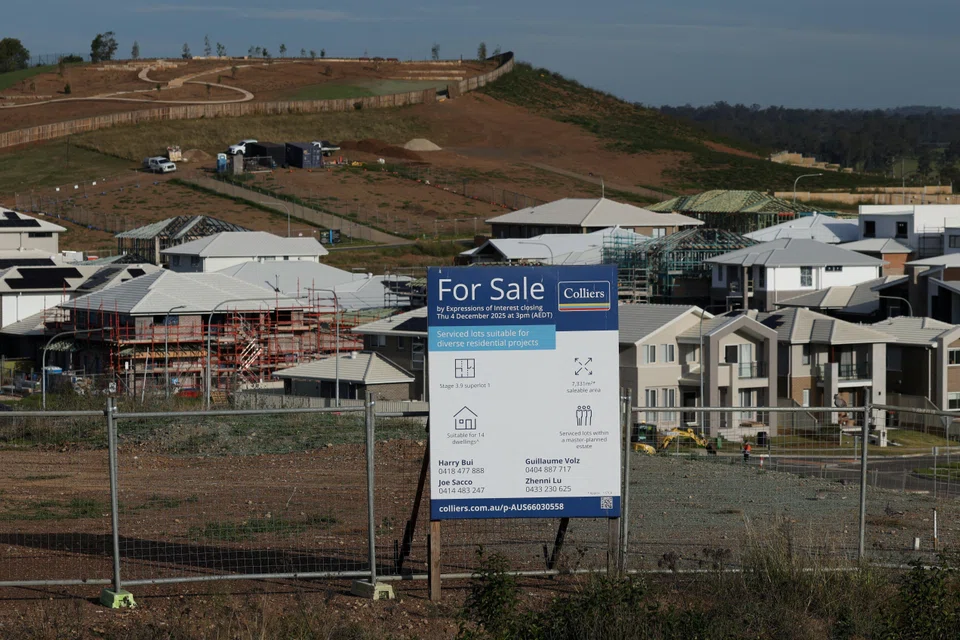
[MELBOURNE] Australia’s housing market decline worsened, with prices declining in June and July by the most since December 2022, as rising interest rates and tax changes hit demand for homes.
Prices across the country last month fell 0.7 per cent from June, with a drop of 1.4 per cent in Sydney leading declines in many major cities and also across regional areas, data from property consultancy Cotality showed on Monday (Aug 3).
June’s decline was also worse than initially reported, revised down to a 0.7 per cent fall from May.
Home values in Australia have been slugged by a combination of rising interest rates, the government cutting tax breaks for investors, as well as the rising cost of living and the already heavy debt burden on households.
The drop in prices may make it easier for some people to buy a place to live, although the data also showed that rents are still rising, adding to the burden for others.
The downturn “gathered momentum” in July, according to the Cotality report, with the situation now worsening in mid-sized capitals after prices already started falling in Sydney and Melbourne.
“There remains a mismatch between the pricing expectations of buyers and sellers,” said Cotality’s head of research Gerard Burg, who noted that less than half of homes put up for auction in capital cities are actually being sold.
In reaction to the tax changes in May and three interest-rate hikes this year, fewer people are taking out home loans, according to banks, with the National Australia Bank last week reporting a 15 per cent drop in mortgages in the second quarter.
Despite that, the total amount of outstanding mortgage debt continued to grow in June, showing just how indebted Australians have become after years of taking out larger and larger loans to pay for houses which have skyrocketed in price.


The value of outstanding home loans rose 7.5 per cent in June from a year earlier, rising at the same pace as the preceding two months, data from the Reserve Bank of Australia last week showed.
Borrowings by people for a residence were up more than 6 per cent, while housing investors’ debts climbed 10.4 per cent, the quickest increase in more than a decade.
Housing supply has undershot demand for years as the cost and time required to build a house has risen, with shortages of workers and rising costs of materials all adding to the difficulty of building new homes.
The number of completed homes has been falling or flat for years, with little sign that the government’s promise to boost supply is actually having an effect.
About 205,000 dwellings were approved to be built in the year that ended in June, according to official data released on Jul 27. There were more than 18,000 approved new homes in June, the data showed, although approvals are quite volatile and there is no guarantee that all these dwellings will actually be built.
“While this remains well short of the Housing Accord target of 240,000 per year, it marks a solid recovery from the mid-2024 low of around 165,000,” said Lucinda Jerogin, an economist at the Commonwealth Bank of Australia.
“Higher interest rates remain a constraint on construction activity, while supply-chain disruptions associated with the Middle East conflict and broader capacity constraints in the sector pose upside risks to construction costs.” BLOOMBERG
Decoding Asia newsletter: your guide to navigating Asia in a new global order. Sign up here to get Decoding Asia newsletter. Delivered to your inbox. Free.
Share with us your feedback on BT's products and services