

Australia’s property boom is unravelling. How bad will it get?
Many economists expect the downturn to continue, though forecasts vary
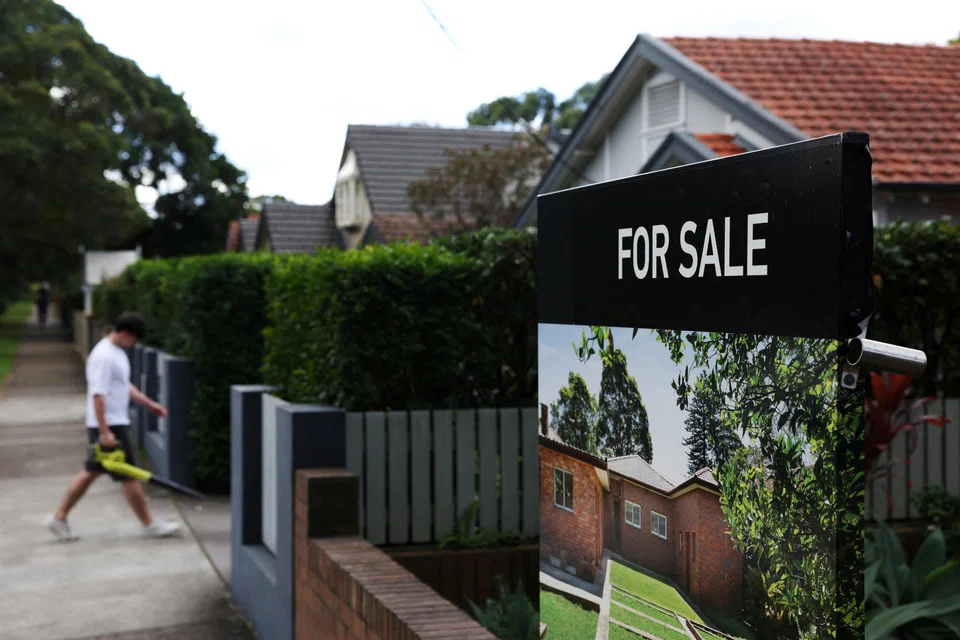
[SYDNEY] For the past three decades, Australia’s property market has experienced a prolonged boom, with prices rising sharply despite periodic downturns. In the past seven years alone, national house prices have risen by roughly 70 per cent, resulting in one of the most expensive property markets in the developed world.
A decade of ultra-low interest rates, a post-pandemic surge in immigration boosting housing demand, and a shortfall in new homes built have compounded price growth. Together, these forces kept prices rising until the Reserve Bank of Australia (RBA) began aggressively raising rates in February 2026. From there, the combination of factors that made Australia’s property market seem like a one-way bet for investors began to sour.
What’s happening to Australia’s property prices?
Nationally, property prices have fallen for six consecutive months and are now 5.2 per cent below their March 2026 peak, according to Cotality data.
The declines have been steepest in the nation’s two biggest and most expensive cities: Sydney values are down 8.6 per cent from their February peak, while Melbourne is down 7.2 per cent since November. Prices are now falling in seven of the eight capital cities, with Darwin the only exception. Regional areas, by contrast, are still recording price growth.
Expensive properties are being hit hardest. In Sydney and Melbourne, top quartile properties – the most expensive 25 per cent of the market – have already fallen more than 10 per cent from their peak levels.
Why are property prices falling?
Property prices in Australia have been hit by rising interest rates, flagged changes to tax breaks for property investors, persistent cost-of-living pressures and already-high levels of household debt.
After the RBA made three interest rate cuts in 2025, the central bank reversed course earlier this year. It made three rapid-fire hikes in February, March and May, and another in September, lifting the cash rate from 3.6 per cent to 4.6 per cent – the highest level since 2011. That has translated into higher mortgage repayments and reduced how much prospective buyers can borrow, cooling demand for property.
The impact is amplified by the fact that Australian households are already shouldering significant debt, equivalent to about 178 per cent of annual disposable income, and most hold variable-rate mortgages making them particularly sensitive to changes in interest rates.
The government’s announcement in May of the biggest overhaul of housing tax settings in decades is also likely deterring some property investors, adding to downward pressure on prices. From July 2027, negative gearing – which allows investors to deduct rental-property losses, including interest costs, from their taxable income – will be restricted to newly built homes.
The government is also replacing the 50 per cent capital gains tax discount – which halves the amount of tax payable on the profit from the sale of an investment property – with a system that adjusts a property’s purchase price for inflation before calculating the taxable gain.
Given the large role investors play in Australia’s housing market, the changes could have a significant impact on demand. The latest Australian Tax Office figures, covering the 2022-23 fiscal year, show more than 2.2 million individuals owned at least one investment property, with almost half of them negatively geared.
There are already signs that investor borrowing is weakening: lending to investors dropped 8.6 per cent between March and June 2026, according to the Australian Bureau of Statistics.
How bad will this property downturn be?
Many economists expect the downturn to continue, though forecasts vary. Westpac Banking’s Matthew Hassan expects home values to fall by 7.3 per cent from peak to trough, while the Commonwealth Bank of Australia’s (CBA) Trent Saunders forecasts a 9 per cent decline.
HSBC Holdings’ chief economist Paul Bloxham is more pessimistic, forecasting a 13 per cent peak-to-trough decline in national home prices and a 17 per cent fall in Sydney. Even at the upper end of the forecast range, though, the declines would not be unprecedented.
Before 2026, Australia experienced 10 housing downturns over roughly four decades. Two of the more severe episodes came in 2017-2019 and 2022-2023.
During the first downturn, Sydney property values fell 13 per cent over 23 months as tighter lending restrictions weighed on the market. During the 2022-2023 downturn, the RBA rapidly raised interest rates after previously indicating that the cash rate was unlikely to increase until 2024. This time, Sydney’s decline is already slightly steeper than it was at the equivalent point in the 2022-23 downturn.
How long the downturn lasts will also determine its severity. Seven of Australia’s previous 10 housing downturns lasted less than a year, according to Cotality. Bloomberg’s lead economist for Australia, James McIntyre, expects prices to continue falling into the first quarter of 2027, noting that the country’s housing downturns have historically taken an average of around 11 months to move from peak to trough.
But the current pace of decline is unusually steep. If the recent annualised rate of around 11 per cent is sustained for a full year, it would mark the largest 12-month contraction in Australian home values since Cotality’s data series began 46 years ago.
What are the broader repercussions of a housing downturn?
Australians hold a large share of their wealth in property, which means falling property prices can have repercussions well beyond the housing market. Household wealth reached a record A$19.2 trillion (US$13.3 trillion) in the March quarter, including A$12.98 trillion in residential property.
A sustained decline in home values can make households feel poorer and more cautious about spending – a phenomenon economists call the “wealth effect”. The RBA estimates that a 1 per cent increase in housing wealth lifts consumer spending by around 0.16 per cent in the long term.
The downturn is expected to reverse some of that effect and could shave as much as 0.3 per cent from consumer spending, according to Bloomberg Economics, which expects the drag from falling housing wealth to become more apparent in the second half of 2026. That could particularly hurt businesses exposed to housing-related spending, including furnishings, renovations and landscaping.
Banks are already feeling the effects through weaker demand for mortgages. CBA – the only major lender to announce full-year results in August – reported a 15 per cent fall in overall mortgage applications and a 28 per cent fall in investor mortgage applications since May. A more severe downturn could also weigh on bank earnings if falling prices are accompanied by rising mortgage arrears or defaults.
Is the RBA worried about falling property prices?
The RBA is watching the housing downturn closely, particularly because declining property prices can weigh on household spending and economic growth. But governor Michele Bullock has pointed out that while property prices have been falling, they remain about 50 per cent higher than in 2020, and the downturn hasn’t been enough to dissuade the central bank from maintaining a hawkish stance on interest rates.

That’s because the central bank’s main focus remains inflation. Australia has struggled with persistent price pressures for several years, and the US-Israeli war on Iran has added to the pain by increasing the cost of energy and raising the risk of further knock-on effects on consumer prices. Inflation jumped to 4 per cent in August, above the RBA’s 2 per cent to 3 per cent target range.
For now, the RBA appears more concerned about inflationary pressures elsewhere in the economy than falling property prices. Bullock has highlighted excess demand in the economy, a tight labour market and the artificial intelligence boom among factors fuelling inflation as the RBA considers whether further interest-rate increases are needed. BLOOMBERG
Decoding Asia newsletter: your guide to navigating Asia in a new global order. Sign up here to get Decoding Asia newsletter. Delivered to your inbox. Free.
Share with us your feedback on BT's products and services






