

Big investors such as Warburg Pincus, Reits by CapitaLand and Keppel lead action in Singapore commercial real estate
Data centres are the top pick for local investors in 2025

SINGAPORE’S commercial real estate market was dominated by institutional investors this year, an MSCI Asia Pacific Capital Trends report for the third quarter showed.
Institutional and listed buyers accounted for about 75 per cent of overall activity, said Benjamin Chow, MSCI’s head of real estate research for Asia.
Notable deals this year included a S$1.6 billion acquisition by Lendlease and US private equity giant Warburg Pincus of a portfolio of assets – comprising business parks and high-tech industrial facilities – from a real estate investment trust (Reit) owned by Blackstone and Lim Chap Huat, Soilbuild’s executive chairman.
The Brunei Investment Agency also bought a 49 per cent stake in Ho Bee Land’s Elementum, a biomedical life-sciences complex in Singapore’s one-north area, for US$206 million.
According to JLL’s Asia Pacific Capital Tracker for Q3, Singaporean investors were the most active as cross-border investment volumes in the region reached US$14.5 billion in the year to date, up 6 per cent year on year.
Pamela Ambler, JLL’s head of investor intelligence for the Asia-Pacific, said: “Private equity funds remained conservative in previous quarters because of pricing and interest rate uncertainties...
“As the interest rate outlook is becoming more certain and the re-pricing cycle is coming to an end, investors begin to deploy capital in Apac real estate, which has a long track record of generating alpha.”
Christine Li, head of research for the Asia-Pacific at Knight Frank, noted that the uncertainty over valuations has lifted with the start of the US Federal Reserve’s easing cycle, and narrowing bid-ask gaps have led to more deals being transacted, especially in the office sector.
She added: “Expectations of further rate cuts and lower debt cost have also made investors more willing to deploy capital.”
Chris Pilgrim, Colliers’ managing director of global capital markets for the Asia-Pacific, said that there was a significant increase in core capital raised, which is a positive sign of recovery.
This is a shift from the previous year when more capital was raised for value-add or opportunistic deals, he added.
Investors’ appetite
In Singapore, the industrial sector is very attractive to investors as it still offers positive carry with higher yields, observed CBRE head of research for Singapore and South-east Asia Tricia Song.
She said: “Investor appetite for retail and hospitality assets was also strong on the back of brighter prospects in both sectors from a continued tourism recovery in 2024.”
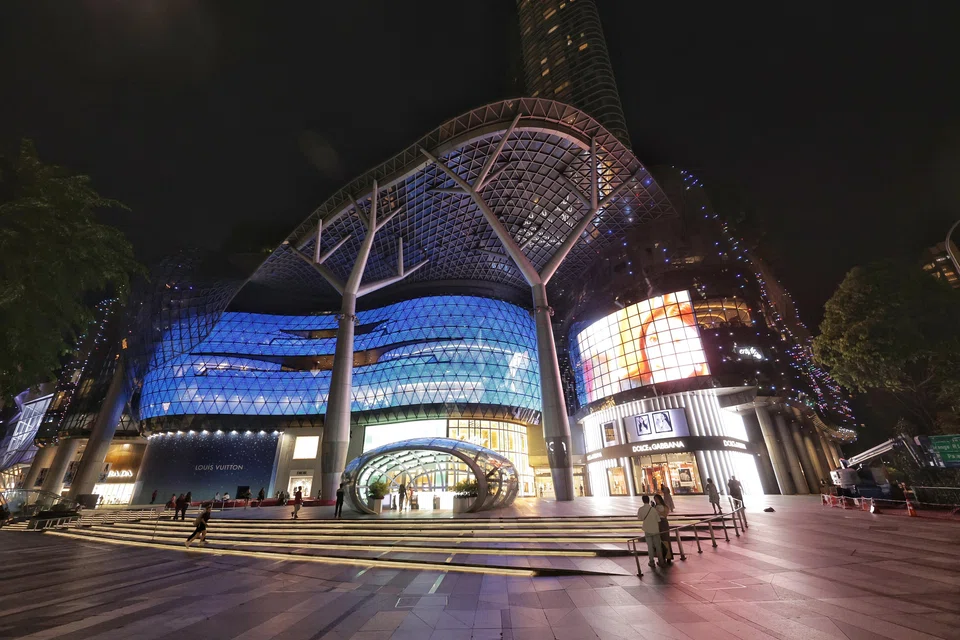
CapitaLand Integrated Commercial Trust’s acquisition of a 50 per cent stake in Ion Orchard for an agreed property value of S$1.85 billion was the largest transaction in Singapore this year. Another retail asset that changed hands was the sale of The Seletar Mall to Allgreen Properties for S$550 million.
When Warburg Pincus and Lendlease were asked about their acquisition of a S$1.6 billion industrial facilities and business parks portfolio, they noted that the industrial assets are in close proximity to Tuas Port. This is expected to be the world’s largest automated port, and the business parks are located in established infill office markets.
EZA Hill, a Singapore-based real asset investment platform backed by alternative investment manager Hillhouse Investment through its real assets division, Rava Partners, noted that it is looking to expand its investment footprint in Singapore, with a focus on growing its logistics portfolio.
Frank Ng, EZA Hill’s chief investment officer (CIO), said: “Within the logistics sector, there is a growing demand for specialised facilities, including dangerous-goods warehouses and multi-temperature storage. EZA Hill intends to leverage its advanced operational expertise to meet these specialised needs effectively.”
More opportunities
Institutional investors in Singapore have also been looking abroad to acquire data centres, student housing assets and opportunities in the private credit market.
Peter Hayes, PGIM Real Estate’s global head of investment research, said: “Demand for data centres is expected to grow at a 22 per cent compounded annual rate over the next five years...
“Supply remains constrained given (the) high barriers in obtaining planning permissions and securing power, especially renewable energy. Such supply-and-demand imbalance is creating a generational opportunity for investors.”
Christina Tan, Keppel’s CIO, said: “The global demand for data centres is evolving rapidly due to the rise of artificial intelligence (AI) and generative AI, driving the need for larger, more powerful and energy-efficient infrastructure.”
Keppel aims to expand its portfolio by more than 500 megawatts to 1.2 gigawatts in the near term, fuelled by a S$10 billion increase in funds under management (FUM) from its upcoming Keppel Data Centre Fund III, as well as further co-investments from investors.
CapitaLand Investment (CLI) announced in November that it will be focusing on three secular trends for its investments – demographics, disruption and digitalisation.
Andrew Lim, CLI’s group chief operating officer, said: “There is a greater focus on ‘healthspan’ and age-suitable living, compared to lifespan. Investors are also focused on income-focused financial products with manageable risk-reward structures. To address these trends, CLI will focus on the lodging, living and wellness sectors, as well as our Reits and core products.”
By 2028, the group is projected to have between 10 and 15 per cent of its FUM coming from India, up from 7 per cent in the year to date. CLI also aims to grow its FUM in Australia, South Korea and Japan collectively from 18 per cent year to date to between 25 and 35 per cent of total FUM by 2028.
Last month, CLI said it would be acquiring an initial 40 per cent stake in SC Capital Partners for S$280 million. The acquisition will lead to a trebling of FUM in Japan from S$2.9 billion to about S$11 billion.
Lim added: “We expect to expand our presence in Japan’s key gateway cities by seeking suitable investment opportunities. We are also looking to grow our data centre and self-storage business in Japan.”
A Mapletree Investments spokesperson noted that as part of its fourth five-year plan, the group will continue to concentrate on its four core sectors – logistics, student housing, data centres and offices – in 2025.
“Mapletree aims to reinforce our leadership position as the largest Grade A logistics landlord in both Malaysia and Vietnam. Besides deepening our presence within existing sub-markets, Mapletree will continue to identify sub-markets with potential for long-term growth and scale up our development activity meaningfully.”
The group expects demand for high-quality offices in prime locations to increase in the long run. In the immediate future, it has identified two markets – India and Vietnam – that are less affected by work-from-home trends.
“These countries also typically provide favourable rental prospects, and are seeing a growing interest in business parks and quality office spaces.”






