

Boom turns to gloom as higher interest rates hit New Zealand housing
 Add BT as a preferred source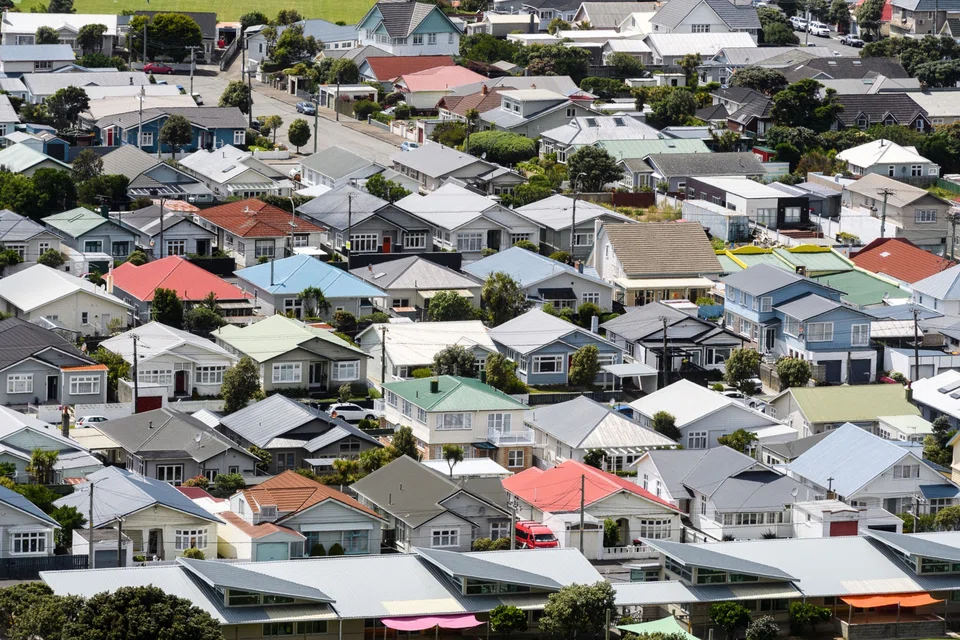
DeeperDive is a beta AI feature. Refer to full articles for the facts.
NEW Zealand’s house prices are forecast to fall 10 per cent this year and 5 per cent next as aggressive interest rate hikes take some heat out of a blazing housing market, but not enough to solve the ongoing affordability crisis, a Reuters poll found.
Billions of dollars in government stimulus and historically low interest rates during the pandemic have inflated house prices far ahead of wage growth in one of the least affordable housing markets in the world.
House prices have risen more than 40 per cent since the start of the pandemic and nearly doubled in the last 7 years, which has led to increased homelessness, fuelled inequality and kept many would-be first-time homebuyers as renters.
Although house prices fell a modest 1.6 per cent year-on-year in July, its first annual fall since 2011, they are still very far from returning to pre-pandemic levels.
Average home prices were expected to decline 10.0 per cent this year, according to an Aug 15 to Sep 1 Reuters survey of 11 property analysts. Those estimates showed a slightly deeper decline than the 9.0 per cent fall predicted in a May poll.
Another 5.0 per cent fall was expected next year.
Navigate Asia in
a new global order
Get the insights delivered to your inbox.
“House prices will continue to decline and there’s not much in the economic outlook that will stop that,” said Sharon Zollner, chief economist at ANZ.
“With private-sector wage growth accelerating to 7.0 per cent in the year to June 2022, there’s a risk the Reserve Bank of New Zealand (RBNZ) may need to lift interest rates even higher than expected, which would weigh further on real house prices.”
Despite the expected fall, the drop in prices was too small to offer much reprieve for first homebuyers. Average prices have soared over 250 per cent since 1998, almost 4 times the average increase across OECD (Organisation for Economic Co-operation and Development) countries.

The RBNZ, which has considered house prices in its policy deliberations, has hiked rates by a total of 275 basis points since October last year and is forecast to take rates to 4.0 per cent early next year.
Prices must drop around 20 per cent to reach a sustainable level, the central bank says. But some respondents in the poll said more was required.
Capital Economics, Infometrics and Kiwibank said average house prices would have to fall between 20 per cent and 30 per cent - roughly the amount they fell after the oil shock of 1973 - to make housing affordable.
“It will take until at least 2027 for house prices to be back towards a more fair valued position, in real terms,” said Brad Olsen, principal economist at Infometrics.
When asked to describe the level of New Zealand house prices on a scale of 1 to 10, from extremely cheap to extremely expensive, the median response was 8. For Auckland, it was 9. REUTERS
Decoding Asia newsletter: your guide to navigating Asia in a new global order. Sign up here to get Decoding Asia newsletter. Delivered to your inbox. Free.
Share with us your feedback on BT's products and services
TRENDING NOW

Shelving S$5 billion office redevelopment plan proved ‘wise’ as geopolitical risks mount: OCBC chairman

Eurokars Group introduces rental car franchises Enterprise Rent-A-Car, National Car Rental, and Alamo to Singapore
20 photos that show how dramatically Singapore has changed in two decades

Singapore’s key exports up 15.3% in March from electronics surge, exceeding forecasts

