

Britain's housing crisis is hitting new depths
 Add BT as a preferred source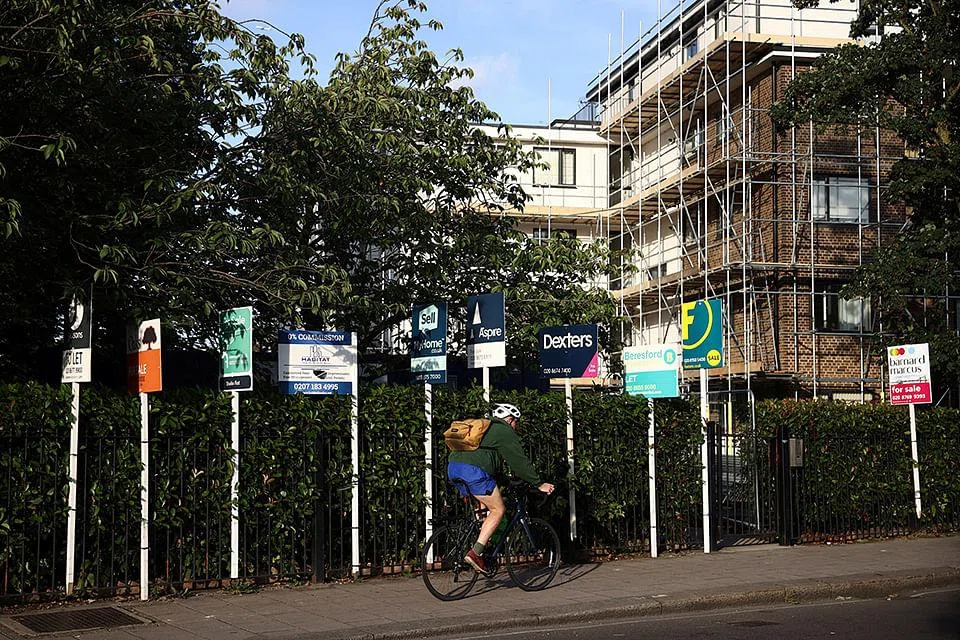
[LONDON] Crisis is a charity known for supporting the homeless at Christmas, and with homelessness in England spiraling to an unconscionable hundreds of thousands of people, its name has never been more apt.
It’s hard for some of us to get a sense of Britain’s severe housing shortage when surveying the screeds of opulent homes up for sale on property websites. According to the Royal Institution of Chartered Surveyors’ Residential Market Survey, buyer demand softened 8 points in November to minus 32 per cent – showing the percentage of agents reporting a decrease in buyer interest versus an increase – and sales have stalled. Moreover, the government’s own models suggest a new council tax surcharge on properties worth more than £2 million (S$3.45 million) will knock another 2.5 per cent off valuations.
Any moderation of the UK’s eyewatering house prices might not cause Keir Starmer’s Labour government to lose much sleep, but there is a knock-on impact from the premium market right through to the needier parts of British housing. Developers often agree to build affordable properties on the quid pro quo that they can also construct the profitable expensive stuff. If they can’t sell the pricier homes, there isn’t the cash to build the rest.
This adds to a devastating shortage of affordable properties to rent right now. To make matters worse, separate government measures aimed at loosening the hold of private-sector landlords have scared off developers, too. It’s a worthy idea to dictate that 35 per cent of any new development must be given over to affordable or social housing, but in reality many of these properties end up empty because social-housing organisations lack the funds to buy them.
A December report from Crisis shows how such economic incentives are having a deeply negative impact on the decisions of nonprofit housing associations tasked with housing the homeless.
England’s social-housing sector has been shrinking fast despite ballooning demand. The past 10 years have seen a net loss of more than 180,000 socially rented homes. We wrote in October that residential planning approvals in the year to June had hit a record low. As such, there is no pipeline of approved projects to narrow this chronic shortfall anytime soon.
The consequence of this freefall in social-housing supply has been associations aggressively managing demand, frequently excluding the most vulnerable tenants. As with private-sector landlords, housing associations can’t afford to have properties where the rent isn’t covered, either by salaries or benefits.
They’re having to apply the same affordability criteria to potential tenants as private landlords. According to Crisis, almost a third of associations report that pre-tenancy affordability checks often lead to a housing applicant being deemed “unsuitable.” More explicitly, almost a quarter said households below a certain income are sometimes excluded from consideration altogether.
Such exclusions don’t simply pass responsibility down the line; the costs escalate too. As Crisis highlights: “If households cannot afford social housing, they are unlikely to be able to afford any housing at all and likely consume more costly public services.” Putting families in unsuitable emergency accommodation is extremely expensive. On occasion, it also puts the legal duty of local councils to house the homeless into direct conflict with the government seeking to house asylum seekers – provoking populist pressure.

Private landlords and developers have become the bogeymen of the UK housing crisis. Yet the war against their apparent greed isn’t some harmless distraction. It’s creating damaging disincentives right across the property market, adding to the chronic shortage of new homes and deflecting attention from the root cause of the problem: the broken relationship between central government and the housing associations. Central to this is the abject failure to tackle the more complex tasks of reforming, funding and professionalising the provision of social housing in England.
That’s what homeless people really need for 2026. BLOOMBERG
Decoding Asia newsletter: your guide to navigating Asia in a new global order. Sign up here to get Decoding Asia newsletter. Delivered to your inbox. Free.
Share with us your feedback on BT's products and services
TRENDING NOW

ComfortDelGro’s Zig to buy S$10 million worth of BYD cars for private-hire fleet

Singapore telco price war squeezes earnings, strengthens case for StarHub-M1 deal, say analysts

Sats slides 13.6% as investors dump shares on profit-margin squeeze

When every phone becomes a satellite phone, what happens to Asia’s telcos?

