
British restaurants battling a staff crisis, worsened by Brexit
 Add BT as a preferred source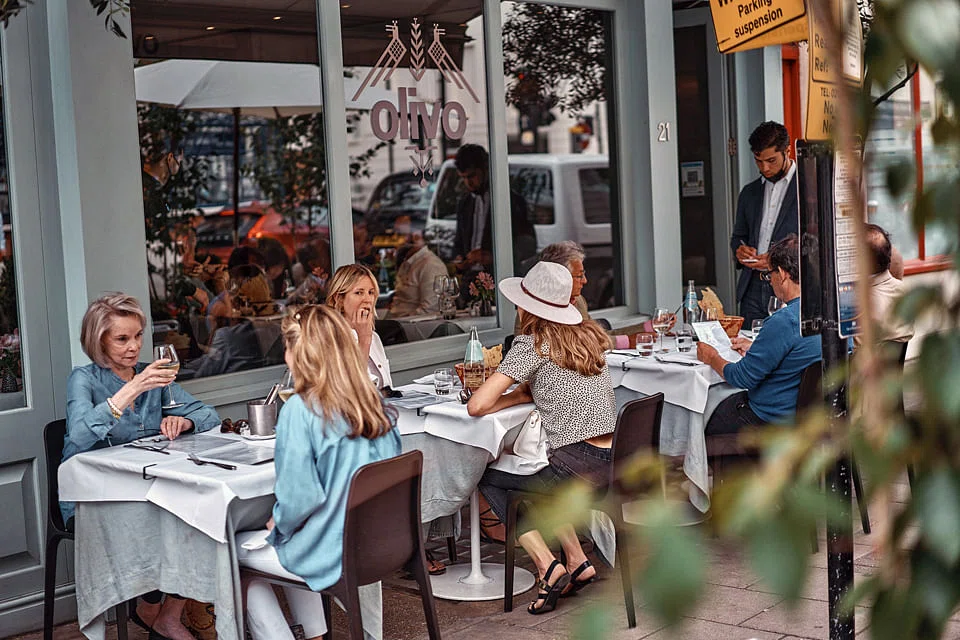
London
IN the wealthy central London enclave of Belgravia, where a two-bedroom apartment is advertised for £1.7 million (S$3.2 million) and Maseratis and Bentleys line the streets, the battle for restaurant staff has become downright underhanded.
The manager at Olivo, a Sardinian restaurant, recently kicked out a rival Sardinian restaurateur from the dining room. At a quiet table by the window, the man was trying to persuade a waitress to work at his restaurant instead.
Olivo can't afford to lose any more staff. Across Britain, there is a dearth of hospitality workers, and companies are getting increasingly desperate to fill vacancies. Until they can, restaurants are partially closing despite huge demand from customers who have saved money during the pandemic and are eager for a great meal out. Even after months of forced closure, many restaurants would rather forgo revenue than risk their reputation offering substandard service from stretched staff. Recruiters and employers are also trying to work out how to coax reluctant workers into the industry - especially British ones, as Brexit has drained the labour pool of many European workers.
Mauro Sanna, owner of Olivo, recently came to the frustrating decision to close the restaurant for lunch on Saturdays and all day on Sundays because of too few staff, particularly chefs.
Another of his restaurants, Olivocarne, just one block away, will be closed on Sunday evenings and all day on Mondays. Olivocarne has four people working in the kitchen but needs seven. The closures enable the staff to rotate between the restaurants while he tries to fill 15 vacancies, including kitchen porters, runners, waiters and a chef de partie.
Navigate Asia in
a new global order
Get the insights delivered to your inbox.
In an exasperated message on Twitter, he explained the predicament to his customers: "If we ever manage to find more staff these hours will hopefully be revised." "It's becoming impossible," Mr Sanna said in an interview. "I thought the Covid crisis was tough, but this one is much tougher because I can't do anything about it. I don't know what to do."
Across the hospitality industry, there are approximately 188,000 open positions, according to Kate Nicholls, CEO of UKHospitality, a trade group. Restaurant companies including the Ivy Collection and D&D have hundreds of open positions advertised online.
Hawksmoor, a small chain of high-end steak restaurants, is paying staff hefty bonuses for referrals.
Similar problems are hampering the sector in other countries including France and the United States, but in Britain, it has been exacerbated by Brexit. Before the pandemic one out of four hospitality workers in Britain was from a European Union country, Ms Nicholls said.
During 2020, when lockdowns froze much of the economy and huge numbers of workers were furloughed, hundreds of thousands of EU migrants are estimated to have returned home. When Britain left the European Union single market, on Dec 31, the open-door policy that had allowed people from any EU country to work in Britain was shut. Migrants wishing to return to Britain now need to have secured permission from the government. New workers must compete for visas in a points-based immigration system that values highly paid jobs more. Plus, there are still quarantine restrictions on incoming travellers.
The problem is not just Britain's stricter immigration rules. Other workers, in Britain and elsewhere, have left the hospitality industry looking for more stable employment, according to Kate Shoesmith, deputy CEO of the Recruitment & Employment Confederation, which represents recruitment companies and agencies. Restaurant and hotel workers, who can't work from home, have been scarred by unexpected changes in lockdown rules that have pulled them in and out of work at short notice. Despite the success of Britain's vaccination programme, the delta coronavirus variant is threatening to delay the full lifting of social distancing restrictions in England later this month. Some people "are not confident there won't be another lockdown," Ms Shoesmith said. Many workers have moved on to less-strenuous jobs that don't require such late nights and long shifts, such as in call centres, retail or other customer service roles.
Ms Shoesmith said recruiters expect some European Union nationals to eventually return to Britain to work, "but the vast majority won't; that's the anticipation".
To help fill the gap, there is a broad sentiment that the industry must make hospitality an appealing career for Britons, one worth aspiring to, with training and opportunities for promotion. UKHospitality has teamed up with work coaches in government job centres. It wants them to prioritise hospitality as a "career of choice" and think beyond entry level or front-of-house positions.
In more than three decades in the industry, John Crompton, director at Hillbrooke Hotels, said he had never known a staff shortage like this. The company, which has four "quirky luxury" hotels and inns in eastern and southern England, needs to hire at least 50 people. "It's always been difficult to get staff, but it's never been as bad as this," he said. In January 2020, the company bought Spot in the Woods, a restaurant and hotel in the New Forest National Park in the south of England, and has hardly had a chance to open it fully.
Lately, as lockdowns have eased, the hotel has been attracting a busy combination of local families, vacationing cyclists and walkers, but the lack of employees has forced it to close the restaurant. When he reached out to workers who had previously worked at the restaurant, some decided they would rather do something else.
The inability to recruit seasonal EU workers this year has also left the company short-handed at its other hotel in the New Forest, called the Master Builder's, where up to 40 per cent of the workers used to be from the European Union. For the time being, some of the staff who would ordinarily work at the Spot in the Woods have gone to the Master Builder's, a 20-minute drive away. With a diminished staff and hiring prospects looking grim, Mr Crompton said the entire industry needed to improve its reputation as a career option. For the first time, Hillbrooke Hotels has hired a "head of people", to have someone solely dedicated to managing employees and creating an enjoyable culture.
For now, the staff shortage is acute. The industry is lobbying the government to include hospitality jobs in the list of "shortage" occupations for which it is easier for immigrants to get a visa. And it is looking for other quick fixes like reducing the size of menus, opening for fewer hours and edging up pay, said Nicholls, of UK Hospitality.
But there's potential for this problem to permanently change working conditions in hospitality, forcing employers to offer higher wages, more predictable and shorter shifts, a broader range of benefits and training and development opportunities. The shortage is giving workers willing to stay in the hospitality business new leverage. "It is a reset moment," Ms Nicholls said. NYTIMES
Decoding Asia newsletter: your guide to navigating Asia in a new global order. Sign up here to get Decoding Asia newsletter. Delivered to your inbox. Free.
Share with us your feedback on BT's products and services

