

Budget 2026: Time to ‘glow up’ built environment sector with AI, robotics; quantity surveying in focus
A dedicated workgroup has been set up to strengthen the quantity surveying profession

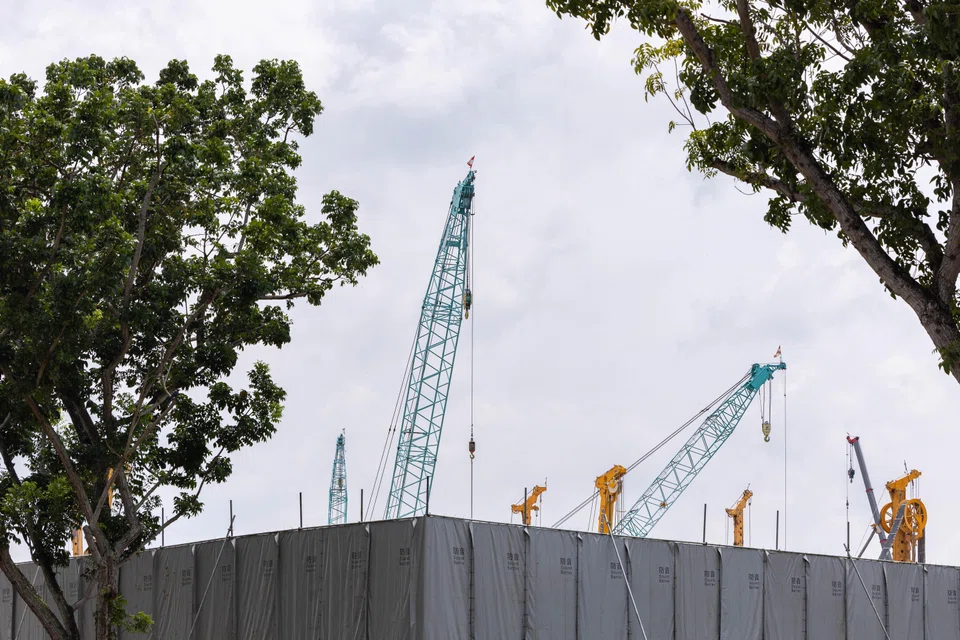
[SINGAPORE] To move from “dusty, dirty, and dangerous” to “dynamic, decarbonised, and digitalised”, the government hopes to employ more artificial intelligence and robotics in the built environment sector, and open up job opportunities.
“This is not a new priority, but we need to give it a renewed focus and stronger push,” said Minister for National Development Chee Hong Tat at the ministry’s Committee of Supply debate on Wednesday (Mar 4).
Chee cited software systems to help designers optimise sub-components that can be construed by 3D printers in days rather than months, or autonomous robots to construct buildings and conduct monitoring in real-time for delays and safety.
“This will also open up more... job opportunities for Singaporeans – jobs that are no longer perceived as ‘dusty, dirty and dangerous’, but ‘dynamic, decarbonised and digitalised’... with strong growth prospects and career development pathways,” he added.
The sector will need at least 1,000 new architects and engineers every year to support Singapore’s development plans over the next decade, Second Minister for National Development Indranee Rajah said. These include the construction of Changi Airport Terminal 5 and Paya Lebar Air Base’s redevelopment, among others.
The government will also work with industry players to focus on strengthening the quantity surveying (QS) profession.

With their work increasingly automated with technology, the QS profession will need to redefine its role and provide more value-added services to stay relevant, Indranee explained.
The fresh focus builds on earlier efforts to nurture talent for the built environment sector.
In September 2025, the Taskforce for Architectural and Engineering Consultants rolled out recommendations including an enhanced internship programme to get students “industry-ready”, better procurement practices and higher starting salaries.


Industry players, from Surbana Jurong Consultants to architectural firms ADDP Architects and DP Architects and engineering consultants Aecom and PH Consulting, have stepped up, said Indranee.
There has also been a shift towards quality-based procurement and away from fee-diving.
In December 2025, BCA’s Reduced Fee Score (RFS) framework was expanded to cover public sector projects of up to S$100 million. Under the framework, outlier bids that are substantially lower than other bids in the same tender are disqualified.
Indranee also addressed questions raised by Members of Parliament about growing cost pressures and supply chain volatility.
“We recognise that contractors need greater visibility of key cost drivers to plan effectively,” she said. “The government is working closely across agencies to improve forward projections and coordination for critical resources, including soil disposal capacity and dormitory supply.”
Authorities will also explore how to provide more regular updates on the timeline of major infrastructure projects to “support more informed project planning decisions”.
Decoding Asia newsletter: your guide to navigating Asia in a new global order. Sign up here to get Decoding Asia newsletter. Delivered to your inbox. Free.
Copyright SPH Media. All rights reserved.
TRENDING NOW

DBS, OCBC, UOB rout lops billions off STI as inflation, rate concerns spook investors

Grab CEO’s wife Chloe Tong on life with Anthony Tan and finding her purpose

OCBC sheds S$8 billion in value as shares close nearly 6% down; analysts cautious on banks

Deal between tycoon friends sparks scrutiny of Philippine power sector

