‘Building the next sunrise’: Metro pivots to global tie-ups, immersive concept stores to woo shoppers

Group does not plan to exit troubled industry, hopes to stabilise loss-making retail operations in one to two years

Summarise
Chong Xin Wei
Published Sun, Sep 14, 2025 · 04:19 PM
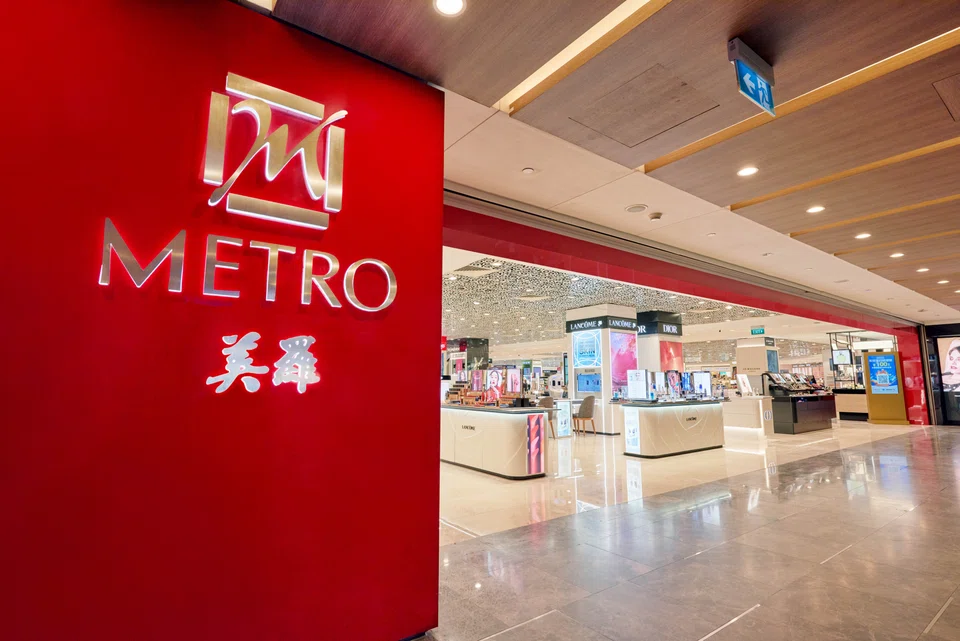
    • In FY2025, Metro's retail arm reported a loss after tax of S$6.9 million, compared with a profit of S$1.8 million the previous year.
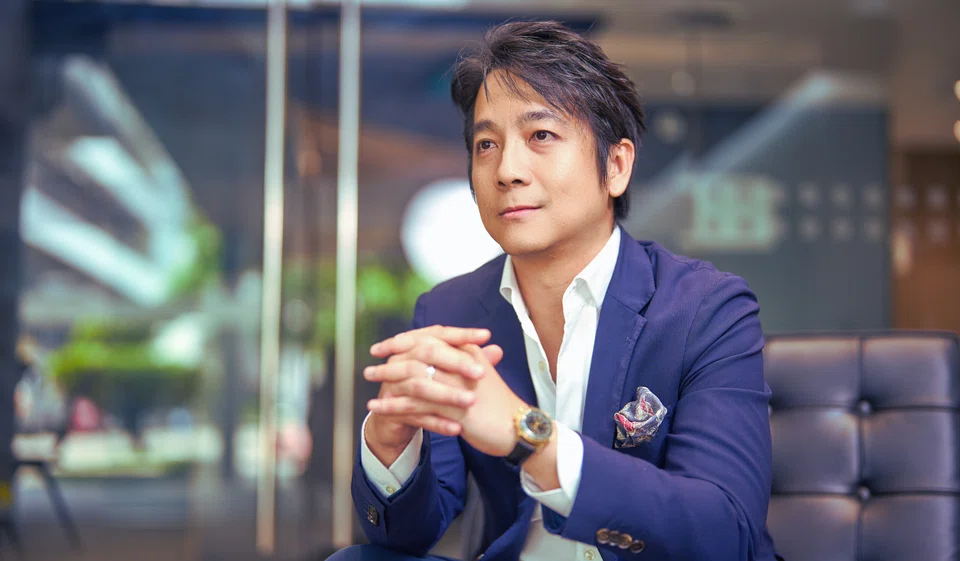
    • Erwin Wuysang-Oei was appointed COO of Metro’s retail business in November 2023.
    • In FY2025, Metro's retail arm reported a loss after tax of S$6.9 million, compared with a profit of S$1.8 million the previous year. PHOTO: METRO
    • Erwin Wuysang-Oei was appointed COO of Metro’s retail business in November 2023. PHOTO: METRO

    [SINGAPORE] With shrinking margins, weaker spending and rising operating costs, retail has often been written off as a sunset industry in Singapore – especially after household-name department stores such as Robinsons exited the market, and Isetan and BHG Singapore downsized.

    Metro views things differently.

    “We see it as a sunrise industry. Every retailer is going through the same challenges, and the objective for us is building resilience,” Erwin Wuysang-Oei, chief operating officer (COO) of Metro’s retail arm, told The Business Times.

    The group, founded in Indonesia by the late Ong Tjoe Kim in 1953, is rethinking its retail approach – focusing on creating immersive shopping experiences and offering exclusive products via global tie-ups to bring shoppers back.

    Industry headwinds have weighed on Metro’s retail arm. In FY2025, the division reported a loss after tax of S$6.9 million, compared with a profit of S$1.8 million in the previous year. Sales fell 8.5 per cent to S$96.5 million with lower contributions from its Paragon and Causeway Point outlets – the two remaining Metro stores in Singapore.

    The weak performance has underscored the urgency of the department store retailer’s revamp.

    Erwin Wuysang-Oei was appointed COO of Metro’s retail business in November 2023. PHOTO: METRO

    At group level, Metro sank into a net loss of S$224.8 million in FY2025 from a profit of S$14.6 million a year ago. Revenue was down 9.8 per cent to S$104.5 million.

    Metro attributed the overall weakness in the bottom line to non-cash fair value and impairment losses from its China real estate exposure.

    Revenue was dragged down by its retail division and lower contribution from sale of property rights of its Indonesia residential development assets. Metro operates in the property and retail sectors, with retail continuing to generate more revenue than property, accounting for more than 90 per cent of the group’s top line in FY2024-2025.

    Year to date, Metro’s share price has dipped 1.1 per cent. Its shares closed at S$0.485 last Friday (Sep 12), up S$0.025 or 5.4 per cent.

    The weak performance has not gone unnoticed.

    At a recent annual general meeting, a shareholder questioned whether the company might consider closing its retail operations given the difficult environment. Another asked if maintaining the legacy of its department stores serves the best interests of public shareholders. Metro’s Singapore business began as a textile shop in 1957, opening at 72 High Street in a two-storey shophouse measuring 250 square metres.

    While the post-Covid “revenge shopping” boost temporarily lifted sales, Wuysang-Oei pointed to rising inflation and a strong Singapore dollar as factors curbing tourist spending and driving more locals to shop abroad.

    Wuysang-Oei was appointed COO of Metro’s retail business in November 2023, after the division’s former chief executive David Tang resigned to pursue other interests. Wuysang-Oei previously held key leadership roles at Metro, including head of marketing, merchandising controller and e-commerce.

    Department store sales in Singapore rose 4.1 per cent in July, but growth lagged other retail segments such as supermarkets and cosmetics, which chalked 9.6 per cent and 5.5 per cent increases respectively.

    Still, consumer-facing sectors, such as retail trade and food and beverage services, are expected to remain lacklustre amid a cooling domestic labour market and a challenging recovery in tourist arrivals.

    Higher operating costs continue to put pressure on Metro’s financials, said Wuysang-Oei. In FY2025, the retail division’s cost of revenue amounted to S$93.9 million.

    “Department stores cannot simply pass these costs on to consumers,” he added. “Margins are typically thin, and acting as the middleman between brands and shoppers leaves little room for price adjustments.”

    Tie-ups with overseas brands

    To counter these pressures, Metro is leaning on global partnerships to differentiate its offerings.

    It has teamed up with South Korea’s retail giant Shinsegae to bring in a slate of in-house brands and exclusive products to its Paragon store.

    The move is part of Metro’s push to offer exclusivity – certain Shinsegae brands will be available in Singapore only through Metro. The line-up includes fashion retailers Studio Tomboy, Man on the Boon and Voice of Voices, luggage retailer Rawrow, lifestyle brand Jaju, and beauty label Vidivici.

    The partnership also taps into the wave of South Korean culture sweeping South-east Asia, while reinforcing both retailers’ focus on highlighting and elevating their private labels.

    “Through this collaboration, we are bringing Shinsegae’s private labels into South-east Asia, with Singapore as a launchpad. At the same time, we are exploring opportunities to introduce Metro’s own labels into Shinsegae,” said Wuysang-Oei.

    Metro is eyeing similar partnerships across Asia. Such tie-ups are critical, given the constraints of Singapore’s domestic market. Wuysang-Oei stressed that with Singapore’s population of about six million, the local retail scene can support only a limited number of stores.

    “For any company to grow, we have to go abroad via collaborations like these. That’s how we minimise risk while expanding our reach.”

    Immersive concept stores

    The retailer is also introducing modular, experiential concept stores.

    “Our priority right now is to move away from the traditional department store format – ‘un-departmentalising’ a department store and creating purpose-built concept stores,” said Wuysang-Oei.

    One new concept coming to the Metro store – The Sleep Lab – allows customers to try mattresses in a setting that simulates the comfort and relaxation of a holiday home.

    An artist’s impression of The Sleep Lab concept store which allows customers to try mattresses in a setting that simulates the comfort and relaxation of a holiday home. ILLUSTRATION: METRO

    Another concept – MiniMuse – is a curated selection of luxury beauty and wellness products in sample sizes, targeting younger consumers and allowing them to experiment before committing to full-sized purchases.

    Other concepts include Kitchen Stadium, where shoppers can watch live demonstrations by chefs and learn techniques while exploring cookware and accessories. On the fashion front, Metro will feature a multi-label platform showcasing Asian brands alongside its private label K/Woods, which contributes 30 per cent of total ladies’ apparel sales.

    Slated to open by year-end, The Sleep Lab will span 5,000 square feet (sq ft) and MiniMuse will occupy 600 sq ft within the Paragon outlet, which spans about 75,000 sq ft.

    An artist’s impression of the MiniMuse concept store, which targets younger consumers with sample-sized beauty and wellness products designed for discovery, travel and gifting. ILLUSTRATION: METRO

    As for its Causeway Point outlet, Wuysang-Oei said that the company is still in talks with landlord Frasers Property and the launch of the concept stores will be rolled out later.

    Metro’s offerings at its Paragon outlet will be aligned with the mall’s upcoming asset enhancement initiative (AEI), he added.

    In February, Times Properties – a wholly owned subsidiary of Cuscaden Peak Investments – moved to privatise Paragon Real Estate Investment Trust, which owns Paragon mall. Times Properties envisages that a major AEI is needed to future-proof the mall’s position.

    While details of the planned AEI are not finalised, Wuysang-Oei said Metro is in “constant dialogue” with the landlord and will tailor its offerings to align with the mall’s positioning.

    “If (the landlord) decides to go even more upmarket, we might bring in more international brands... We work with the flow, not against it,” he added, noting that the total amount of space that Metro will occupy post-AEI is yet to be determined.

    The new concept stores are designed to be modular, allowing them to operate as standalone outlets in other malls without the space requirements of a traditional department store.

    This approach gives Metro the flexibility to refresh experiences and diversify revenue streams, strengthening its resilience against the sobering trend of retail closures, said Wuysang-Oei.

    While it is too early to estimate the revenue from its new initiatives, Wuysang-Oei projects Metro’s retail business could stabilise within the next one to two years.

    “It’s at the starting point... But we are quite confident that exclusivity and brand positioning will contribute to growth,” he added.

    Pressing on in troubled times

    Despite the bleak retail landscape, Metro has no plans to exit the industry.

    “Retail will stay and continue to form the backbone of Metro. It’s just a question of format – not large stores, but bite-size spaces that suit the market,” said Wuysang-Oei. He noted that traditional department stores have not adapted quickly enough to evolving consumer behaviour.

    Metro’s concept stores will be continually refreshed with new incubation brands, with offerings updated every six to 12 months to encourage repeat visits.

    Said Wuysang-Oei: “It’s about strategically building our next sunrise.”