

Burnham warned of financial stability risk from a quick land tax
Britain’s fiscal position remains tight
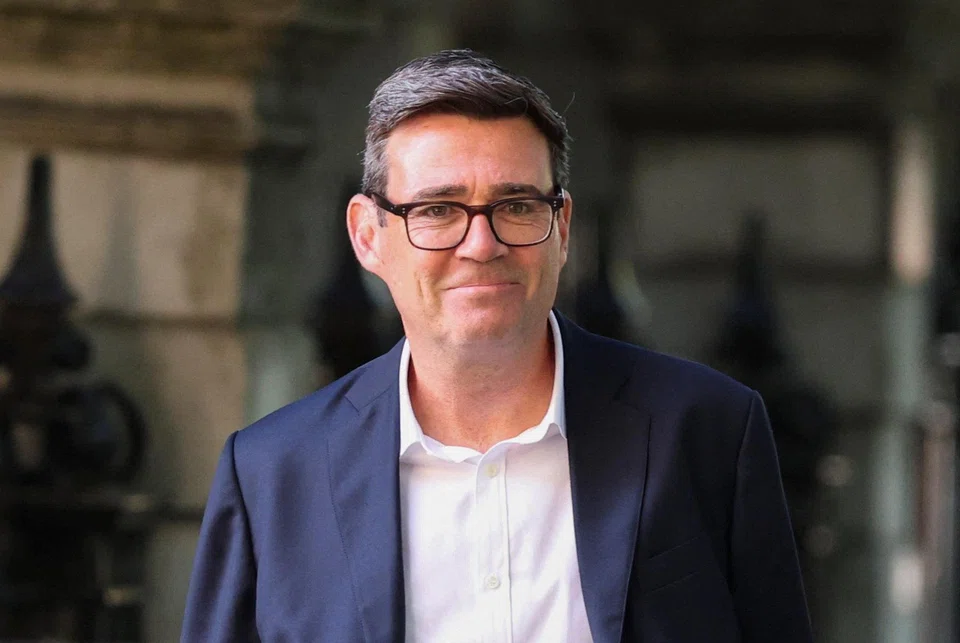
[LONDON] Andy Burnham, the UK’s incoming prime minister, has been propelled into power by left-wing members of the ruling Labour party keen to raise taxes on the wealthy. Many like the sound of a long-standing idea that Burnham has endorsed: a tax on land.
The policy has support on the other side of the political spectrum too, among free-marketeers who agree it is the “least bad tax” – a description by their philosophical doyen Milton Friedman.
Still, it’s not an easy win.
Shifting such a large part of Britain’s tax burden to land would “so immediately lower the price of housing that it could actually bring about a financial crisis”, warned Charles Goodhart, a renowned economist and former rate-setter at the Bank of England.
“Most financial assets are collateralised on the basis of land,” he said during a talk last month.
For more than a decade, Burnham has called for a land tax instead of Britain’s council tax, paid on property values, and stamp duty, paid on home sales. Together these levies raise £75 billion (US$101 billion) a year for the UK Treasury so a land tax would have to match that amount.
Dan Neidle, a tax expert who specialises in British politics, recently endorsed Burnham’s idea and said a land tax should also replace business rates. That would take the total required revenue to £110 billion, according to Office for Budget Responsibility data.
Neidle acknowledged that the change would have to be gradual to avoid shocking property owners.
Canberra, the Australian capital, is 14 years into a 20-year switch from stamp duty to land tax. The slow, incremental nature of the reform leads Neidle to doubt whether Burnham will pursue it with just two to three years until the next general election.
Goodhart agrees. “The transitional problems mean that the introduction of a land tax would need to be so gentle that it could not restore fiscal stability quickly,” he said in an e-mail exchange with Bloomberg. “So politicians are likely to look for other, more immediate sticking plasters.”
Tom Clougherty, former head of the libertarian Institute of Economic Affairs, said he supported Burnham’s preference for a land value tax but that “it is not realistic to raise much more from property taxes than we do at the moment”. He also argued there would have to be a “phased transition”.
Land taxes differ from property taxes because they measure the value of the land itself rather than the building on it.
A new home or a property extension does not increase the land value so there is no penalty for development. Economists also argue that the tax captures unearned value created by public and private investment such as transport links. As land cannot be moved, taxing it is less likely to cause distortions than taxing labour and profits.
Nonetheless, a land tax is unlikely to help the Labour left in its quest for higher public spending. Britain’s fiscal position remains as tight as that of many of its European peers, and is at the mercy of global events and their impact on borrowing costs.
“The UK economy has at present little capacity for expansionary fiscal policy,” another former BOE rate-setter, Jonathan Haskel, told MPs on Wednesday. BLOOMBERG
Decoding Asia newsletter: your guide to navigating Asia in a new global order. Sign up here to get Decoding Asia newsletter. Delivered to your inbox. Free.
Share with us your feedback on BT's products and services
TRENDING NOW

DBS, OCBC, UOB rout lops billions off STI as inflation, rate concerns spook investors

Grab CEO’s wife Chloe Tong on life with Anthony Tan and finding her purpose

OCBC sheds S$8 billion in value as shares close nearly 6% down; analysts cautious on banks

Deal between tycoon friends sparks scrutiny of Philippine power sector

