Cape Town housing is booming but many residents are unhappy about it
More than one-third of its residences are reserved for short-term rentals on Airbnb
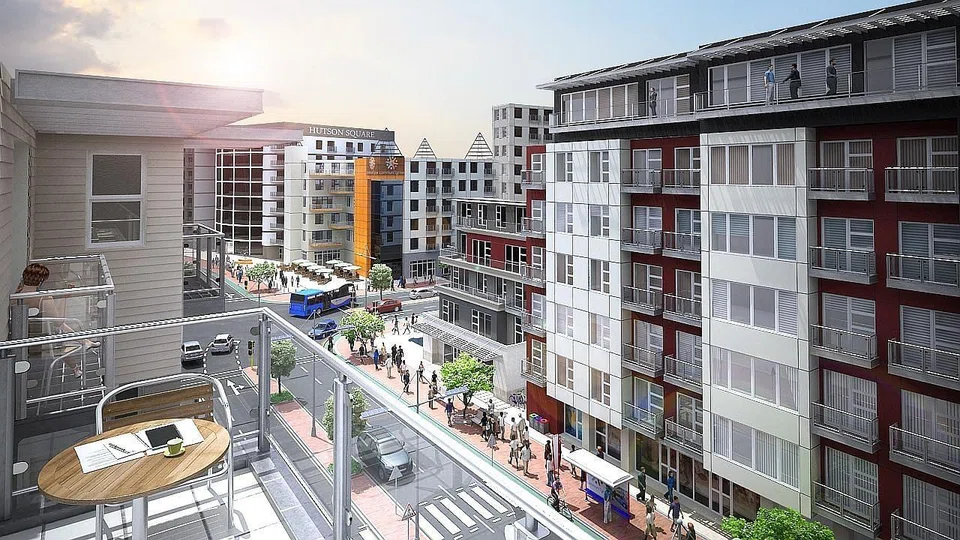
[CAPE TOWN, South Africa] On a Cape Town corner, two blocks from the crashing waves of the Atlantic Ocean, near high-end grocery stores, smash burger joints and matcha cafes, sits the Sage, a modern mid-rise condo building that many locals would love to call home.
Yet much of the building is designed to attract tourists, not local residents. More than one-third of its residences are reserved for short-term rentals on Airbnb.
Two-bedroom apartments in the building cost as much as about US$350 a night, nearly 40 per cent of what a median-income family in Cape Town earns in a month.
Properties like the Sage are at the heart of a raging debate in this South African metropolis over affordable housing, tourism and the persistence of apartheid segregation.
From young professionals to the working poor, many Cape Town residents complain that out-of-control housing prices have forced them to live far from the jobs, affluent schools and healthy supermarkets available in the city centre They blame deep-pocketed tourists for occupying housing in prime locations and developers for pricing them out.
Some 70 per cent of the downtown residential housing stock is dedicated to hotel rooms or short-term rentals, according to a report the city released last year.
“The city’s actually being upgraded for tourists,” said Lizanne Domingo, a telemarketer. She takes a daily two-hour commute to work each way because she can’t afford to live close to the city, she said. “It’s not for our own people because the cost of living is ridiculously expensive.”
The challenges in Cape Town may sound similar to those of over-tourism in European cities like Barcelona and Venice, or gentrification in New York and San Francisco. But Cape Town is notable for its multimillion-dollar coastal homes a short distance from sprawling informal settlements, where families have lived for generations in small shacks built from sheet metal and wood.
City officials argue that curbing tourism or banning Airbnb won’t solve the problem. In order to grow, the city needs the 210,000 jobs and annual US$1.7 billion in revenue that tourism generates, they say.
“We have to figure out ways to manage that pressure,” said Geordin Hill-Lewis, the mayor of Cape Town. “But what we can’t do is turn our backs on one of the only parts of the entire South African economy that is growing fast enough to actually get people out of poverty and into employment.”
South Africans migrating from other parts of the country are the biggest source of pressure on the city’s housing market, he said. They come to Cape Town hoping to take advantage of its services and economic opportunities.
But many Capetonians say the housing crisis is entrenching dynamics created during apartheid, when South Africa’s white-minority government confined people of colour to far-flung, dilapidated communities.
Domingo, 27, was raised near the city centre in one of Cape Town’s many informal settlements, areas that often have no electricity and where residents sometimes are forced to use buckets for toilets. Her family and most others in the settlement were coloured, a multiracial classification created by the apartheid government.
She has bounced around from one hardscrabble dwelling to the next. After getting married and having three children, she at one point slept with her family of five in a single room that they rented in a three-bedroom house for US$200 a month, just so they could live near the city.
They have since settled in a squat two-bedroom home more than 35 miles from the city centre. Domingo thinks about how her 1-year-old son has never even seen the beach.
“There’s only one supermarket in our area,” she said. “There’s no police station. There’s no fire brigade. There’s no hospital. Where my kids are concerned, I’m just scared that they think that this is all that there is to life.”
About 20 per cent of Cape Town’s population lives in informal settlements, said Francois Viruly, a property economist in Cape Town. The unemployment rate is also about 20 per cent. Nine of 10 families seeking housing can’t afford to live downtown.
Tucked between a mountain and a rocky coastline, Cape Town boasts much cheaper real estate than comparable cities abroad. A one-bedroom rental in San Francisco typically goes for about US$3,000 a month; along Cape Town’s scenic coastline it’s around US$1,300.
But housing prices in the city have surged 38 per cent over the past six years.
Hill-Lewis, the mayor, has implemented changes that he said could increase housing supply, such as accelerating the release of city-owned land and eliminating red tape for developers.
More government-subsidised housing has been built in Cape Town than in any other metropolitan area in South Africa since 1994, when apartheid ended. But none of those units have been built downtown.
Officials for the Western Cape province, which includes Cape Town, have unveiled three projects that are expected to deliver more than 1,900 units of government-subsidised housing downtown in the coming years. But residents say they aren’t holding their breath.
Lucinda Jafthas and her family lived in an informal settlement near downtown for years. After a fire burned down the settlement, the government placed residents in nearby temporary homes in 2018. Jafthas’ family was told they would eventually be placed in subsidised housing, she said. They’re still waiting.
“Were you guys just dumping the people here so that you can get the piece of land and sell it or do whatever?” said Jafthas, a retail worker. “Are you ever planning to build houses for these people or must they die out here?”
For now, residents are doing their best to find what’s available and within their means.
Through a friend, Zamo Tana learned of a new development about a 15-minute drive from downtown Cape Town. There was a studio rental available for US$400 a month – a steal.
The new building, with 241 affordable rental units, offered more space and amenities, and a shorter commute to work. Tana, 26, said he immediately contacted the building and secured the unit.
When his girlfriend, Mamello Moeketsi, stepped into the apartment for the first time on a recent evening, she could not contain her joy. Moeketsi, 23, stood in front of the bathroom mirror with her hands clasped. The couple’s old place did not have a mirror in the bathroom, she said. She looked out the window and relished the thought of watching sunrises and sunsets from their unit.
“We hit the jackpot,” she said. NYTIMES
Decoding Asia newsletter: your guide to navigating Asia in a new global order. Sign up here to get Decoding Asia newsletter. Delivered to your inbox. Free.
Share with us your feedback on BT's products and services