

CapitaLand eyes Gulf region’s ‘deep, liquid pools of capital’, investments in logistics, hospitality
Real asset manager intends to grow its presence and engage investors in the region, as the oil-producing nations reinvent themselves

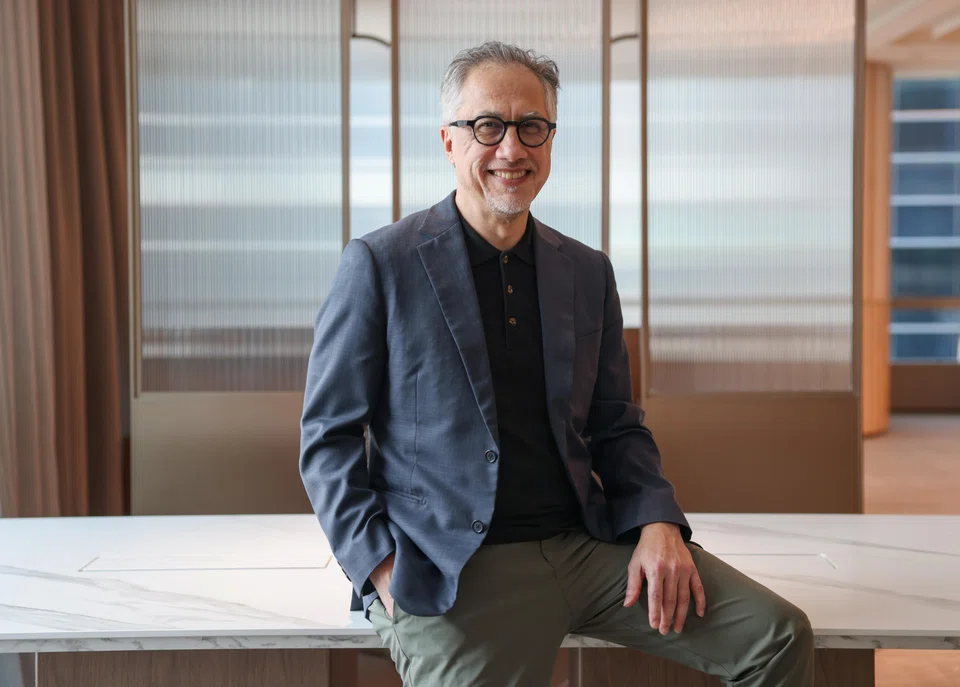
[SINGAPORE] CapitaLand Investment (CLI) has set its sights on lucrative Gulf markets, eyeing fast-growing logistics and hospitality sectors as the region’s oil-producing nations move to remake themselves.
CLI opened an office in the Dubai International Financial Centre last July, as the real asset manager seeks to grow its presence and engage institutional investors and family offices in the region.
Traditionally viewed as deep sources of capital, countries in the Gulf Cooperation Council (GCC) – Bahrain, Kuwait, Oman, Qatar, Saudi Arabia and the United Arab Emirates – are positioning themselves as investment destinations as well, CLI’s group chief operating officer Andrew Lim told The Business Times in an interview.
The region’s “very deep and liquid pools of capital” range from sovereign wealth funds to large, highly sophisticated family offices as well as newer and smaller ones.
“Oil-producing countries in the GCC are aware that these resources are finite, and they need to leverage the wealth which they have built up to reimagine, reinvent and remake themselves.”
Andrew Lim, CapitaLand Investment group chief operating officer
Increasingly, the GCC is positioning itself as an investment destination for infrastructure, logistics, data centres and tourism, Lim noted. “They want to be seen as a centre for capital, tourism (and) human resources to congregate.”
This fundamental change has been taking place over the last three to five years, and CLI – like many of its peers – is “heeding that call”, he said.
“We see opportunities to put together interesting products that invest into the GCC, alongside capital partners from the GCC and from outside the GCC as well.”
The recent “very large, very ambitious” economic transformation initiatives that Gulf countries have embarked on include Dubai’s free-trade zones and Saudi Arabia’s Vision 2030.
Lim said: “Oil-producing countries in the GCC are aware that these resources are finite, and they need to leverage the wealth which they have built up to reimagine, reinvent and remake themselves as destinations for infrastructure, tourism, supply chains, digitalisation. (They) are looking for partners to help them do that.”
Demand for logistics
He also noted that established supply chains in China and India have been compelled to reorder themselves amid geopolitical uncertainty.
“As the world’s supply chain reorders, a place such as the GCC, which is geographically halfway between Europe and Asia, starts to emerge as a very logical destination,” he said.
Last September, CLI launched the SC GCC Real Estate Industrial Development Fund, with SC Capital Partners as the co-sponsor. THi Holding Management Corporation is the development manager, asset manager and operator for the fund, which is said to have a fundraising target of US$500 million.
The fund’s first project involves the development of 300,000 square metres of land in the up-and-coming emirate of Ras Al Khaimah (RAK) into an industrial park, which is expected to attract more than 50 tenants and create 1,800 jobs.
“SC Capital, who identified this piece of land, (has) a great relationship with RAK, and THi (has its) own set of customers who have already indicated: ‘If you build it, we will come,’” said Lim.
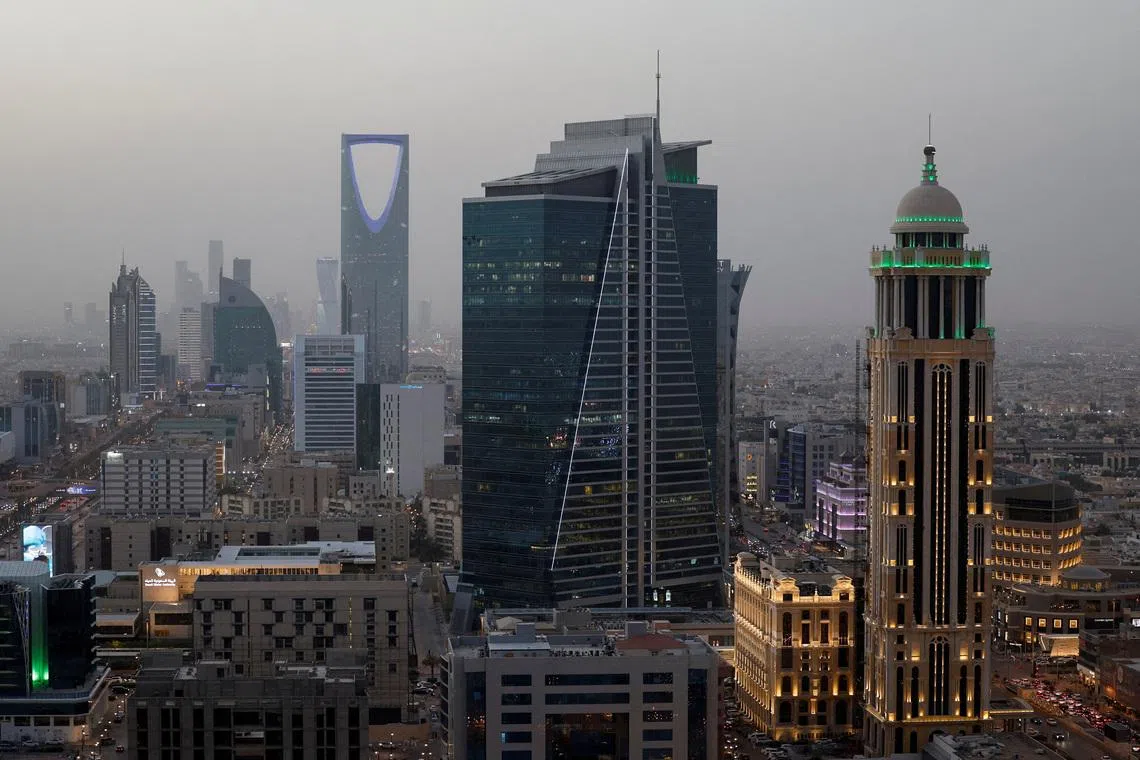
He noted that across most of the main GCC markets, logistics sector occupancies are near 100 per cent.
“There is intense competition for land (with) which to develop logistics and industrial facilities – so much so that the authorities are having a hard time keeping up with the demand.”
However, even though the logistics sector is highly attractive, CLI is “careful about ensuring that our investment criteria are met”, he said.
“We can’t be overly ambitious and end up overpaying for land (or) accepting terms which are disadvantageous to our capital partners.
“When you have a very strong market, just like anywhere else in the world, as an investment manager and a fiduciary to (our) third-party capital partners, (we) have to be very disciplined in how we manage the money that’s entrusted to us.”
Opportunities in lodging
CLI has also identified potential in the GCC’s lodging sector.
“The tourism industry in Saudi Arabia is just taking off now. It is underserved as a hospitality market. A lot of the tourism-related real estate has yet to be built,” Lim said.
For instance, while Saudi Arabia is known for its vast deserts, few are aware that there is a mountainous region in Aseer with a temperate climate, he added. “You go up into the mountains, it’s cool, the air is very clean. There (are) a lot of wellness opportunities there.”
CLI’s lodging arm, The Ascott Limited, holds leading Indonesian hotel operator Tauzia – it acquired a 70 per cent stake in 2018 and now fully owns it.
“One thing about Middle Eastern capital is that they are very agnostic to political winds. They are sophisticated investors. They go where they think the opportunity is.”
Andrew Lim, CapitaLand Investment group chief operating officer
“Leveraging our strong brand recognition in Indonesia, we could take these brands into Saudi Arabia to offer lodging for Muslims who are making the Haj, providing comfort, safety and security during the pilgrimage,” Lim said.
He pointed out that CLI has had a presence in the GCC for about two decades through Ascott, which manages more than 2,400 units across 14 operating and pipeline properties in five countries across the region.
“We see the GCC very strategically as a destination for tourism and hospitality, and we want to do much more.”
Connecting capital
CLI is also looking to strengthen relationships with sovereign wealth funds, institutional investors and family offices, engage new investors and originate high-quality opportunities for them across the GCC and globally, he said.
“It’s very important for us to be able to cultivate deep, lasting, mutually collaborative and trusting relationships with our capital partners.”
Connections with Middle East investors will allow CLI to showcase its Asia-Pacific strategies, which fall under three major themes: demographics, digitalisation and disruption.

“One thing about Middle Eastern capital is that they are very agnostic to political winds. They are sophisticated investors. They go where they think the opportunity is.”
He also said that China is arguably a “great place to invest in right now”, if investors have long-term horizons as asset prices have come down.
“You can buy good-quality (assets) for a much lower entry point than any time in the last five years. So if I take away all the political uncertainty (and) geopolitics, and look at it strictly from a real estate basis, the market that is most attractive right now is probably China.”
Investors from the GCC are also “hungry for anything that’s in Singapore”. He said: “Singapore is a very interesting destination for global capital because I think we consistently demonstrate (the) key attributes for capital partners – stable real estate environment, rule of law, strong currency.
“All these things matter to global capital, and it matters even more in a situation where the global situation is unstable (and) uncertain.”
The challenge with Singapore is that it is not a “deep, liquid market”. “There’s only so much square footage and almost of it is securitised,” he said.
“There’s very little new stuff you can buy, so you have to go in and look for assets that... have been transacted already, but for one reason or another are coming to the market again.
“That’s (why) I think the demand for commercial, institutional-grade real estate is not going to go away anytime soon.”
TRENDING NOW

Once staunchly pro-China, Malaysian Chinese businesses are now distancing themselves from Beijing

Looking beyond looming CEO succession, should UOB potentially pursue a transformative merger?

Could stablecoins be the future of money?

Grab CEO’s wife Chloe Tong on life with Anthony Tan and finding her purpose

