

CapitaLand remains bullish on flexible workspaces
It's preparing to open its second Bridge+ flexible workspace here; official says work-from-home experience will prompt firms to review their utilisation strategy

Nisha Ramchandani
Singapore
CAPITALAND remains sanguine on the future of flexible workspaces in a post-pandemic world as it prepares to open the doors to its second Bridge+ flexible workspace in Singapore.
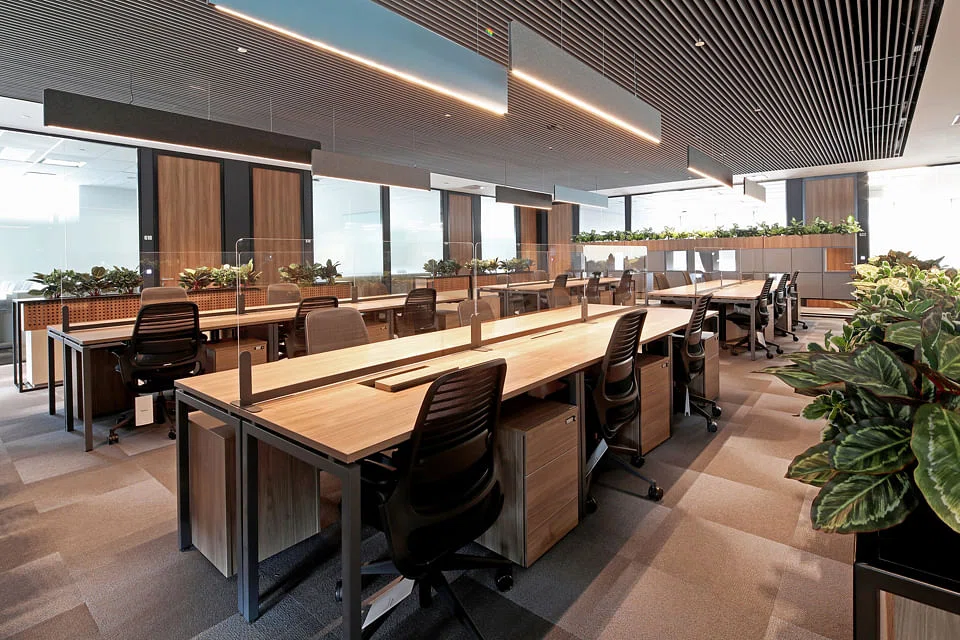
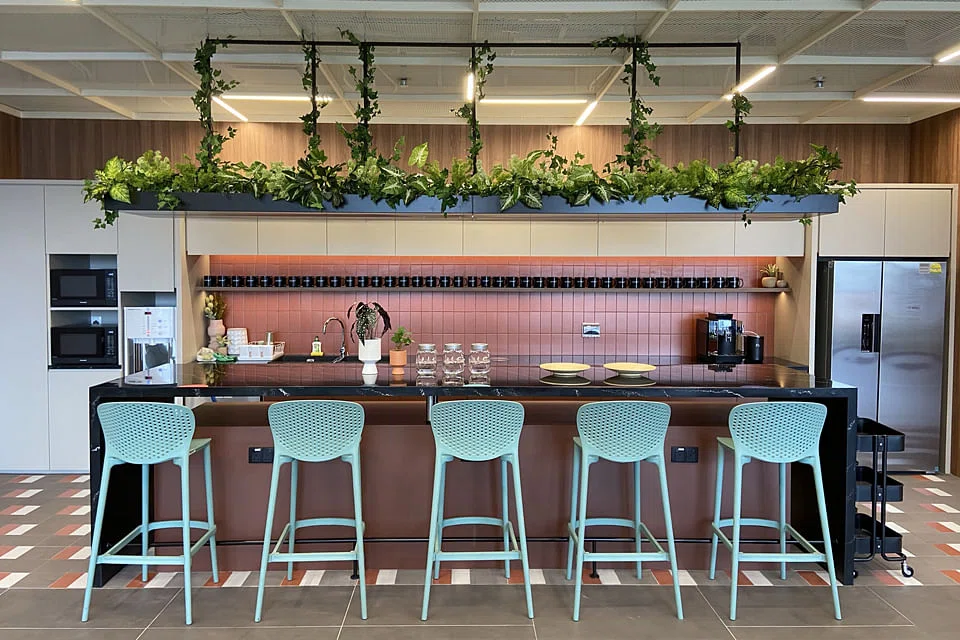
Located at 79 Robinson Road (the former CPF Building), the 56,000 square foot flexible workspace offers both workspace options and meeting rooms/event spaces across three levels and will launch officially on Jan 4.
Jointly owned by CapitaLand, trading house Mitsui & Co and developer Tokyo Tatemono, the 29-storey Grade A office building - which received its temporary occupation permit (TOP) in late April - has leased over 70 per cent of its 518,000 sq ft of net lettable area to MNCs such as Allianz and EFG Bank. Tenants are in the process of moving in this month and next.
CapitaLand is currently in advanced talks with several tenants that will increase occupancy at 79 Robinson Road substantially, CapitaLand's managing director (workspace and residential), Chew Peet Mun, told The Business Times in a recent interview.
At its latest Bridge+ space, the developer is seeking to build a "FinTech hub", pulling together the likes of tech firms, venture capital firms, financial institutions and international organisations.
Members which have confirmed space at Bridge+ 79 Robinson Road include the Bank for International Settlements, Tribe and Alibaba Cloud.
The idea is to create an ecosystem that enables bigger firms to network and exchange ideas with smaller firms, with curated events such as seminars, hackathons, and exhibitions offering an avenue to interact. With the ongoing pandemic, however, physical events have been put on hold in favour of virtual ones.
CapitaLand is also in a position to connect companies with stakeholders such as government agencies, industry associations and universities to foster collaboration. "It goes beyond that singular area of space - there's an entire precinct and ecosystem we're activating," Mr Chew said.
The new Bridge+ flexible workspace is the second under the Bridge+ banner in Singapore, with the other being a 30,000 sq ft space at Ascent at Singapore Science Park. Members of Bridge+ Ascent include The FinLab by UOB, Shopee, Barramundi Asia and the Wildlife Conservation Society. The average tenancy for Bridge+ is typically a year, with an option to renew for another year.
Outside Singapore, Bridge+ has a presence in Shanghai, Hangzhou, Suzhou, Dalian, Chongqing and Bangalore.
Like most businesses this year, the co-working space has been impacted by the pandemic, Mr Chew acknowledged.
But he believes flexible workspaces will still remain relevant in the future, arguing that the work-from-home experience will prompt companies to review their utilisation strategy.
"Companies that previously didn't even believe in flexible working are now suddenly thrust into this environment where it can and does work," he noted.
The average physical occupancy in CapitaLand's office buildings in the CBD presently stands at 30-40 per cent, following government regulations which curb the number of people on the premises.
Physical occupancies at co-working spaces have been slightly below that 30-40 per cent range due to the pandemic, although this doesn't mean co-working operators who have taken space in CapitaLand's buildings aren't paying rent, Mr Chew added.
Meanwhile, he still sees a case for co-working and traditional office space to co-exist side by side, creating "a bit more tenant stickiness" for CapitaLand's buildings as existing tenants can adjust their space in line with their requirements.
He said: "Conventional office tenants will have any new, flexible requirements met, while small-and-medium enterprises in co-working spaces could choose to lease conventional workspaces as they grow."
Aside from providing some existing tenants with the flexibility to scale up space, flexible workspaces enable asset owners to house occupiers from smaller firms who may not typically otherwise look to a Grade A office building.
"When we have flexible work spaces, it introduces a new set of tenant base that a larger building doesn't naturally attract," Mr Chew said.
At the same time, the income generated from the introduction of a flexible workspace into the building is typically no worse off - or even slightly higher - than if leased it to a single tenant, he added.
This is due to fractionalisation of space, where smaller or multiple tenants could end up paying a higher price per square foot in rent compared to a single or larger tenant.
Looking ahead, CapitaLand identifies the hub-and-spoke model as a trend as office occupiers transition towards a diverse location strategy with a mix of home working, local office hubs and a headquarters in the city.
Core-and-flex is seen as another trend that may play a more important role, giving firms flexibility in areas such as space and cost management.
Thirdly, it sees asset owners becoming more creative as they reinvent the way space is used. For instance, traditional office floors may adopt a "micro-corporate campus model", including social spaces such as cafes and function rooms.
As companies review strategies such as core-and-flex, do landlords run the risk of their larger tenants shrinking their core space? While companies are evaluating their work strategies, Mr Chew doesn't expect that to happen on a large scale. "Not all will fit into that (model)," he emphasised.
Amid the weaker economic environment however, he reckons there could be a bit of a rationalisation of space from existing office tenants in an effort to contain costs as leases come up for renewal. Some tenants are maintaining their space but have opted for shorter term leases of one to two years, instead of the typical three to five years.
Aside from Bridge+, CapitaLand has invested in co-working operator The Work Project, in addition to housing other co-working operators such as WeWork and JustCo as tenants.
According to Cushman & Wakefield's associate director (research) Wong Xian Yang, around 360,000 sq ft of co-working spaces will come onstream in Singapore in 2021, up from 250,000 sq ft this year.
Mr Wong said: "Given the desire for flexibility and cost containment strategies by companies, we see continued take-up rates for co-working spaces. Co-working spaces allow companies to quickly and easily right-size their spatial requirements in response to prevailing business conditions." Mr Wong also expects that co-working operators will start to look at decentralised locations as companies contemplate a hub-and-spoke strategy and seek to offer working spaces closer to employees' homes.
Where expansion is concerned, Tricia Song, head of research for Colliers International, reckons that flexible workspace operators - who have been driving new office demand in recent years - are likely to take a more cautious stance.
"Flexible workspace operators are likely to... seek to improve occupancy - especially in newer locations - instead as more firms adopt a flex-and-core strategy," she said.
Previously committed leases for 2021 are expected to proceed, however, including The Great Room at Afro-Asia iMark and The Work Project at CapitaLand's upcoming development CapitaSpring.
TRENDING NOW

If Europe goes to war, the fallout will be felt in East Asia

Indonesia stocks suffer worst plunge in nearly 30 years as MSCI proposes standalone status

Director of PR firm sacked for secretly recording internal meeting loses wrongful dismissal claim
Firms linked to haze pledge cooperation in meeting with Shanmugam; government to table changes to haze law

