

Certifications for smart features could help buildings stand out from the crowd

Nisha Ramchandani
WHILE nascent in Singapore, digital and smart certifications of buildings could present a competitive advantage for commercial landlords by improving marketability, analysts said.
As awareness grows, tenants such as multi-national corporations (MNCs) as well as firms in the finance and tech sectors, in particular, could look to such certifications for validation as they secure office space.
Mark Lampard, Cushman & Wakefield’s head of regional tenant representation, noted that the digital certification of buildings is still in its early stages here but may gain traction with certain tenants, given the tech-fueled economy as well as increasing opportunities in the Internet-of-Things (IOT) space.
“Digital connectivity is especially important for some tenants in the tech and finance industries, where connectivity speed is crucial for their mission critical operations,” said Lampard. “A digital certification would also assure new-to-market tenants whom have an experience of volatile digital connectivity in their home countries.”
While location and quality ultimately come out tops when tenants are on the hunt for space, certification acts as a good differentiator that can enhance a building’s marketability, reckons CBRE’s co-head of office services and occupier, David McKellar.
He said: “We expect to see certifications and assessments that measure technology in buildings - such as electrical systems, lighting, air quality and sustainability - to be on the radar of more occupiers as they evaluate office options in Singapore. These measures can impact user experience and productivity.”
Simon Long, director (technology strategy and transformation) at CBRE, suggests that the biggest advantage for landlords from undergoing certification is identifying what is within the realm of possibility - or put more simply, what features are necessary to deliver a gold- or platinum-rated building. “With this information they can look to align and differentiate their buildings to tenants, and potentially achieve higher rents and occupancy.”
Smart buildings could also have a competitive advantage in that they could retain tenants longer, thus reducing letting voids for landlords, added McKellar.
Meanwhile, Ng Hsueh Ling, managing director for developer Lendlease, expects that as awareness of certification grows, MNCs will want validation that the work spaces they are leasing will be digital ready.
She said: “Securing these certifications reassures tenants that the workplace can support the increasingly digitalised way we work today and provide the flexibility to cater to changing workplace needs. It also means the workspace is resilient and future-proofed to support hybrid and remote working norms.” Lendlease said it is looking at how it can adopt such certification standards for both its existing and upcoming developments.
Established building certification schemes include WiredScore for digital connectivity, as well as the SmartScore and SPIRE certifications for smart buildings. Other notable schemes that benchmark green or health standards include the BCA Green Mark, Leadership in Energy and Environmental Design (LEED), BREEAM and WELL.
Here in Singapore, Keppel Bay Tower, Shaw Tower as well PAG’s StarHub Green building were among the first to recently sign up to undergo certification for the WiredScore and SmartScore certifications. WiredScore is a digital connectivity certification system while SmartScore is a smart building certification. US-based firm WiredScore, which offers the WiredScore and SmartScore certifications, launched its Asia headquarters in Singapore in March as part of regional expansion plans.
Thomasin Crowley, global director (Asia Pacific) for WiredScore, highlighted that certifications such as WiredScore can help landlords in areas such as leasing and branding, asset management as well as design by helping to future-proof the asset.
As companies strive to get workers to come back to the office, there is a need for landlords to create offices that people want to be in, whether it means ensuring superior connectivity or spaces that promote productivity and collaboration, she pointed out.
According to Raymond Chan, managing director for Shaw Group of Companies (HK), Shaw Tower - which is currently being redeveloped - is being designed with the future of work in mind. In line with Shaw’s commitment to achieve the certification, the building will incorporate technologies such as facial recognition, contactless entry, destination control lifts equipped with UV sterilisation as well as smart lighting.
Chan said: “We are committed to offer the highest quality indoor environment, with inspirational technology-enabled spaces for inhabitants to work and collaborate in.” Managed by Lendlease, 33-storey Shaw Tower on Beach Road offers over 435,000 square feet (sq ft) of Grade A office space.
A spokesperson for Keppel Reit highlighted that Keppel Bay Tower’s WiredScore Platinum certification is a nod to Keppel Reit’s drive “to create more experiential and sustainable workspaces that are resilient and future ready”. The spokesperson added that Keppel Reit is open to looking at relevant certifications for its other assets as the opportunities arise.
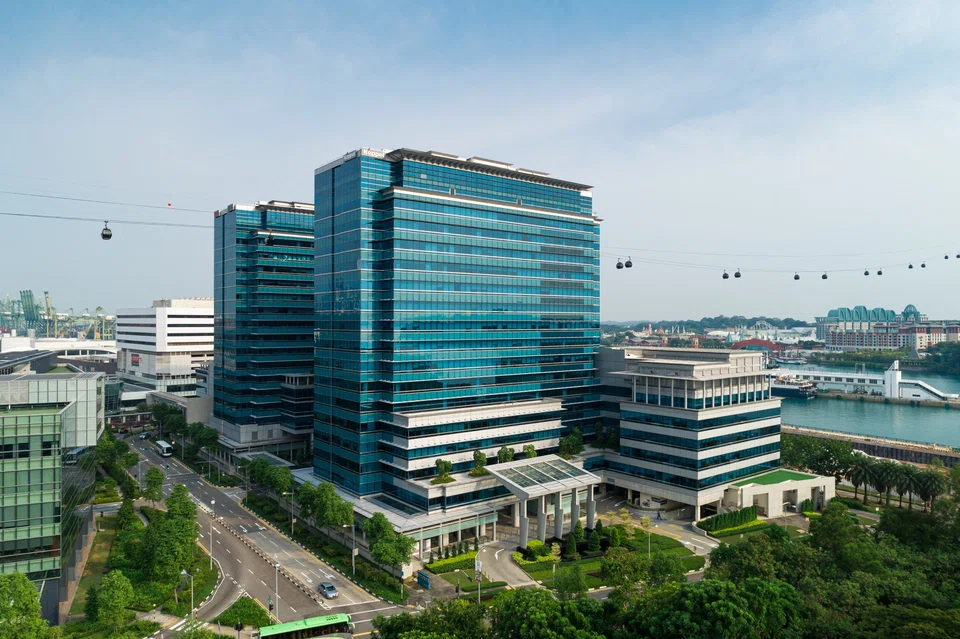
The 386,000 sq ft office building at Harbourfront, which is managed by Keppel Reit, features energy-efficient technologies and best-in-class connectivity. It is also the first Green Mark Platinum Zero Energy commercial building here.
However, being certified is a journey in itself, since most certifications are valid for a specific time frame, which industry players say could range from two to five years. During this period, information relating to the building performance may have to be shared, and documentation will need to be re-submitted after that time frame.
CBRE’s Long added: “Although this sounds like way for the frameworks to get extra revenue, it is valid as it keeps the building benchmarked against the current industry best practices and expected operational performance.”
The best way to use any framework is to start working with an accredited professional early and review the ROI potential for building systems and services in tandem with reviewing the aspirational outcome, he highlighted. “This will allow landlords to better evaluate their options, clearly align objectives and even introduce new opportunities for revenue,” Long concluded.
TRENDING NOW

First Resources blames El Nino, outside fires for Kalimantan hotspots amid haze scrutiny

High Court rules against Julius Baer’s Singapore trust arm in US$50 million family trust dispute

Singapore key exports jump by higher-than-expected 68.4% in September, led by non-electronics

MSCI proposes downgrading Indonesia to standalone market status

