

China home price drop slows for second month as pressure eases
Supportive measures for the property market have trickled out across cities in recent months
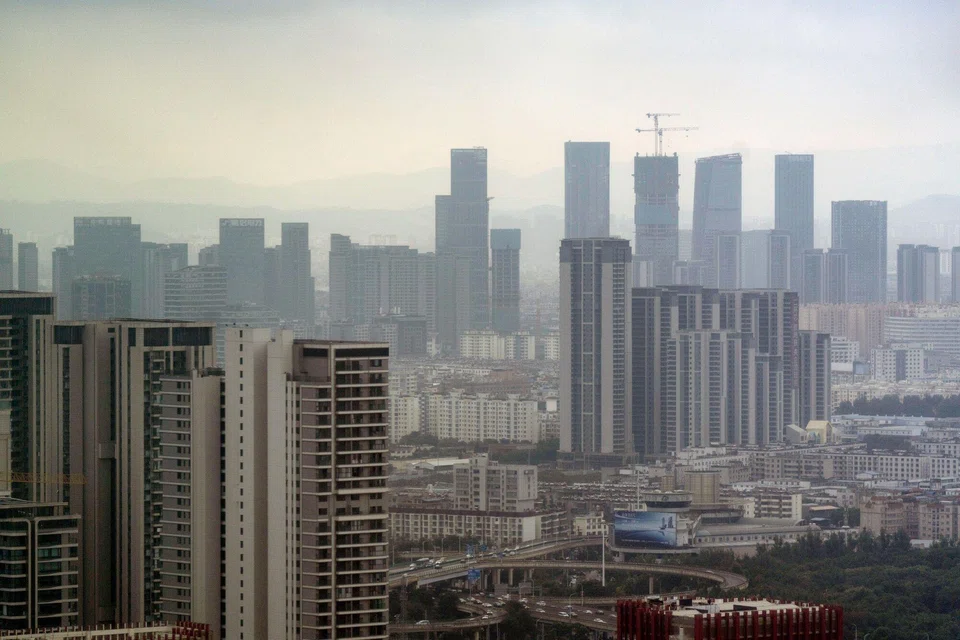
CHINA’S new home price declines abated for a second month in March, a sign that the property downturn may finally be reaching a bottom in some cities.
New-home prices in 70 cities, excluding state-subsidised housing, dropped 0.21 per cent from February, when they slid 0.28 per cent, figures from the National Bureau of Statistics showed on Thursday (Apr 16). Resale home values, which are subject to less government intervention, decreased 0.24 per cent, the least in a year.
Real estate values in China have been in a years-long slump, exacerbating deflationary risks and hurting household spending in the world’s second-largest economy. But the decline in prices is now starting to tip some homebuyers back to the market, aided by a steady stream of supportive measures by local governments.
“We expect Shanghai and Shenzhen to lead the national housing recovery, bottoming out in late 2026,” Goldman Sachs analysts, including Yi Wang, wrote in a note last week. They predict some other prominent cities to follow in six to 24 months.
Supportive measures for the property market have trickled out across cities in recent months. Shanghai eased homebuying rules in February, allowing more non-residents to purchase homes in urban zones. The central government has also lowered the value-added tax for selling residential properties owned for less than two years.
Green shoots have emerged in the used-home market, where sellers have tended to cut prices more than developers of new units. Pantheon Macroeconomics analysts view this as part of the prolonged bottoming-out process, with about a year or so to go for new residential inventory to reach a sustainable level.
SEE ALSO



Still, most global banks hold cautious outlooks on the broader home market. Signs of a recovery in Shanghai may not spill over to other cities, Lu Ting, chief China economist at Nomura Holdings, wrote in a note last week.
“We expect property distress to persist for another couple of years due to entrenched expectations, deeply intertwined non-performing debt, and a lack of decisive policy solutions,” Lu wrote. BLOOMBERG
Decoding Asia newsletter: your guide to navigating Asia in a new global order. Sign up here to get Decoding Asia newsletter. Delivered to your inbox. Free.
Share with us your feedback on BT's products and services
TRENDING NOW

LTA proposes combining car COE categories, adding rebate-surcharge system

StarHub to acquire MyRepublic’s mobile business amid ongoing telco consolidation

DBS, OCBC, UOB rout lops billions off STI as inflation, rate concerns spook investors

Grab CEO’s wife Chloe Tong on life with Anthony Tan and finding her purpose

