

China races to solve US$148 billion property threat as leases end
Office towers, malls and warehouses sit on land with dwindling lease terms – which owners could be forced to return upon expiry
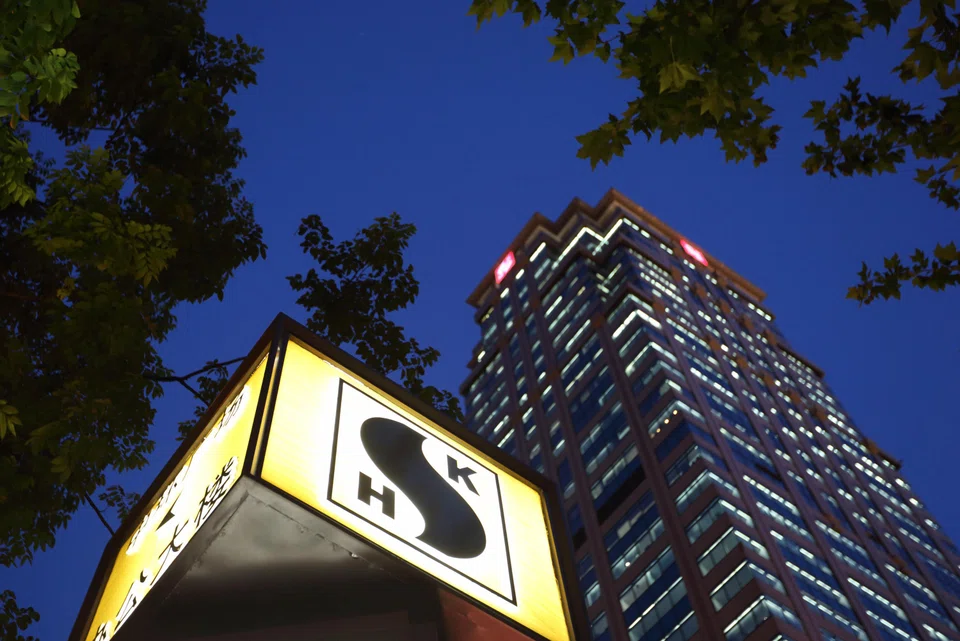
CHINA is tackling a problem that has plagued its real estate sector for years: a ticking time bomb of expiring leases that has scuttled deals and left investors facing the risk of heavy losses.
Scores of office towers, shopping malls and warehouses sit on land with dwindling lease terms, and owners could be forced to return the land to local governments when the leases expire.
There has been little clarity over when – and how – property owners could extend these leases.
That has been a big headache for the developers and global funds that once rushed to invest in the country’s real estate sector, prolonging a slump that has lasted more than five years.
More than 1 trillion yuan (US$148 billion) of non-residential property now has leases of 20 years or less, which means they have passed the halfway mark or gone beyond it, estimates Andrew Chan, the head of valuation and advisory services for Greater China at Cushman and Wakefield.
Developers including Parkview Group and New World Development have struggled to sell some assets because of dwindling lease terms, according to people familiar with the matter.
Chinese officials are finally waking up to the issue.
Shanghai local government officials in recent weeks circulated guidelines on lease renewals, outlining both the terms and the costs of lease extensions. That follows a similar move in Guangzhou earlier in 2026.
These moves may help bring clarity to a real estate market that is trying to find a bottom, giving investors confidence that their assets will not become worthless due to expiring leases.

Office values in some big cities fell more than 40 per cent from peak levels, and developers across the market have defaulted on around US$130 billion of debt.
“Policy uncertainty over leasehold renewal has tanked appraisal values of commercial properties, hurt fundraising and impeded deals,” said Song Hongwei, research director at Tospur Real Estate Consulting.
“Now, they’re all set to be improved.”
The Ministry of Natural Resources, which regulates land in the country, and the Shanghai municipal government did not immediately respond to faxes seeking comment.
Representatives for Parkview and New World also did not respond to requests for comment.
Tipping point
Almost all urban land in China is owned by the state.
The government wrote the current rules for leasing that land around the early 1990s, granting leases of 40 years for plots that house shopping malls, 50 years for industrial and office properties and 70 years for residential buildings.
By 2030, about 30 million square metres (sq m) of office and retail space in 18 major Chinese cities will have remaining land tenures of less than 20 years, property consultancy CBRE Group previously estimated.
The figure only includes properties with single owners, meaning it likely understates the true total.
These expiry dates might seem far enough in the future for the problem to be academic, but it has real economic consequences.
Local insurers and developers typically require land terms to be longer than two decades before they will enter into deals, according to consultancy Jones Lang LaSalle. The two groups have an outsized role in the market after the collapse of foreign inflows.
Many banks will not extend or refinance loans to properties that have less than a decade left on their leases, risking a systemic issue if the problem carries on, said Cushman & Wakefield’s Chan.
The potential cost of lease extensions also affects how investors weigh up projects. For one thing, it makes a clear difference to how much of a discount they should expect to offer investors when they eventually decide to sell.
Some potential investors have assumed the worst case scenario for properties, which decline in value as their lease terms get shorter.
That has led to some low-ball bids for buildings, putting more pressure on overall prices, said people familiar with the matter.
Hong Kong-based builders Parkview and New World have struggled for months to offload some properties in mainland China in part because potential buyers do not want to pay up for assets without the certainty of future land lease extensions, according to people familiar with the matter, who asked not to be identified because the information is not public.
Parkview has been trying to sell a Beijing shopping centre which is affected by short land tenure, including one parcel with a remaining lease of less than a decade, according to four people familiar with the matter.
That has led the Hong Kong real estate conglomerate to explore options including offering buyers a partial stake in the Parkview Green property, one of the people said.
A short tenure issue is also affecting one of New World’s projects in Shanghai, as the developer attempts to sell an office tower on top of its Shanghai K11 Art Mall, according to people familiar with the matter.
Some executives have discussed the problem with government officials and regulators.
Executives at Singapore’s CapitaLand Group, including the chief executive officer of its investment arm Lee Chee Koon, have raised concerns with senior Chinese officials, according to people familiar with the matter.
The listed unit, which is backed by Singaporean state-owned investor Temasek Holdings, manages or owns stakes in over 2 million sq m of real estate with remaining tenures of 20 years or less, including offices and shopping malls, according to Bloomberg calculations.
Potential solutions could include a lease extension on one of its oldest projects in the country, Raffles City Shanghai, whose lease ends in 2045, the people said. The mall, which sits in the financial hub, is majority-owned by Ping An’s life insurance arm.
Brookfield Asset Management has also been in touch with local government officials about land tenures for their properties and possible extensions, said people familiar with the talks.
Representatives for CapitaLand, Brookfield and Ping An declined to comment.
Hong Kong, which is guaranteed a separate legal system from mainland China until 2047, has taken a standardised approach to lease extension: Leases in the city can roll over for 50 years upon expiry, with property owners paying the government rent each year.
Better deal
Although officials in mainland China are finally addressing the concerns around expiring leases, some investors and property owners are still hoping for a better deal, said people familiar with the matter.
Shanghai and Guangzhou both proposed lease costs of at least 70 per cent of a relevant benchmark, potentially payable over more than a year.
The benchmark in both cases will reflect land prices before the added value of the malls or offices built on top, meaning extending the lease is likely to be just a fraction of total project costs.
A number of other areas, including the southern city of Xiamen and a district in eastern Hangzhou city, have also released similar rules on land for industrial use, albeit without providing as much detail.
Investors are still concerned about a lack of clear criteria for applying for a lease extension years in advance of its expiry, beyond some cities suggesting that future investment plans or capacity expansion will have to be shown, said Lillian Duan, a Shanghai-based managing partner who leads the real estate practice at Chinese law firm Kaiman Legal.
Local governments have wide discretion to decide what that means in practice, she said.
The best chance for property owners to get an even bigger discount may come if and when Beijing issues a nationwide policy.
China earlier this year said for the first time that it would “refine laws and regulations governing the renewal of land-use rights for industrial and commercial purposes and advance extension work in a steady and lawful manner”.
The central government can “test the waters” with local rules in places such as Shanghai and Guangzhou, said Duan, but will eventually have to figure things out on a national level.
“You have to have a central rule to apply across China,” she added. BLOOMBERG
Decoding Asia newsletter: your guide to navigating Asia in a new global order. Sign up here to get Decoding Asia newsletter. Delivered to your inbox. Free.
Share with us your feedback on BT's products and services
TRENDING NOW

Britain’s mansion tax shows the difficulty of targeting wealth

Once staunchly pro-China, Malaysian Chinese businesses are now distancing themselves from Beijing

The only common thing in S-E Asia is that we all eat rice: Cisco’s Asean president
Singapore data centre operator DayOne opts for US IPO at likely US$20 billion valuation

