

From China to Singapore: Perennial banks on eldercare for growth
Rates at its new assisted-living facility are high, but the group’s CEO hopes to refine the model and lower them over time

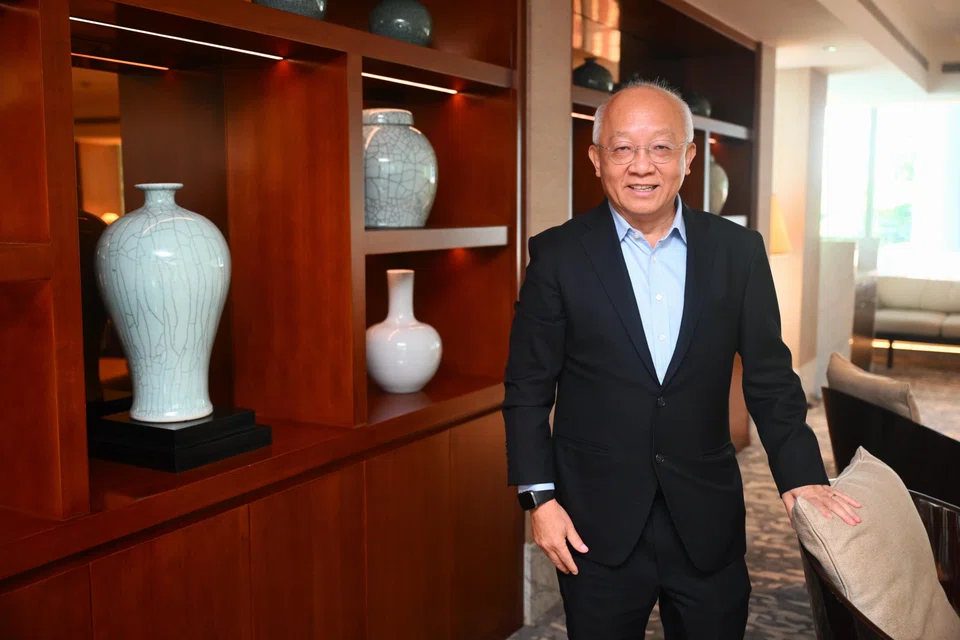
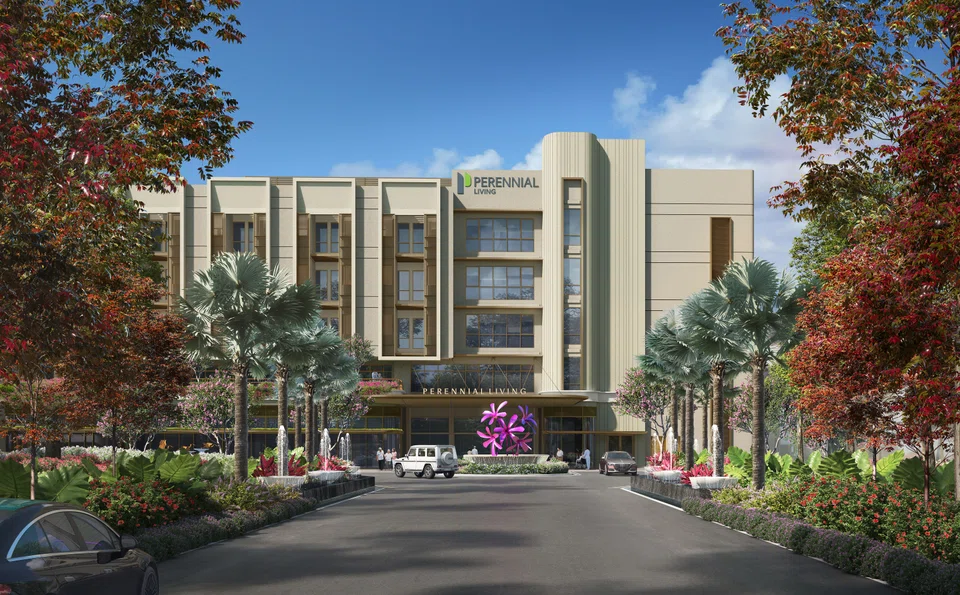
[SINGAPORE] Perennial Holdings on Thursday (Aug 28) made its move into Singapore’s eldercare sector with the opening of Perennial Living, a pilot project in assisted living which chief executive officer Pua Seck Guan hopes will pave the way for a new growth market.
The Parry Avenue project will comprise 200 assisted-living apartments, a nursing home with 100 beds in either private one-bed or two-bed suites, and a rehabilitation, medical and wellness centre.
Pua told The Business Times that the group hopes to achieve an occupancy rate of 70 to 80 per cent in the project’s first year.
“We hope we exceed the target, because I think it takes some level of education,” he explained. “Moving (into an assisted-living facility) is not like checking into a hotel for a night. You need to make a (big) commitment to stay a few months, or even years.”
He said that people in Singapore may need time to adjust to the idea, but Perennial’s experience developing such facilities in China has shown that assisted-living rooms tend to fill up “very quickly” due to a real need among seniors.
There is also pent-up demand in Singapore, given the lack of comparable products in the market, he said. “It’s not coming cheap because of the cost (of development),” Pua added. Rates for the assisted-living units start at S$8,900 a month.
“But compared to living in serviced apartments, this is an attractive proposition… You don’t need to pay for help to maintain (your home) or worry about household chores, but have people to service you instead.”
Building on past experiences
Perennial Living has drawn on the group’s decade-long experience developing eldercare facilities in China.
It entered the market in 2015, seeking a more sustainable business model – to make full use of strategic land, rather than to rely on one-time gains from residential sales, said Pua. In five to six years, the group became one of the largest operators in China, with about 25,000 beds in the country’s medical and eldercare facilities in 15 cities.
In December 2024, Perennial became the first foreign company to be granted a licence by the Chinese authorities to wholly own and run a tertiary hospital in China.
In March that year, it opened China’s first Alzheimer’s disease care village. The 43,000 sq m facility – about the size of six football fields – includes an eldercare complex, nursing and rehabilitation hospitals, and a research institute for geriatric health management.
Pua said that he had wanted to create similar models in Singapore, but existing stock was limited and often substandard – many were defunct schools or army camps that lacked common facilities.
Regulatory and zoning constraints in the land-scarce city-state further complicated matters: assisted-living and eldercare units are zoned as residential, but if meals are provided or medical services required, they are zoned as commercial or medical.
“There is no one zoning available (for such an integrated development),” noted Pua. Such regulatory hurdles, coupled with the limited supply of land, could explain why few have attempted similar projects here.
When the Parry Avenue tender was put up, Pua said that the group was determined to win it and showcase its experience. “(With) our expertise, we can create a model that can benefit the eldercare community in Singapore.”
But being the first mover came with some risks.
Not only did the project require a large capital outlay for land acquisition and construction, but it was also a challenge to recruit qualified staff amid the current manpower shortage, he pointed out. Perennial has invested S$260 million in developing the project, including land and construction costs.
Given these costs, Perennial Living would cater mainly to the upper-middle class, according to Pua.
He acknowledged that it was uncertain if Singaporeans were prepared to fork out that kind of money to stay in the facility. And in a cosmopolitan city like Singapore with high homeownership rates, seniors would need a compelling reason to move into such assisted-living facilities. “The reason is care,” said Pua. “Your facility must be better than their home.”
The group therefore aims for Perennial Living’s facility to offer a five-star hotel experience with senior-friendly safety features and medical support.
Much of the hardware is already in place, said Pua. The real test is in the “software” – pulling together the group’s resources in hospitality, healthcare and eldercare, and cultivating a culture of care – in which staff treat residents as they would their own parents.
“With only 200 assisted living rooms and 100 nursing rooms, we believe there should be sufficient market for a project like this,” the chief executive said.
And as Singapore’s first private assisted-living development, Pua believes that there are no close competitors in the market. “None in Singapore will have the full suite of services and the concept we want to do... They don’t have the similar size and attributes.
“Our competition will be ourselves to ensure that we can deliver the services and ‘software’ to our residents. If we can do so, I think we will have a successful project.”
A long-term bet
Asked about the profitability of Perennial Living, Pua laughed, saying: “I can only say that this is a long-term business.”
He added: “As I told people, Singapore is a very difficult place to make money. Our main business is outside (the country), but we have done so much, learned so much. What we hope to do is bring the skill set and create (a similar model here).”
The model can be refined over time, and Pua hopes that policymakers and the market will see value in it.
He added that while the government has done a good job with subsidies for the lower-income, the upper-middle segment has few private options. “That’s understandable, because it’s not the government’s policy to do those parts, so it’s left to us. But we hope that over time, the cost can be brought down, because the government will come up with a different model, instead of… having developers bear all the risks.”
Pua cited Perennial’s experience in China, where local governments support operators with upfront costs. Perennial is exploring Reit (real estate investment trust) listings in China as it expands fast in the country’s medical and eldercare sectors.
When the group first entered Shanghai a decade ago, Pua said that the local government leased the building out to them for 10 to 20 years, significantly reducing construction costs. The reduced capital outlay meant residents could enjoy lower rates.
This later evolved to the government renovating the buildings – of comparable standard to what Perennial’s – and then leasing these out to operators, or even taking on all the work entirely and telling operators the price to charge.
These lowered costs even further, and in some cases, the group was able to charge residents as low as 4,000 yuan (S$720) a month, added Pua. “The finishing (of the developments) is slightly different, but the level of service and medical integration is the same.”
Development costs in China are now about one-fifth of that in Singapore, he said. This translates to average rates of between 9,000 and 11,000 yuan in Perennial’s assisted-living projects in China.
In Singapore, that approach might involve tapping underused spaces in public housing estates to deliver healthcare and eldercare services – not just building new nursing and eldercare homes, he noted.
For now, Pua pointed out that the group is open to scaling up locally if opportunities arise, but tight regulations and potentially hefty land-betterment charges pose challenges.
“I guess the government wants to see how (Perennial Living) is received, and then fine-tune the model before releasing more projects.”
TRENDING NOW

Britain’s mansion tax shows the difficulty of targeting wealth

Once staunchly pro-China, Malaysian Chinese businesses are now distancing themselves from Beijing

The only common thing in S-E Asia is that we all eat rice: Cisco’s Asean president
Singapore data centre operator DayOne opts for US IPO at likely US$20 billion valuation

