

China developer Vanke plans second bondholders’ meeting to avoid onshore default
The bond tranche is due on Monday and has a five-business-day grace period
 Add BT as a preferred source
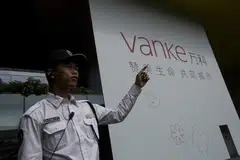
[BENGALURU] China Vanke plans to convene a second meeting with its bondholders to seek “solutions” for repaying an onshore bond, the developer said, as it seeks to avoid a default after holders of the note rejected a payment extension proposal.
The meeting for the two billion yuan (S$366 million) note will start on Thursday (Dec 18) and will end with voting on Dec 22 at 0200 GMT, a filing to the National Association of Financial Market Institutional Investors showed on Monday.
Vanke’s move comes after bondholders rejected the state-backed developer’s earlier plan to push back payment by a year, raising the risk of default for the developer and renewing concerns about China’s crisis-hit property sector.
The bond tranche is due on Monday and has a five-business-day grace period.
In a separate filing made with the Hong Kong stock exchange on Monday, Vanke apologised for the “impact caused to the relevant parties by the matters relating to the rollover” of the bond payment.
“The company will communicate and negotiate honestly with all parties, study and improve the initiatives, continue to seek solutions for this tranche of bonds and safeguard the long-term common interests of all parties,” it said.
Credit risk
Vanke’s yuan bond due January 2028 fell more than 20 per cent in early trade, triggering a trading suspension by the Shenzhen Stock Exchange, while another onshore bond due July 2029 dropped 8 per cent.
Shares of Vanke in Shenzhen and Hong Kong were down 3 and 4 per cent, respectively, as at 0157 GMT.
Vanke’s first attempt to seek bondholders’ approval to delay payment via a voting process that ended late on Friday required support from at least 90 per cent of the noteholders. The proposal to postpone principal and interest payments by a year without extra credit support was rejected with 76.7 per cent opposing it.
SEE ALSO
Two other proposals for the same bond, which included credit enhancement measures, had drawn some backing, with one winning 83.4 per cent approval, but neither met the 90 per cent threshold and were also rejected.
Nevertheless, that lent optimism to some analysts.
“We think Vanke’s bondholders may demand more credit enhancement or earlier repayment of some principal for the bonds due on Dec 15. The second option is close to being approved, so we are hopeful that a deal could be reached in the next five days,” said Jeff Zhang, equity analyst at Morningstar.
“That said, Vanke still relies heavily on external liquidity support even for the interest payment. Hence, the credit risk of Vanke remains elevated.”
Financial trouble
The setback for state-backed Vanke, one of China’s highest-profile developers with projects in major cities, comes after some of the country’s best-known developers have defaulted in recent years.
Among the companies hardest hit by China’s property crisis that started in 2021 was former giant China Evergrande, which was ordered to liquidate by a Hong Kong court and was delisted this year after tighter regulations sparked a liquidity crunch.
Since then, the sector, which once made up a quarter of China’s gross domestic product, has been hit by slowing demand, with homebuyer sentiment hurt by developers’ defaults, weighing on the growth of the world’s second-largest economy.
Vanke is about 30 per cent owned by state-owned Shenzhen Metro Group. That state backing had been considered by some analysts as sufficient to stop the company from sliding into severe financial trouble.
“If Vanke ultimately defaults, we think the ramifications on the China property sector can be significant. Investors may be more concerned about the balance sheet and government’s attitude towards bailout for even the ‘safe names’,” Morningstar’s Zhang said.
In its filing on Monday, Vanke said that interest during the grace period will be calculated on the outstanding principal and unpaid interest, using the note’s coupon rate plus an additional five basis points.
Separately, the developer is also seeking to extend by one-year the repayment of a yuan bond worth 3.7 billion yuan due on Dec 28, with a bondholder meeting also scheduled for Dec 22. REUTERS
Decoding Asia newsletter: your guide to navigating Asia in a new global order. Sign up here to get Decoding Asia newsletter. Delivered to your inbox. Free.
Share with us your feedback on BT's products and services
TRENDING NOW

ComfortDelGro’s Zig to buy S$10 million worth of BYD cars for private-hire fleet

From sales executive to DBS chairman: A look at banking veteran Peter Seah’s career
Japan Home licenses Singapore retail stores to Valu$ owner Radha Exports

Japan Home closing outlets; staff say Valu$ taking over operations

