China's developers priced for meltdown as contagion risk spreads
Major Chinese developers' September sales plunge, putting more pressure on the government to limit the fallout
 Add BT as a preferred source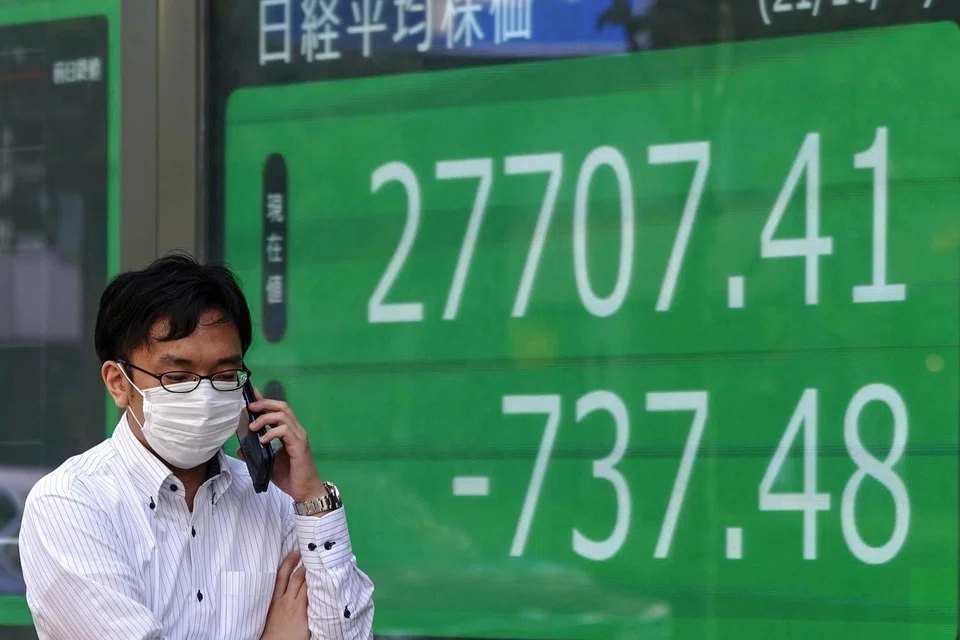
A MISSED bond payment by a Chinese developer re-ignited investor angst about the health of China's property sector. Chinese junk dollar bonds were poised for their biggest sell-off in at least eight years amid renewed concern that the authorities will do little to alleviate the credit crisis gripping the industry. Yields are near a decade high.
Developer shares tumbled. A gauge of Chinese stocks in Hong Kong headed for its lowest close since 2016. China Evergrande Group's silence on a reported stake sale in a unit left its shares suspended.
Mid-sized Fantasia Holdings Group, which develops high-end apartments and urban renewal projects, became the latest property company to fail to repay a maturing bond on Monday, while a series of rating downgrades from global risk assessors and a slump in US markets overnight added to investor jitters.
Credit traders blamed thin volumes for the scale of the meltdown. Mainland China is closed for a week-long holiday, shutting off liquidity channels like stock links into Hong Kong and the central bank's daily cash injections.
Fantasia's missed payment "provides a clear sign that despite piecemeal bailouts of select Evergrande assets, property market stresses remain elevated", said Craig Botham, chief China economist at Pantheon Macroeconomics. "The rot is unlikely to stop here."
The average price of China's high-yield dollar bonds fell about 5 cents on the dollar, with single B rated firms down as much as 10 cents, said credit traders.
Yuan-denominated bonds of property developers fell on Friday, with notes of Xiamen Yuzhou Grand Future Real Estate Development and Yango Group on pace for record lows.
Offshore, China's junk-rated bonds are poised for their worst week since March 2020 with yields hitting 16.9 on Thursday, according to a Bloomberg index.
Chinese property shares fell on Friday, while investor concerns about developers' liquidity mounted after Fantasia bonds were suspended from trading. In the mainland stock market, an index tracking the shares of developers sank as much as 1.4 per cent, while the Hang Seng Property Index in Hong Kong was down as much as 1.3 per cent.
The government is unlikely to ease its curbs on the property sector, despite the recent speculation, according to Nomura Holdings. "Beijing's hawkish stance on the property sector remains intact," Nomura analysts wrote in a note. "We expect Beijing to maintain its property-related tightening measures and a rapid weakening of the property sector to deal a severe blow to headline GDP growth and government revenue."
The government has maintained strict rules that force indebted developers to cut leverage, and measures aimed at preventing a bubble in home prices.
The result is that refinancing debt is becoming increasingly difficult for the sector, with junk-rated or unrated real estate firms selling the least amount of notes in the third quarter since late 2017.
Evergrande agreed to sell a majority stake in its property services unit to a Guangdong-based developer, Cailian reported on Monday, citing sources.
Last week, Evergrande agreed to sell a 20 per cent stake in Shengjing Bank to the local government in a deal that S&P Global Ratings said marked the first step towards solving Evergrande's liquidity crisis.
A Bloomberg index of Chinese real estate stocks is trading at less than 0.4 times book value. That shows stock traders are applying a significant discount to the value of assets held by Chinese developers - near the largest in data going back to 2005.
Fifteen of the country's most stressed property developers will have US$2.1 billion in bond payments due this month, according to calculations by Citigroup analysts, comprised mostly of coupons. The bill will more than double in January as principal payments come due, indicating market stress may reach another maximum around that time, the analysts wrote in a note.
Meanwhile, major Chinese developers saw their sales plunge last month as China Evergrande Group sank deeper into crisis, putting more pressure on the government to limit the fallout. Combined contracted sales by the country's top 100 real estate companies plummeted 36 per cent to 759.6 billion yuan in September from a year earlier, deepening a downward spiral emerging in July, China Real Estate Information Corp (CRIC) said in a report. More than 90 developers saw a decline in their sales from a year ago, with 60 per cent of them recording a drop of more than 30 per cent, said the report.
Under the current market conditions, real estate enterprises need to speed up development, ensure supply, strengthen marketing and accelerate sales to recoup cash in the fourth quarter, the official Shanghai Securities News cited Lin Bo, general manager of the property consulting firm, as saying in a report. "In the medium to long term, reducing leverage is still the focus of real estate enterprises," Lin added.
Risk aversion among credit investors and Chinese banks has hurt builders' financing.
The country's top 100 developers, such as Country Garden Holdings, China Vanke and Evergrande, raised a combined 85 billion yuan in September, down 37 per cent year on year, extending a downward trend starting in November last year, the CRIC report said.
That was also due to some developers' efforts to limit borrowing to meet regulatory requirements, it added.
September has traditionally been a strong season for residential property sales in China but the slowdown deepened last month. Sales volume in 28 Chinese cities monitored by CRIC declined 25 per cent in September year on year, said the report.
In Shanghai, volume dropped 45 per cent, while Beijing, Shenzhen and Guangzhou saw a decline of 30 per cent.
The top 100 developers also saw higher financing costs in September, which rose 0.61 percentage point from the previous month and 0.16 percentage point from a year earlier to 5.55 per cent, the report said.
Domestic home sales by value already slumped 20 per cent in August from a year earlier, official data showed, the biggest drop since the onset of the coronavirus. BLOOMBERG
Decoding Asia newsletter: your guide to navigating Asia in a new global order. Sign up here to get Decoding Asia newsletter. Delivered to your inbox. Free.
Share with us your feedback on BT's products and services