

China’s rural banks struggle to sell seized properties despite hefty discounts
Failure to find buyers adds pressure to weak home prices, sales
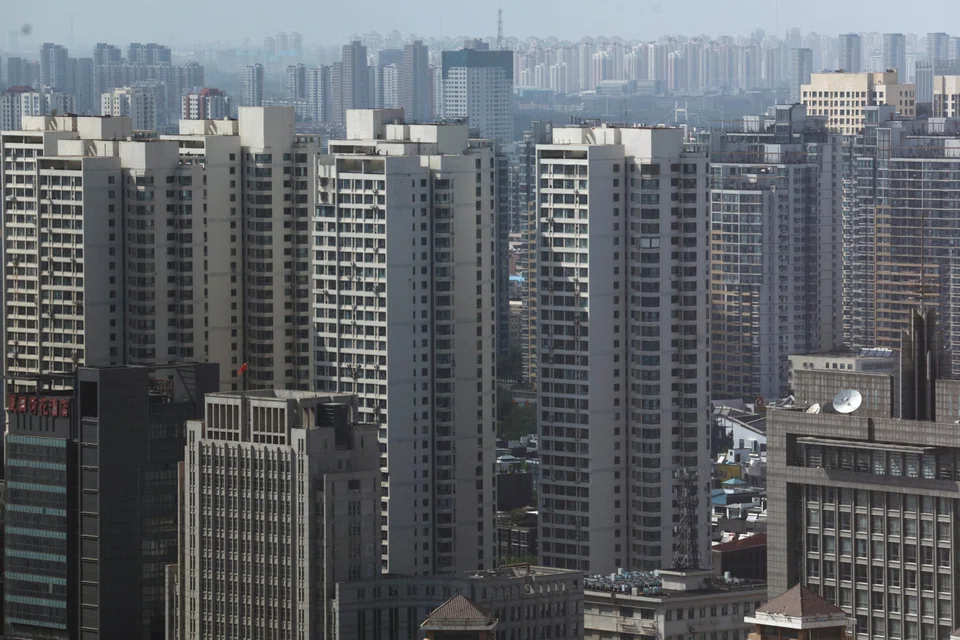
[BEIJING] Chinese rural banks are unable to find buyers for hundreds of foreclosed properties they are auctioning despite offering steep discounts, deepening a real estate crisis and adding to risks for the financial sector and broader economy.
Several less-developed regions that suffered steep home price declines saw a surge in bank-initiated property sales last year, a Reuters review of bank-supplied listings on JD.com’s asset trading platform, one of China’s largest online auction places, showed.
The properties were mainly offered for sale by local rural banks, the platform showed. They were priced at discounts of 20 to 30 per cent to the market, according to analysts, bankers and real estate agents.
Property values tumble
The scramble comes as properties, traditionally a high-quality collateral for bank loans in the world’s second-largest economy, have been sharply revalued downward due to steep price declines across China’s housing market.
The rush to sell foreclosed properties at low prices reflects how smaller rural banks, facing surging bad loans and limited capital buffers, are racing to cut their losses.
“The prices are shockingly low,” said Li Youcai, a real estate agent in Dalian, Liaoning province. “Currently, banks have a very large supply of foreclosed properties.”
For example, a 160-square-metre apartment put up for auction by Bank of Jilin’s Dalian branch for 1.35 million yuan (S$248,535) failed to find buyers even in a second auction round on Nov 6 compared to the two million yuan market price at the time, Li said.
Bank of Jilin and the National Financial Regulatory Administration did not reply to Reuters requests for comment.
Debilitating property downturn
China’s property market downturn, which started in 2021, is the longest and deepest in its history, and has been the biggest drag on the US$19 trillion economy, with few signs of a turnaround in the near future.


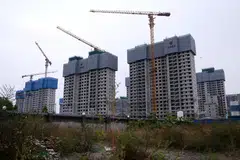

Average home prices in 2025 fell to levels last seen in 2018, while new home sales by floor space during the year have plunged around 50 per cent from their peak, returning to 2009 levels, according to official data.
The property slump is set to extend into this year with weak sales and falling prices, according to a research note by Moody’s Analytics.
Some of the country’s biggest property companies, such as Evergrande, have gone bust and dozens have defaulted on their debt obligations.
As the crisis ripples across the economy, the list of properties seized by rural banks and put up for auction has lengthened dramatically.
Banks in China’s north-western Gansu province, for example, offered 4,292 properties last year, up from 2,398 in 2024, according to Reuters’ calculations based on listings on the JD.com platform.
In south-western Sichuan province, banks listed 1,909 properties – including residential and commercial – in 2025 versus 370 in 2024, the data showed.
Lenders in north-eastern Jilin province put up 1,696 properties last year, compared to 371 in 2024, while northern Shanxi province listed 519 properties in 2025 versus 457 in 2024, the data showed.
The provincial governments of Gansu, Sichuan, Jilin and Shanxi did not respond to Reuters requests for comment.
Nationwide, banks have cumulatively put up an estimated 1.35 million properties acquired through defaults since mid-2024, according to a UBS report in November.
The wave of sales follows failed judicial auctions for properties foreclosed from homebuyers and developers in 2022 to 2023. Those lengthy court processes, typically lasting two to three years, left banks holding properties they could not sell, bankers and developers said.
“Unless selling prices are very attractive or the projects are in good locations, it’s almost impossible to find clients for these banks,” Centaline China chief executive officer Andy Lee said.
New wave of distressed assets
Additionally, banks face a fresh wave of distressed assets as small business loans issued during Covid mature. Many borrowers are struggling to refinance as economic recovery sputters, forcing banks to seize collateral, analysts said.
The surge in bad loans in the Chinese banking sector will push the volume of foreclosed properties to 2.43 million units in 2027 from 640,000 units in 2025, UBS estimated.
Sales of such properties may still be in the early stages relative to the 37 trillion yuan in outstanding mortgages and 25 trillion yuan in household business loans, said Ming Tan, a director at S&P Global Ratings.
But it would be unsustainable if this becomes widespread, he added.
John Lam, head of Asia property research at UBS, forecasts property prices will continue declining, dropping about 10 per cent in 2026 and 5 per cent in 2027.
“The entire industry still has oversupply,” he said.
Zhang Xiaoxi, an analyst at Gavekal Dragonomics, said the trend could herald a broader cycle of non-performing-asset disposal in the banking system, depending on how much disposal volume banks’ capital can bear.
“We’re definitely in the largest non-performing-asset disposal cycle historically,” she said. REUTERS
Decoding Asia newsletter: your guide to navigating Asia in a new global order. Sign up here to get Decoding Asia newsletter. Delivered to your inbox. Free.
Share with us your feedback on BT's products and services
TRENDING NOW

First Resources blames El Nino, outside fires for Kalimantan hotspots amid haze scrutiny

High Court rules against Julius Baer’s Singapore trust arm in US$50 million family trust dispute
Singapore key exports jump by higher-than-expected 68.4% in September, led by non-electronics

MSCI proposes downgrading Indonesia to standalone market status

