

Chinese developers' bet on HK looks misguided
Hong Kong
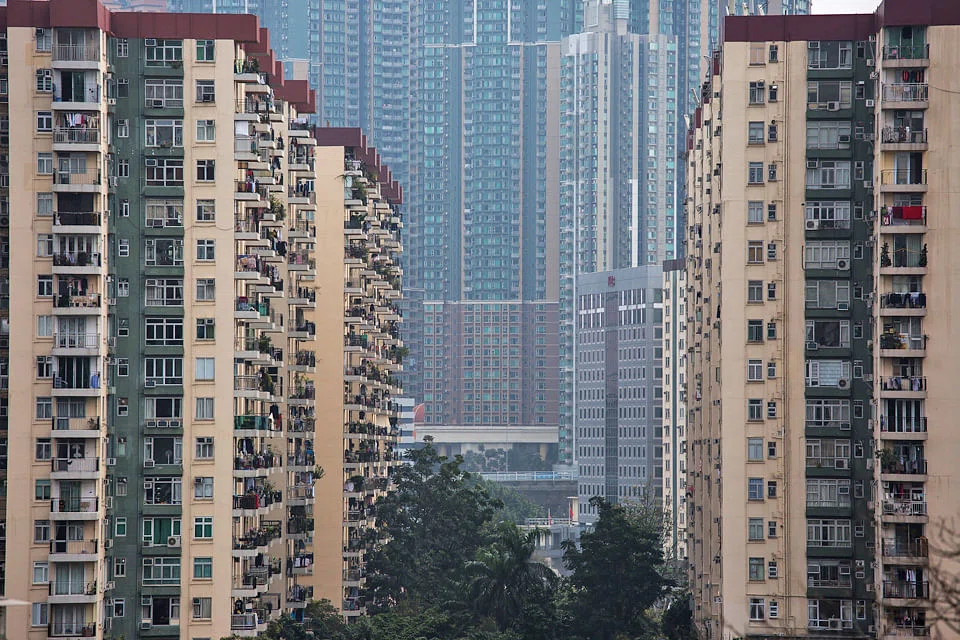
PRICES may be plunging but there are some who reckon real estate in Hong Kong is still a buy. Chinese developers, for instance.
On a pure macroeconomic level, it doesn't make a lot of sense, especially since the forecast in China is for rising real estate prices and further declines in the city.
But demand is being driven by more than the direction of home prices alone.
One attraction is access to an appreciating currency as the yuan weakens. As CLSA analyst Nicole Wong noted, even if developers "get zero gains in Hong Kong, the depreciating yuan means they're better off in the city".
She also points out that on the mainland, homebuilders have to pay a tax on any profits of 25 per cent, and that's on top of a land-appreciation levy of about 5 per cent. In Hong Kong, profits are taxed at 16.5 per cent.
Another draw is that Hong Kong's developers themselves aren't bidding, or at least not as much as they used to, leaving the auction floor wide open.
On Monday, a parcel of government land in Tai Po, an area in the New Territories of Hong Kong, sold for HK$2.13 billion (S$386 million), or HK$1,904 per square foot, to a unit of state-controlled China Overseas Land & Investment - nearly 70 per cent less per square foot than a similar transaction in September.
Earlier this month, Shenzhen-based homebuilder China Vanke snapped up a plot in Sham Shui Po for HK$4,249 psf of floor area, the least any government residential site in Kowloon has raised since 2004.
It may seem like companies from the mainland are getting a bargain, but with Hong Kong's economy slowing and a lot of new supply coming over the next few years, no one expects a rebound in prices anytime soon.
That's probably the view Hong Kong developers have taken. Certainly Standard & Poor's expects the market to get tougher in 2016, saying earlier this week that average home prices, which have already fallen 11 per cent since September, could be as much as 15 per cent lower than last year.
Hong Kong developers also have a backlog of unsold stock - discounts of almost 15 per cent on new apartments aren't uncommon - and from a financial standpoint they can afford to sit on the sidelines too.
Companies such as Sun Hung Kai and Cheung Kong Property have been in the real estate game a lot longer than than their mainland counterparts. They've built out huge portfolios of retail and office space from which they can get rental income when residential prices are volatile.
Mainland developers aren't in such a fortunate position. They have precious few other income streams to see them through when residential prices see-saw, plus more often than not they're leveraged to the hilt - their net debt-to-equity levels average 139 per cent, versus 23 per cent in Hong Kong, data compiled by Bloomberg show.
But using Hong Kong to diversify may not be the simple answer it seems. The city is notorious for development delays because of environmental planning issues, and currency fluctuations haven't always worked in developers' favour.
On the surface, buying the Hong Kong property dip might seem like a smart move. In reality, it could prove to be a misguided bet. BLOOMBERG
TRENDING NOW
One-third of Singapore-listed firms at risk in severe AI downturn: MAS
‘Not done’: Keppel CEO Loh Chin Hua transformed the group, but says there’s ‘still a lot to do’

He built the Vingroup empire. Now South-east Asia’s richest man is handing some key roles to his sons
‘We don’t want to stay as we are’: CEO Patrick Ng builds a more resilient Huationg

