The City of London’s skyline to be transformed in just six years
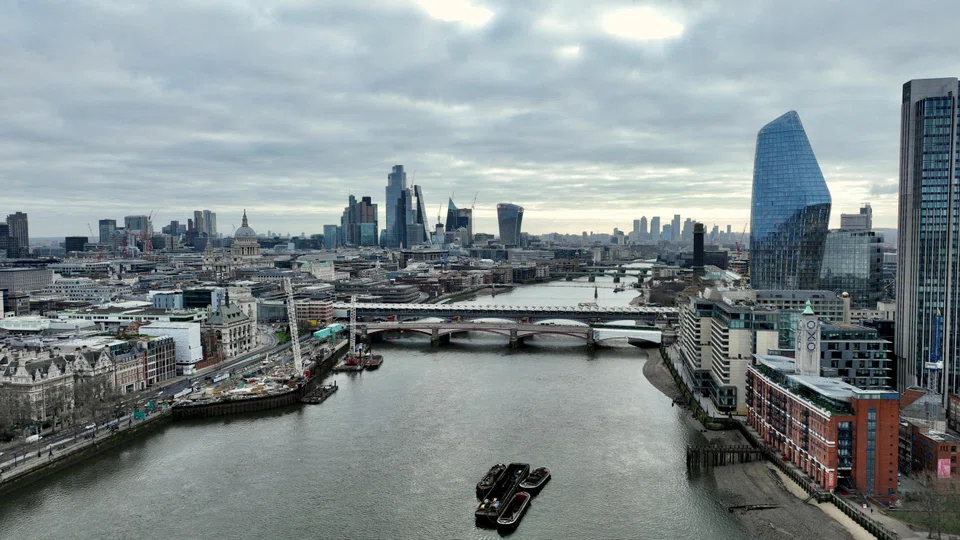
BY 2030, the City of London financial district will have sprouted an entirely new crop of skyscrapers. And the difference will be striking.
The Square Mile is set to get a total of 11 new towers, the tallest stretching higher than any now existing. Together, they will turn what is currently a somewhat scattered and erratic cluster into a tight, almost grid-like area where tall buildings will line up in a formation resembling the bristles on a tooth brush.
This new view comes from the City of London Corporation, which said 500,000 square metres of new office space is approved or under construction, with another 500,000 sq m of space being proposed. The committed projects are roughly equal in size to 70 football pitches.
So far, reaction to these impressions of the future skyline has been largely hostile. One commenter on X, formerly known as Twitter, said it would turn the City into “Londhattan”, while others questioned the wisdom of constructing glass-clad buildings during a climate crisis and starving streets below of light. What’s more, in a period when office space is less in demand, new skyscrapers could swamp housing-starved London with more commercial floorspace. Central London has an office vacancy rate of about 8.5 per cent, according to a report from broker CBRE Group.
While the density of skyscrapers will intensify, it’s difficult to argue that this represents a new direction for the City of London. A longstanding business hub substantially damaged by bombing during World War II, the area has long been paradoxically central London’s oldest and newest district at the same time. Here, modernist steel and glass loom over Baroque churches, Victorian markets and Edwardian offices in limestone, all built atop onetime Roman settlements.
High-rise buildings have been appearing here for decades, typically constructed on the sites not of historic structures but of 1960s and ’70s office complexes that had reached obsolescence. And while a few of these towers – notably the Gherkin – have become well-liked, several others have been notable aesthetic and practical debacles, in particular the Walkie-Talkie, a building so flawed it seemed to have been designed to antagonise everyone. Opponents of a tower-filled City may have their points, but they are arguably at least 20 years too late.
That the new towers merely reinforce the City’s direction may be spare comfort to skyscraper critics who dislike what is already there. While the cluster is at some distance from the nearby dome of St Paul’s Cathedral, a rare jewel in London’s skyline, there is reasonable concern (as there is in New York) that more towers will further block views. But it could be argued that the future skyline is at least a step towards order, moving on from the visual anarchy of recent years when towers cropped up along the Thames without any apparent visual coherence or care. Skyscrapers placed close together may risk starving streets below of light, but they also look a little better.
And as one commenter noted, at least the new towers will make it harder to see the Walkie-Talkie.
Decoding Asia newsletter: your guide to navigating Asia in a new global order. Sign up here to get Decoding Asia newsletter. Delivered to your inbox. Free.
Share with us your feedback on BT's products and services