

Car parks are valuable even if they risk becoming redundant

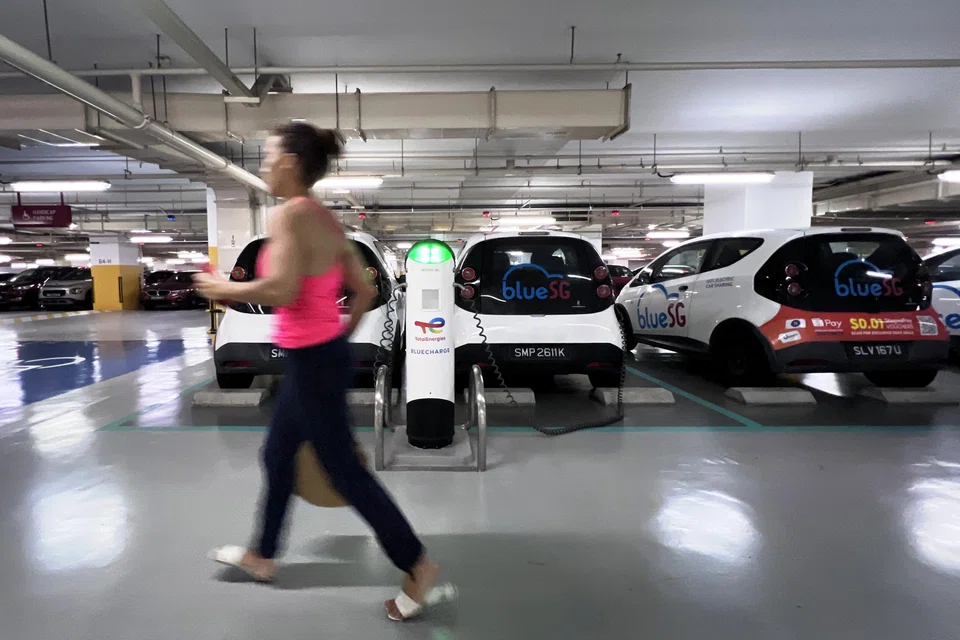
A TIME may come when car park spaces are redundant in many commercial buildings. But major car park owners need not panic, as car parks can potentially be repurposed.
In land-scarce cities such as Singapore and Hong Kong, car parks have long held some appeal as investments.
They are relatively low-maintenance and, unlike with commercial or industrial properties, arrears are low because users usually have to pay before they can exit.
Also, car parks may not require highly specialised asset management skill sets when compared with asset types such as malls, modern logistics facilities or data centres.
Buying car parks does not incur additional buyer’s stamp duty, which applies to buying homes. And, foreigners can buy car parks in Singapore.
Car parks are a key part of the business of Asia’s largest real estate investment trust (Reit), Hong Kong-listed Link Reit. Car parks and related business in Hong Kong contributed over 20 per cent of the trust’s total valuation of investment properties of around HK$223 billion (S$39 billion) as at Sep 30, 2022.
Car parks do not feature as large for leading Singapore Reits. Car park income was over 2 per cent of CapitaLand Integrated Commercial Trust’s gross revenue for H1 2022. The trust’s car park income in H1 rose 13.4 per cent year on year to S$15.9 million.
But several property groups here own many car park spaces. Based on its latest annual report, the portfolio of Singapore investment properties held by subsidiaries, associates and joint ventures of Singapore Land Group contained about 5,000 car park lots.
Car park deals
There have been several transactions of standalone car parks or predominantly car park properties in recent years.
In 2021, an entity of the Ng family’s Far East Organization bought the multi-storey car park and the F&B (food and beverage) unit on the rooftop of the car park at People’s Park Complex in Chinatown. The property, which had around 46 years of land lease outstanding then, was acquired for S$39.3 million. The car park property, with 648 parking spaces for cars and another 56 for motorcycles, was estimated to have transacted at a gross yield of over 4 per cent.
Other sales of car park properties in recent times include the purchase by a local family office of car park space at Parklane Shopping Mall in Selegie Road for S$16.2 million, or around S$70,000 per parking space.
Car park space at freehold Holland Road Shopping Centre was bought for S$17.3 million, or more than S$360,000 per parking space, by an ultra-high-net-worth family office from Hong Kong. A car park at 999-year leasehold Bukit Timah Shopping Centre was purchased for S$16.2 million, or close to S$43,000 per parking space, by an entity of listed property group LHN and its partners.
Condominium dwellers here typically do not need to buy strata-titled car park lots, unlike in many residential developments in Hong Kong and China. An owner of an upmarket apartment in Shanghai, China, may have to pay over 400,000 yuan (S$78,000) to buy a car park lot.
Less need for car parks
But challenges loom for car park owners. Alongside the expansion of the public transport network, the Ministry of Transport has been reducing the vehicle growth rate over the years to help further Singapore’s car-lite goals. From 2018, this rate was zero for all categories except Category C for goods vehicles and buses.
Singapore’s MRT network is rapidly growing. By 2030, eight in 10 households will live within a 10-minute walk of a train station. Getting around Singapore via rail will be much easier. The cycling path network is being expanded to around 1,300 kilometres islandwide by 2030. With this, all Housing and Development Board towns will have cycling path networks connecting people from their homes to MRT stations, bus interchanges and nearby shopping malls and schools.
Fewer people may drive to offices and malls, thus reducing usage of car park facilities in future. Moreover, with greater use of electric vehicles, car park owners may need to invest in installing electric vehicle charging stations to cater to the needs of electric vehicle drivers.
Should driverless vehicles be widely used, some car parks may become redundant. After one has finished using a shared driverless car, the car could drive itself straight to its next customer. Or, the car that has completed its journey could drive itself back to one’s home – with no need for parking facilities at any destination.
Repurposing car parks
Car parks in commercial buildings may, therefore, face an uncertain future and not be steady recurrent income generators over time. Yet, car park owners need not despair.
First, if older mixed-use buildings such as People’s Park Complex are successfully sold in the en bloc market, the owners of the car park components can participate in a potential windfall. In 2022, strata-owned buildings with large commercial components, such as Golden Mile Complex and Tanglin Shopping Centre, were successfully sold in the en bloc market. Perhaps, buying the car park of an old commercial building is a good punt on a potential successful en bloc sale.
Second, if car park usage reduces, car parks can be possibly reconfigured for other uses, subject to regulations. A car park that becomes an urban farm or an event space or a fitness centre or a flea market could be a good money spinner. As land is scarce, expect the authorities to allow car park spaces to be repurposed if their existing use as car parks is no longer needed.
With technological advances, usage of various physical spaces will change. Malls get disrupted by online shopping. Office buildings have to respond to the adoption of remote working. Today’s modern warehouses and data centres may not be fit for purpose in a decade’s time.
In the near term, owners of car parks in commercial buildings can enjoy the steady cash flow generated by their car parks. This is especially so if the properties are in popular locations where finding parking is a nightmare. Perhaps technology can be used more extensively to optimise revenue via dynamic pricing.
Still, car park owners should prepare to pivot their assets to other uses. A future Singapore with less space taken up by car parks can be more conducive for life, work and play.
TRENDING NOW
Ex-Nvidia CEO Jensen Huang carried a secret for more than a year. It led to his downfall

South-east Asia has lost Nvidia’s best salesman

Demand, tech capabilities position Apac and AI as Skyscanner’s next growth frontiers: CEO Bryan Batista
Jensen Huang discusses comeback as Nvidia CEO with allies: report

