

Commercial property market hits inflection point as debt cost outpaces rent
A spike in rates this year is complicating the math for commercial real estate financing deals
 Add BT as a preferred source
DeeperDive is a beta AI feature. Refer to full articles for the facts.
THE cost of debt on commercial property has risen so fast that it’s now more expensive to finance many real estate deals than owners currently earn from rents.
About US$5.5 billion, or 28 per cent, of new commercial mortgage-backed securities had negative leverage – where the cost of debt exceeded projected returns on investments – in the third quarter, according to a report by Moody’s Analytics. Only 8 per cent of similar loans had negative leverage in the second quarter and barely 2 per cent were negative in the third quarter of 2021.
Properties such as warehouses and apartments are more likely to face these issues, given prices had soared as investors bet they could generate positive returns by raising rents. Now, warehouse demand is cooling and apartment landlords are pressured as renters start to reach affordability limits.
“Ultimately, negative leverage will drive bid prices lower,” Kevin Fagan, head of commercial real estate economic analysis for Moody’s, said in an interview. “You’re either not going to buy that investment, or if it comes to refinancing, you might have to hand the keys back. You might not be incentivised to save the property.”
The CMBS deals capture a limited slice – but are a representative bellwether – of all commercial real estate financing, Fagan said. The Federal Reserve has aggressively raised interest rates to combat inflation, a move that has driven up the cost of debt in areas such as real estate. Borrowing costs in CMBS deals for warehouse and industrial properties have jumped to 5.29 per cent from a recent low of 3 per cent in the last quarter of 2021, Moody’s reported.
The last time a significant number of mortgages had negative leverage was before the start of the 2008 global financial crisis, which unleashed a flurry of defaults as property values plunged.
Navigate Asia in
a new global order
Get the insights delivered to your inbox.
“The market is entering a transition phase, and it’s likely we’ll continue to see many negative leverage deals get done in the near future as the equity markets gradually react to rate increases,” Fagan and his co-author, Xiaodi Li, said in the report.
Of 500 loans tracked by Moody’s, 84 per cent of those financing deals with negative leverage were backed by apartments, mostly with loan balances of US$15 million or less. More than 82 per cent were securitised into government-guaranteed deals backed by Freddie Mac. A Freddie Mac spokesman declined to comment.
Some larger loans are among those facing negative leverage, including a US$467 million mortgage on Hudson Commons, an office building on Manhattan’s west side, and a US$1.1 billion mortgage on a portfolio of industrial properties, according to Moody’s.
SEE ALSO

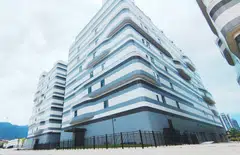



After spiking in early 2020 when the Covid-19 pandemic threw the economy into turmoil, CMBS delinquencies have dropped to 2.2 per cent, according to data provider Trepp. That may change as rates continue to rise and more borrowers need to refinance, Fagan said.
“I don’t think it’ll be cataclysmic because there’s not that much debt maturing,” Fagan said. “But the deeper investor returns are hit, the less likely they are to hold onto a property in a downside scenario, which could increase default rates.” BLOOMBERG
Decoding Asia newsletter: your guide to navigating Asia in a new global order. Sign up here to get Decoding Asia newsletter. Delivered to your inbox. Free.
Copyright SPH Media. All rights reserved.
TRENDING NOW

From 1MDB to ‘corporate mafia’: Is Malaysia facing a new governance test?

Higher costs, lower returns: Why are Singaporeans still betting on real estate?

South-east Asian markets account for 8.8% of global capital inflows from 2021 to 2024: report

Richard Eu on how core values, customers keep Singapore’s TCM chain Eu Yan Sang relevant

