

Securing anchor tenants can be a double-edged sword for commercial property landlords

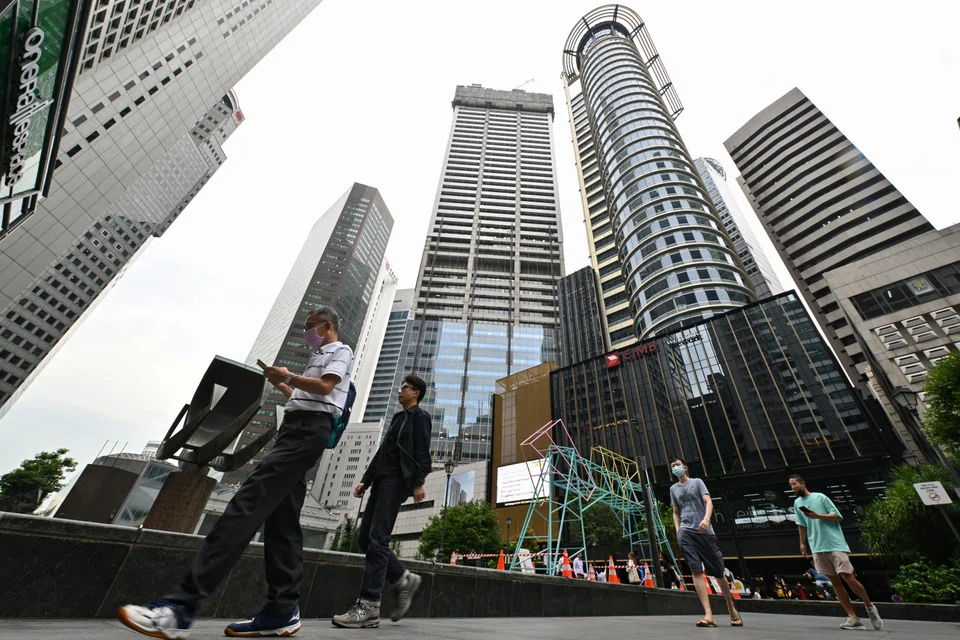
IOI Properties’ landmark new development, IOI Central Boulevard Towers, in Singapore’s Central Business District (CBD) is taking over six years to be completed. But the Malaysian group is buoyed by strength in Singapore’s Grade A office market and the securing of Amazon as an anchor tenant.
IOI’s Singapore unit snared the white site at Central Boulevard near Marina Bay, where it is building IOI Central Boulevard Towers, for S$2.57 billion or S$1,689 per square foot per plot ratio in November 2016. The new development, which could be completed in 2023, will comprise a 48-storey tower, a 16-storey tower and a seven-storey podium with about 1.26 million square feet (sq ft) of Grade A office space and 30,000 sq ft of retail space.
Taking several years to complete the development can be painful for the developer as there are substantial financing costs. As the project has no residential component, there is no cash inflow from pre-sales of uncompleted homes.
But rental rates for Grade A office buildings in the CBD have picked up, helped by flight to quality among businesses who are fighting for talent. During 2022, many workers returned to physical offices as Singapore opened up amid its move to live with Covid. New office leases are being signed by tenants from a wide range of sectors who use Singapore as a hub.
Office anchor tenants
Earlier this year, The Business Times reported that Amazon will take up 369,000 sq ft of office space spread across 11 floors or close to 30 per cent of the total office space at IOI Central Boulevard Towers.
Getting Amazon as a major anchor tenant would likely have brought relief to IOI’s board and management. Signing up a big office tenant ahead of project completion significantly de-risks a new office project. Fears of building a white elephant that is largely empty post-completion and running operating losses can be gradually put to rest.
A new office building under development will enjoy positive leasing momentum from securing an anchor tenant. Other potential tenants may expedite signing leases for fear that choice floors, which they are eyeing, get taken up. As more space gets committed, a developer can up asking rents or get tougher on lease terms.
Signing a prominent name as an anchor tenant helps in a new building’s branding. Smaller businesses will be drawn to take up space in a building that has been selected as the headquarters of a major multinational corporation.
Moreover, the positive impact on office occupancy through securing a big anchor tenant at IOI Central Boulevard Towers helps in the leasing of the retail space, which is to be used for purposes such as food and beverage. Retail operators would want to set up shop at IOI Central Boulevard Towers because they know there is a sizeable office crowd in the development to serve.
Nonetheless, there are downsides to signing big anchor tenants. They may sign a lease with highly favourable terms for the tenant.
Big space users would likely have shopped around and be wooed with attractive leasing terms by various landlords. Possibly, a major office tenant can sign a lease of five years or more at a rental rate which is 25 per cent below that charged to smaller tenants. A big tenant may also wangle from the landlord generous rent-free periods or help with fit-out costs.
In sum, an office landlord may be wise to balance pursuing big anchor tenants with filling up space at a slower pace by targeting multiple users that have smaller requirements. Possibly, filling up a building with many smaller tenants can lead to higher revenue. From a risk management perspective, diversifying revenue risk across multiple tenants and tenants from different sectors makes sense.
Moreover, landlords may choose to keep some vacant space within an office building. Such space can be offered to existing tenants at high rental rates to meet short-term expansion needs of businesses.
Retail anchor tenants
The signing of big anchor tenants on long leases with relatively low rental rates has traditionally been popular with mall owners. The benefits of leasing to a department store, supermarket or cinema, which takes up loads of space, include boosting the occupancy rate and occupying less accessible parts of a mall.
Crucially, a mall owner may rely on having a strong anchor tenant to help draw shopper traffic to said mall, and hence achieve higher retail spending across various tenants of the mall.
At Mapletree Pan Asia Commercial Trust’s VivoCity, Singapore’s largest retail and lifestyle destination, the hypermarket/department store category contributed 9.1 per cent of gross rental income as of end-March 2022. This category contributed 10.8 per cent of gross rental revenue for March 2012.
While anchor tenants can be a key contributor to revenue at malls, the value such tenants bring may be declining. Challenged by speciality retail and online shopping, physical department stores may fade away, while online grocery shopping may eat into the business of physical supermarket stores. And visits to cinemas may decline as more people use video streaming services.
Metro department store is a major space user at SPH Reit’s Paragon. If Metro gives up this space, SPH Reit could suffer near term. But the space can probably be reconfigured and leased to multiple smaller tenants. Net lettable area may be reduced, but rental rates could rise such that the space ultimately generates higher revenue.
Filling up space matters for landlords, as vacant spaces incur running costs. Still, whether for real estate investment trusts, which are under pressure to report steadily growing quarterly or half-yearly numbers, or developers of new commercial buildings, who have incurred huge capital expenditure, decisions on terms to offer to big space users require very careful evaluation.
A multi-year lease with sweet terms for an anchor tenant, who adds value to a building’s branding, can be a drag on an asset’s performance subsequently, especially if rental rates are rising.






