

Commercial, mixed-use en bloc sales may be unscathed by strata subdivision rule

THE new restriction on strata subdivision of some commercial properties in Singapore's Central Area may not move the needle for future collective sales in general, although it could hinder the plans of existing unit owners, property consultants told The Business Times (BT).
In a circular on Tuesday (Mar 15), the Urban Redevelopment Authority (URA) announced that commercial developments as the commercial component of mixed-use developments located in certain prominent areas and routes are no longer allowed to be strata subdivided into individual units.
The guidelines apply to locations such as Orchard Road, Tanglin Road, Scotts Road (Orchard Road corridor), Shenton Way, Robinson Road, Anson Road, Raffles Quay, Raffles Place Park, and along the Singapore River (CBD corridor).
JLL executive director, Singapore capital markets, Tan Hong Boon said that for most of these prime and prominent properties, the new rule is unlikely to affect their land values in a collective sale.
"Existing old strata-titled developments in these prime areas that are aiming for a collective sale are likely to target the large developers and institutional buyers with a long-term investment objective."
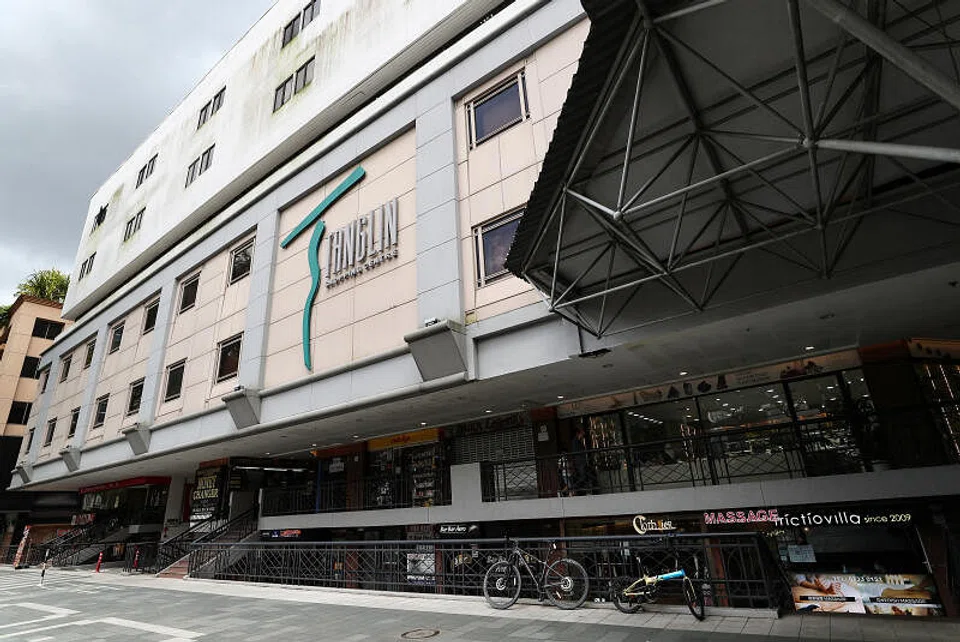
He added that a case in point would be Tanglin Shopping Centre in Orchard. It was sold en bloc in February to Pacific Eagle Real Estate, a Singapore-based real estate investor and developer privately held by the Tanoto family. The freehold complex has more than 360 strata retail and office units, and fetched S$868 million in the sale.
Drawing reference from market transaction data and trends, Karamjit Singh, chief executive of property investment sales specialist Delasa, highlighted that selected commercial and mixed-use en bloc sites may encounter challenges in agreeing on the valuations carried out for apportionment purposes.
"That said, this has been a common challenge faced (by collective-sale hopefuls) even before the URA's latest restriction on strata subdivision," he noted.
ERA Realty head of research and consultancy Nicholas Mak told BT that the new rule could lower the chances of a successful en bloc deal for buildings in the affected locations.
This is because some developers, after buying a building, prefer to redevelop into individual strata units for sale, "as this method can provide a relatively high rate of financial return within a given time, compared to holding the property for rental income". The new guidelines may therefore "drastically" reduce such developers' interest in the properties in the key areas of the Central Area, Mak added.
Existing unit owners of developments gunning for en bloc sales could also face an obstacle if they intend to look for replacement shops or offices in the vicinity, as the restriction is expected to limit future supply of individual strata commercial units.
Singh flagged that if a collective sale succeeds, the sellers "may find it difficult to source for suitable replacements in the Central Area because of the lack of options available to them".
Prices of existing strata units are likely to rise, too. Colliers expects an increase in demand from private wealth, family offices and individual investors for strata office units, as most office buildings are already in the hands of major landlords and real estate investment trusts.
The firm also anticipates some spillover investor interest from the private residential market as a result of the December 2021 cooling measures.
The strata office market is thus likely to remain well supported by both investor and owner-occupier demand for the rest of 2022, Colliers said.
Cushman & Wakefield's head of research, Singapore, Wong Xian Yang, said the existing strata units, especially offices, will become more valuable due to the dearth of future supply.
Meanwhile, Tan from JLL pointed out that the owners or buyers of such prime and prominent mixed-use or commercial buildings and sites are typically large developers or corporate and institutional investors.
Already, these entities are likely to hold the developments en bloc, for better control to maintain and enhance the assets' values for long-term investments, he said.
Tan also noted that there remains no prohibition for the different uses within a mixed-use development to be held under separate bloc strata titles, even with the URA restrictions on strata subdivision now. That means the different components - such as retail, office and hotel uses - can each be under a strata title of its own.
This will continue to allow for independent control by different owners, and for investment transactions to separate buyers with varying objectives of holding the different asset classes, Tan said.
URA's circular on Tuesday stated that the strata subdivision for the purpose of delineating boundaries between different uses in mixed-use developments will continue to be permitted, given that the intention of the new guidelines is to limit the number of strata lots within a development to avoid fragmented ownership.
READ MORE:
- URA bars strata subdivision for commercial properties in key parts of Central Area
- Fillip for malls, shops in city centre as URA cuts down on strata units
- Tanglin Shopping Centre sold for S$868m to Tanoto family's Pacific Eagle Real Estate
- Orchard Towers' potential en bloc sale may come with S$1.6 billion price tag
TRENDING NOW

DBS remains analysts’ pick ahead of Q3 earnings after Singapore banks’ share slump

Singapore identifies 7 firms responsible for haze fires, notices issued urging action: Grace Fu

Good Class Bungalow market activity picks up pace on ‘realistic’ pricing

High Court rules against Julius Baer’s Singapore trust arm in US$50 million family trust dispute

