

Cuba's first luxury hotel opens in Havana
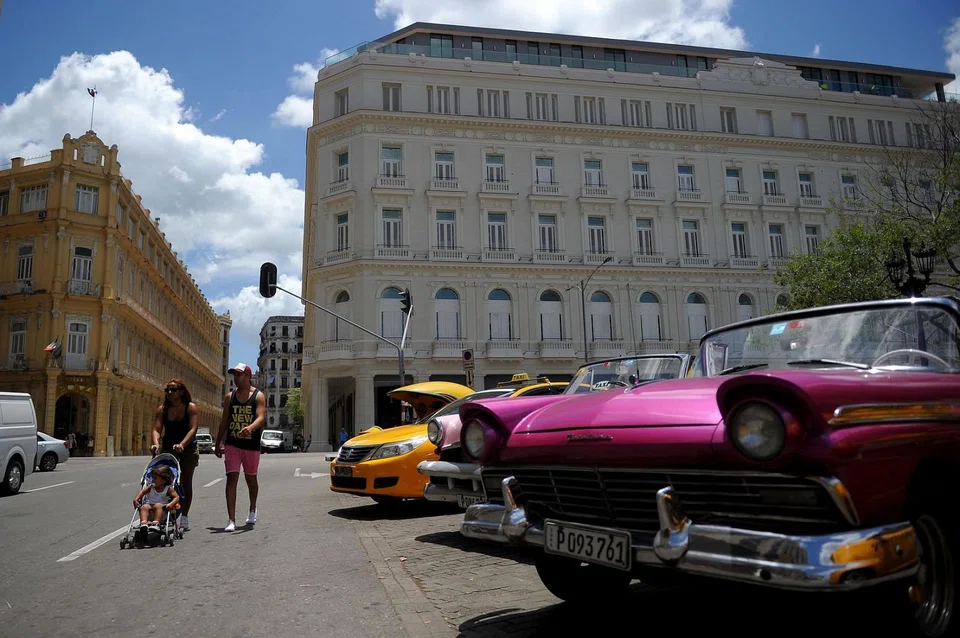
[HAVANA] Cuba's first ultra luxury hotel opened its doors Monday in Havana, with guests paying up to US$2,500 a night to stay in five-star comfort on the Communist island.
The "Gran Hotel Manzana," part of the Swiss group Kempinski Hotels, is situated in the heart of the Cuban capital in front of the verdant gardens of Parque Central and the grand Alicia Alonso theater, home to the Cuban National Ballet.
Guests in each of the hotel's 246 rooms, 50 of which are suites, have the pick of four bars and two restaurants and can take a swim in the rooftop infinity pool.
The European-style building first opened in 1917, before undergoing a complete renovation.
In order to deliver the project in time, the Cuban government was forced to accept the builders bringing hundreds of qualified workers from India, a rare move in a country that usually requires that only underpaid - and undermotivated - Cuban workers.
Now the hotel, jointly owned by Kempinski and the military-controlled Cuban tour operator Gaviota, charges between US$440 and US$2,485 a night.
"We appreciate hidden gems and this matches our philosophy," Kempinski director Xavier Destribats told Cuban state television.
On the ground floor of the hotel, a shopping mall filled with high-end boutiques such as Versace, Lacoste and Montblanc sparked curiosity in a country where luxury was long ago banned under the iron-fisted rule of revolutionary leader Fidel Castro.
"The hotel is really beautiful, but here everything is terribly expensive. It's not for the Cubans," said Lidia Martinez, a 29-year-old housewife.
Leonardo Padilla, a salesman at Montblanc, admitted he had difficulty selling watches ranging from US$1,775 to US$4,500 in a country where the average wage is no more than US$30.
AFP
Share with us your feedback on BT's products and services
TRENDING NOW

He built the Vingroup empire. Now South-east Asia’s richest man is handing some key roles to his sons

Grab executives buy back shares after stock hits 3-year low on Atome deal
US dollar falters after Iran’s offer to reopen Hormuz sends oil lower
Martin Modern, Wallich Residences properties linked to money laundering case sell for S$16.3 million at auction

