

Curbs on Wall Street landlords could stoke US house prices: investors
The restrictions will fuel the demand for homes without increasing supply, thus increasing asset prices
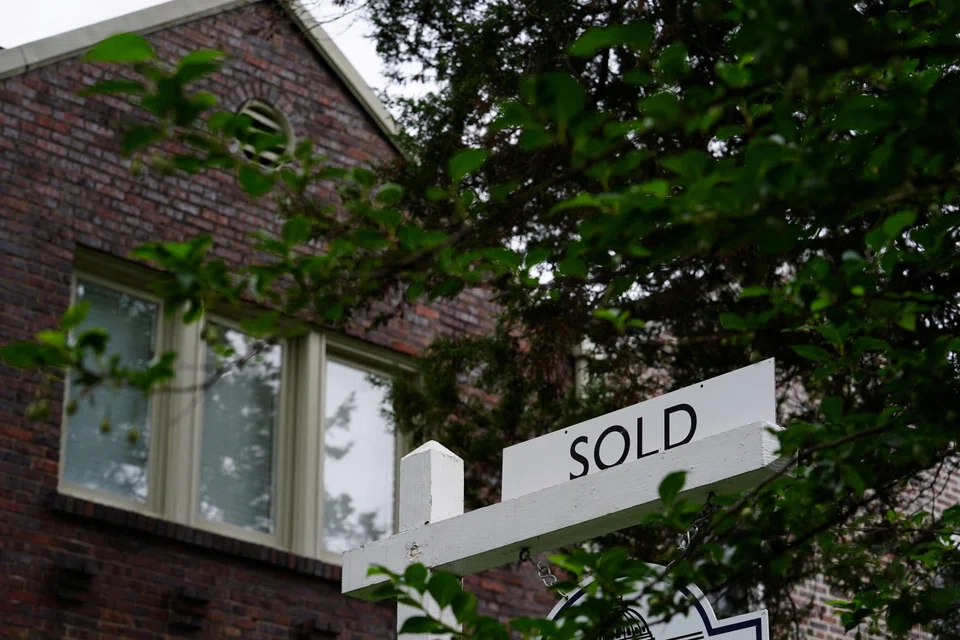
[NEW YORK] US President Donald Trump’s executive order restricting Wall Street investors from buying up single-family homes could boost the demand for homes while doing little to address tight housing supply, a key reason for house price inflation, investors said.
Trump’s Tuesday (Jan 20) order, which he touted during his lengthy address at the World Economic Forum in Davos, Switzerland, on Wednesday, outlined measures that are ultimately aimed at making homes more affordable by reducing competition from Wall Street investors.
It directs regulators to promote sales to individuals, and to issue guidance preventing federal programmes from facilitating single-family home sales to Wall Street investors. It also requires antitrust scrutiny of institutional home purchases, and calls on Congress to codify the changes.
White House economic adviser Kevin Hassett also said on Jan 16 that the administration plans to allow 401(k) funds to be used as down payments, with more details to be expected soon.
Without more housing supply, however, the measures are unlikely to tame house price inflation, and by potentially boosting demand they could make the problem worse, said investors.
David Wagner, head of equities and portfolio manager, Aptus Capital Advisors, said: “The affordability issue when it comes to housing isn’t a demand problem. There’s plenty of demand there. It’s a supply problem.”
He added: “So, that’s fuelling more demand, which is only going to increase asset prices.”
The Trump administration has pushed policies to ease construction costs, and the executive order could eventually help cut the red tape that makes it expensive to build and renovate.
But the federal government and Congress have few levers to significantly boost the housing supply, which is mostly controlled by local governments in cities and towns, said investors.
“If you enact policies that boost demand without increasing supply, the price goes up,” said Michael Rosen, chief investment officer at Angeles Investments.
He added: “The best thing that could be done – and it’s hard to do this at the federal level because these regulations are all generally local regulations – would be to make it a lot easier for new housing units to be built.”
Since Trump’s first electoral victory in 2016, US home prices have risen roughly 75 per cent, more than double the increase in overall consumer prices tracked by the consumer price index, although home sales price increases have eased substantially over the past year.
The Federal Housing Finance Agency reported in late December that national home sales prices had risen just 1.7 per cent in October from a year before, the lowest increase in more than 13 years.
The housing supply has also been slowly improving over the last year or so, said the National Association of Realtors.
Jim Tobin, chief executive officer of the National Association of Home Builders, said that his organisation has been engaged across the administration to push policies that could help lower the cost of housing production.
“I believe that corporate investment in housing has been a driver of new home construction,” he said.
White House spokesperson Davis Ingle said that the administration is committed to exploring every tool possible to deliver affordability for the American people.
Wall Street landlords
Wall Street institutions such as Blackstone, American Homes 4 Rent and Progress Residential have bought thousands of homes since the 2008 financial crisis.
The crisis led to a wave of home foreclosures, and by June 2022, such institutions owned roughly 3 per cent of all single-family rental homes, government data showed.
The institutions disputed that their investments have stoked house price inflation, repeatedly pointing to supply problems. In a statement, Blackstone said it had been a net seller of homes over the last decade.
Spokespeople for American Homes 4 Rent and Progress did not immediately respond to requests for comment.
Since institutions account for a large chunk of demand for homes built explicitly for rent, curbs on Wall Street landlords could slow home construction in that sector, the American Enterprise Institute Housing Center warned in January.
After ending 2025 down 3.4 per cent, the broader Philadelphia Housing Sector Index is up 8.2 per cent for the year to date.
Trump, who is under pressure to address voter affordability concerns ahead of congressional elections this year, has pushed a number of other policies aimed at boosting home ownership, including government buying of mortgage bonds and a 50-year mortgage.
With housing stocks having been in the doldrums, some investors see potential opportunities. “If they work, they will be huge for the markets,” said Greg Halter, director of research, Carnegie Investment Counsel. REUTERS
Decoding Asia newsletter: your guide to navigating Asia in a new global order. Sign up here to get Decoding Asia newsletter. Delivered to your inbox. Free.
Share with us your feedback on BT's products and services
TRENDING NOW

Once staunchly pro-China, Malaysian Chinese businesses are now distancing themselves from Beijing

Looking beyond looming CEO succession, should UOB potentially pursue a transformative merger?

Could stablecoins be the future of money?

Grab CEO’s wife Chloe Tong on life with Anthony Tan and finding her purpose

