Data centres overtake offices in US construction-spending shift
Tech companies have made data centres the latest darling of the real estate industry
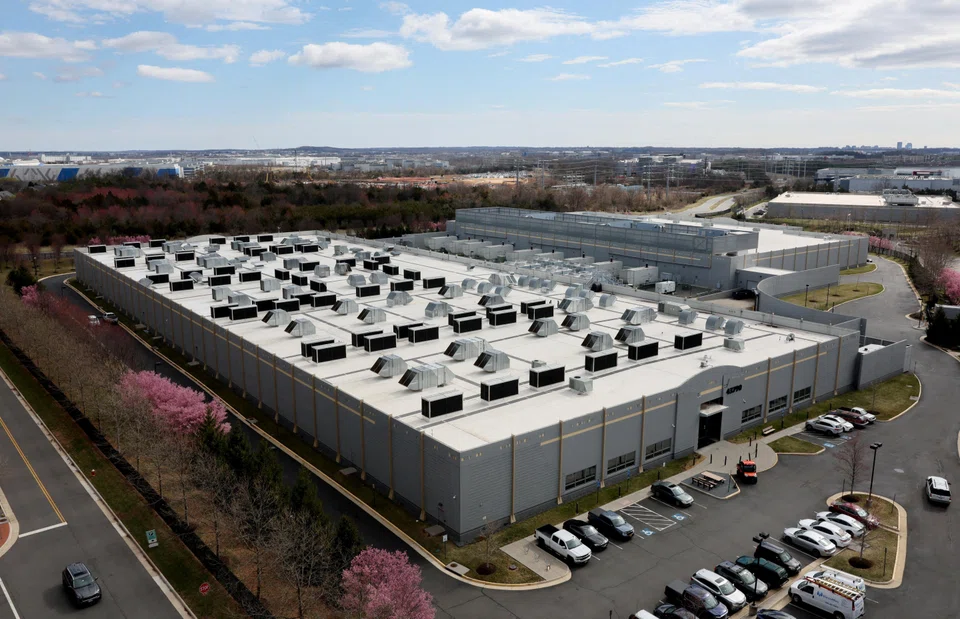
[NEW YORK] Spending on data centre projects in the US has exploded, surpassing offices for the first time at the end of last year. It’s a trend Matt Kunz saw early on when Meta Platforms built a computing hub outside Columbus, Ohio.
Other tech companies soon swarmed into the area, drawn by its stable economy, university talent pipeline and ample power, water and land, said Kunz, vice-president and general manager at Turner Construction, the firm that led Meta’s build-out. Since Meta broke ground in 2017, it has expanded its data centre campus, and Amazon.com, Alphabet’s Google and Microsoft made plans to join it nearby.
“When one shows up, almost all the other ones tend to follow,” Kunz said.
For Turner, a construction giant responsible for supertall office skyscrapers, sports stadiums and cultural venues around the globe, data centres are commanding more of its bandwidth. The company completed US$9.4 billion of the projects last year, more than five times its 2020 total. Last month, Turner announced it was chosen as one of the contractors on a US$10 billion data centre for Meta in Indiana.
Tech companies’ needs for AI processing facilities have made data centres the latest darling of the real estate industry. The properties are figuring heavily into portfolios of major investors such as Blackstone, Brookfield Asset Management and KKR, on a bet that long-term demand for computing power will continue to grow. At the same time, office development has slowed as cities across the US contend with vacancies that have piled up since the Covid lockdowns.
Construction spending for data centres has climbed steadily in recent years, while outlays for general office projects headed downward, US Census data show. The two crossed paths in December, with roughly US$3.57 billion spent on data centres that month, compared with US$3.49 billion for offices, according to preliminary estimates.
The shift is likely to continue and “may perpetuate itself even further as AI is utilised for automating day-to-day jobs,” said Andy Cvengros, co-lead of US data centre markets for the brokerage Jones Lang LaSalle “It’s going to directly impact the amount of office space people need.”
Hyperscale data centre clients rushing to secure power capacity are entering long-term contracts – typically 10 to 15 years – that include potential for rent increases, according to a report by CBRE Group That helps makes the properties especially attractive to the real estate investors who are ploughing billions of US dollars into the asset class, sometimes teaming up with developers or tech companies to bankroll projects with both equity and debt.
There’s been opposition to data centres in some communities, where voters worried about rising electrical bills are seeking to block their construction. The backlash has prompted President Donald Trump and some state governors to encourage data centre operators to generate or pay for their own power.
SEE ALSO


Massive projects
For developers, building “offices” for computers rather than people has its own set of challenges.
Kunz said he was not intimidated when he got his first look at a rendering for Meta’s Columbus-area facility. “It’s a box, it can’t be that hard,” he recalled thinking. “Then we all started to realise real quickly how very much complicated they are.”
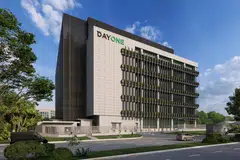
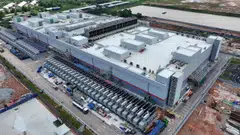
Instead of human-friendly lighting, flooring and amenities, data centres are often collections of windowless concrete buildings filled with substations, industrial cooling systems and racks of servers linked by miles of fibre. And compared with offices, which can tolerate brief power outages, data centres are designed for near-continuous uptime, requiring redundant electrical systems.
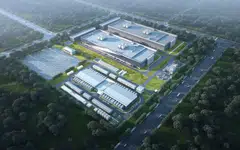
“Some of these newer campuses are 10, 12, 15 buildings – thousand-acre campuses that are massive construction projects,” said Cvengros of JLL. They involve “critical infrastructure from the utilities all the way down to the rack level, thousands of workers working on that stuff.”
Data centre construction costs jumped to US$11 million per megawatt last year from US$8 million per megawatt in 2020, according to JLL. Electrical systems make up the largest share of the expense, at roughly 38 per cent.
Projects also need large and specially trained work crews. A 500,000-square-foot (46,500-square-metre) office building can have as many as 300 tradespeople on site, compared with up to 800 for a similarly sized data centre, according to Christopher McFadden, senior vice-president at Turner. Mechanical and electrical trades generally account for about 70 per cent to 80 per cent of that workforce.
Because data centre campuses often unfold in multiple phases and can remain underway for years, the work tends to be steadier than for many traditional office developments. Steve Kwaterski, political and communications director for the Wisconsin Laborers’ District Council, said that continuity has translated into more stable income for union members, even enabling some to buy their first homes.
Room for growth
The robust pipeline of projects is also drawing a new generation of workers into construction.
Azuka Ukor, who works on server rack deployments at a Microsoft data centre in Phoenix, did not initially plan to enter the field. The 24-year-old had jobs in logistics at Amazon and later at semiconductor fabrication facilities before he landed at a data centre contractor last year. The career opportunities convinced him to stay.
“There’s a lot of room for growth,” Ukor said. “It’s not just being a technician.”
On construction sites, he works in a reflective vest, hard hat, hearing protection, steel-toed boots and safety glasses. After work, he studies networking and cybersecurity through industry certification programmes.
“It’s a good starting point,” he said. “I feel that I can really excel in this industry.”
Eight years after Turner began constructing Meta’s Ohio facility, the company’s steady stream of data centre projects across the country shows no signs of slowing. More than a third of Turner’s backlog is now tied to data centre work, according to McFadden.
“We’re going to be building these at this scale for years to come,” McFadden said. “There’s a lot of wind in the sail.” BLOOMBERG
Decoding Asia newsletter: your guide to navigating Asia in a new global order. Sign up here to get Decoding Asia newsletter. Delivered to your inbox. Free.
Share with us your feedback on BT's products and services