

Default by developer of Legoland Korea flags risks for nation’s developers
 Add BT as a preferred source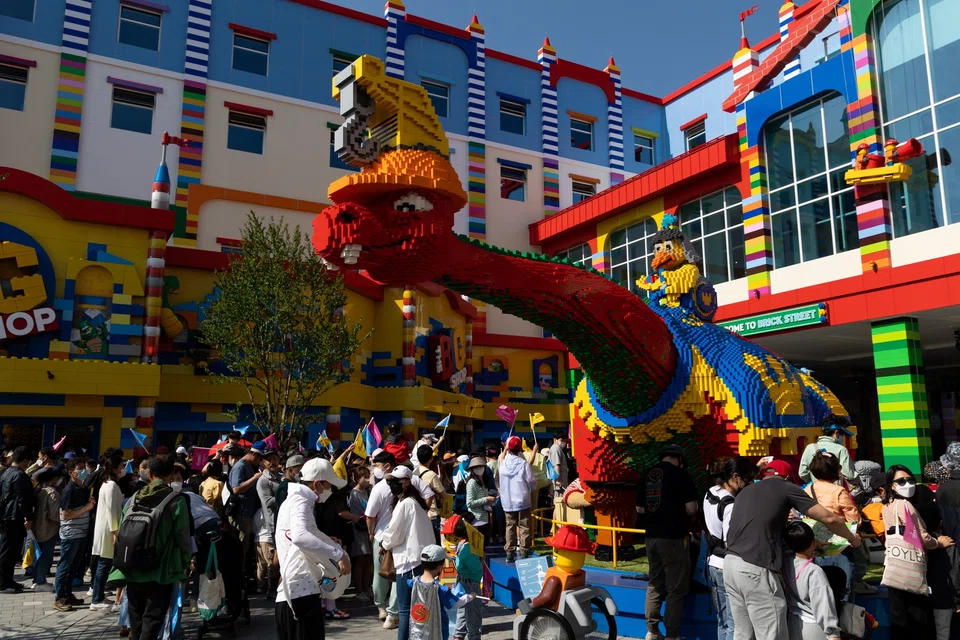
DeeperDive is a beta AI feature. Refer to full articles for the facts.
A MISSED debt payment by the developer of Legoland Korea theme park adds to difficulties faced by the nation’s real estate market that’s already weakened by surging interest rates.
The amusement park opened in May just as turmoil in global debt markets made it much pricier for South Korean borrowers including developers to refinance debt. Commercial paper repackaging 205 billion won (S$208 million) of loans for the Legoland Korea project by the developer wasn’t paid on the maturity date of Sep 29, according to backers of the project.
That constitutes a default, according to South Korea Investors Service and Gangwon province, the northeastern municipality where the park is located and the largest shareholder in the project’s developer LL Development.
While South Korea’s property woes may be dwarfed by those of China, the missed debt payment is a reminder for global investors of the way that interest-rate hikes are battering once-booming real estate markets around the world. A downturn in South Korea’s property market may cause a 10 per cent decline in national house prices from their peak to trough, and that could prompt the central bank to pivot to rate cuts, according to Nomura analysts.
“There are already increased concerns over real estate project financing debt and lower-rated builders in South Korea, and this event will likely further dent investor sentiment towards those sectors, raising their refinancing risks,” said Kim Eun-gie, credit analyst in Seoul at Samsung Securities Co. “It’s like slapping someone who is about to cry.”
LL Development, the borrower of the loan and the developer of the amusement park, will file for receivership, according to Gangwon province. The province still has an obligation to repay the loan and will meet it after LL Development’s rehabilitation is arranged, a spokesperson said. The province will find a new developer that has sufficient assets and ability to normalise the project through the rehabilitation procedures, according to the spokesperson.
Navigate Asia in
a new global order
Get the insights delivered to your inbox.
Increasing financial costs have squeezed returns on housing investment in South Korea, “setting the stage for a downturn in the housing market,” Nomura analysts including Jeong Woo Park wrote in report dated Oct 4.
In addition to expecting a 10 per cent drop in South Korea’s house prices, they see around an 18 per cent drop in Seoul apartment prices over the next few years. That would represent a sharper slowdown than the 2009-2014 housing market slump.
Highlighting the rapid decline in South Korea’s property market, transaction volume in Seoul’s retail property plunged 21 per cent in August, while office deals also sank about 21 per cent, the sharpest monthly drop since 2015 for both, according to Real Capital Analytics data.
Spreads on South Korean corporate notes have surged to the highest since 2010, in line with the global debt market rout sparked by accelerating inflation and rising interest rates. The Legoland news is another factor weighing on the local credit market, said Shin Jae-hoon, head of fixed-income team in Seoul at Mirae Asset Global Investments. BLOOMBERG
Decoding Asia newsletter: your guide to navigating Asia in a new global order. Sign up here to get Decoding Asia newsletter. Delivered to your inbox. Free.
Copyright SPH Media. All rights reserved.
TRENDING NOW

Shelving S$5 billion office redevelopment plan proved ‘wise’ as geopolitical risks mount: OCBC chairman

Eurokars Group introduces rental car franchises Enterprise Rent-A-Car, National Car Rental, and Alamo to Singapore
20 photos that show how dramatically Singapore has changed in two decades
Singapore’s key exports up 15.3% in March from electronics surge, exceeding forecasts

