

Demand for industrial space remains healthy; prices, rents continue rising in Q2: JTC
Samuel Oh
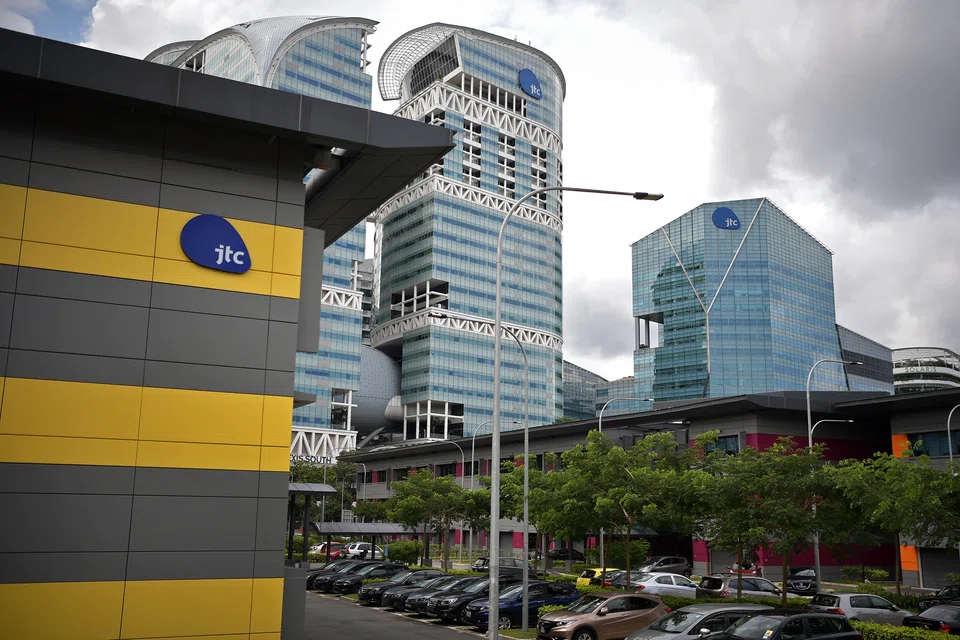
PRICES and rents of Singapore industrial spaces continued their upward trend in the second quarter of 2023 despite overall inflationary pressures, based on JTC’s quarterly market report released on Thursday (Jul 27).
The increase in both price and rental indices – for the 11th consecutive quarter – shows the resilience of the industrial property sector in the face of global economic uncertainties and disruption in demand for exports, said Leonard Tay, Knight Frank’s head of research. Industrial rents rose 2.1 per cent quarter on quarter in Q2 and 9.4 per cent year on year. Among the various segments, multiple-user factory space posted the largest increase of 3 per cent in Q2.
Business park rents rose 1.3 per cent in Q2 over Q1, more than the 0.6 per cent rise recorded in Q1, noted Lam Chern Woon, head of research and consulting at Edmund Tie. But with phase 1 of Punggol Digital District (totalling 166,000 sq m) coming onstream in 2024, the business park sector is expected to face headwinds, Lam said, coupled with softer leasing momentum in the office sector.
Year on year, multiple-user factory rents recorded the highest rental increase of 11.5 per cent, while warehouses rose 8.6 per cent. Single-user factory spaces were up 7.8 per cent, while business parks grew 3.7 per cent.
JTC said prices for industrial space increased 1.5 per cent quarter on quarter and 6.9 per cent year on year. Multiple-user and single-user factory prices climbed higher in the quarter, with multiple-user factory prices gaining 1.4 per cent and single-user factory prices increasing 1.8 per cent in Q2. Year on year, multiple-user factory prices jumped 8.2 per cent, while single-user factory prices rose 5.4 per cent.
Investors continued to favour industrial real estate in Q2, thanks to a positive yield spread against the current high interest rates and future rent growth prospects, said JLL’s head of research and consultancy Tay Huey Ying. Data from JLL showed around S$811 million worth of industrial properties changed hands in the second quarter, up 47.5 per cent from Q1.
On the other hand, Huttons Asia’s senior director of data analytics Lee Sze Teck said that industrial price growth appeared “to have stabilised as investors resist higher prices against an uncertain economic backdrop and persistently high interest rates”.
Overall occupancy stood at 89.1 per cent, a 0.3 percentage point increase from the previous quarter. This was largely driven by the multiple-user factory and warehouse segments where demand exceeds supply, said JTC.
Although most manufacturing clusters contracted in June, occupancy levels remain strong with demand coming from the transport engineering cluster for multiple-user factories. For warehouses, demand was driven by the shortage of quality storage spaces and facilities, in light of the global supply chain disruptions, added Knight Frank’s Tay. However, occupancy was down by 0.9 percentage point year on year. JTC attributed this to new completions in the last few quarters. Over the past year, industrial space supply expanded 1.2 million square metres (sq m), while total occupied stock rose 0.6 million sq m in the same period.

As at the end of Q2, total available industrial space was 52.5 million sq m, up 0.2 million sq m from Q1. Transaction volume was down 21 per cent year on year.
In Q2, JTC allocated a total of 80,800 sq m of ready-built facilities (RBF). This included 54,800 sq m of high-rise space and 20,400 sq m of land-based factory space.
Total RBF returns in Q2 were 166,200 sq m, of which 125,900 sq m was land-based factory space and 26,900 sq m was high-rise space.
For the second half of 2023, JTC expects around 0.6 million sq m of new industrial space to be completed.
Between 2024 and 2026, JTC predicts an additional 2.8 million sq m of industrial space to be completed, which translates to an average annual supply of one million sq m of new space from now until the end of 2026.
Over the last three years, average annual supply was around 0.9 million sq m and demand was 0.7 million sq m.
Looking ahead, Tay said despite the gloom in the manufacturing sector, the industrial real estate market is expected to remain stable for the rest of 2023.
“As a modern, neutral and innovative business hub, Singapore’s fundamentals offer international companies a flight-to-safety and flight-to-quality destination for investment and expansion that will facilitate growth when stability returns to the global economy,” he added.
Decoding Asia newsletter: your guide to navigating Asia in a new global order. Sign up here to get Decoding Asia newsletter. Delivered to your inbox. Free.
Copyright SPH Media. All rights reserved.
TRENDING NOW

Government to bring forward raising of retirement age, give employers more financial support to create flexi-load jobs

Indonesia stocks suffer worst plunge in nearly 30 years as MSCI proposes standalone status
If Europe goes to war, the fallout will be felt in East Asia
Natural gas to stay for the long haul beyond 2050: Singapore International Energy Week panellists

