

Do green buildings command better prices? The evidence is limited, although other benefits add up
Samuel Oh
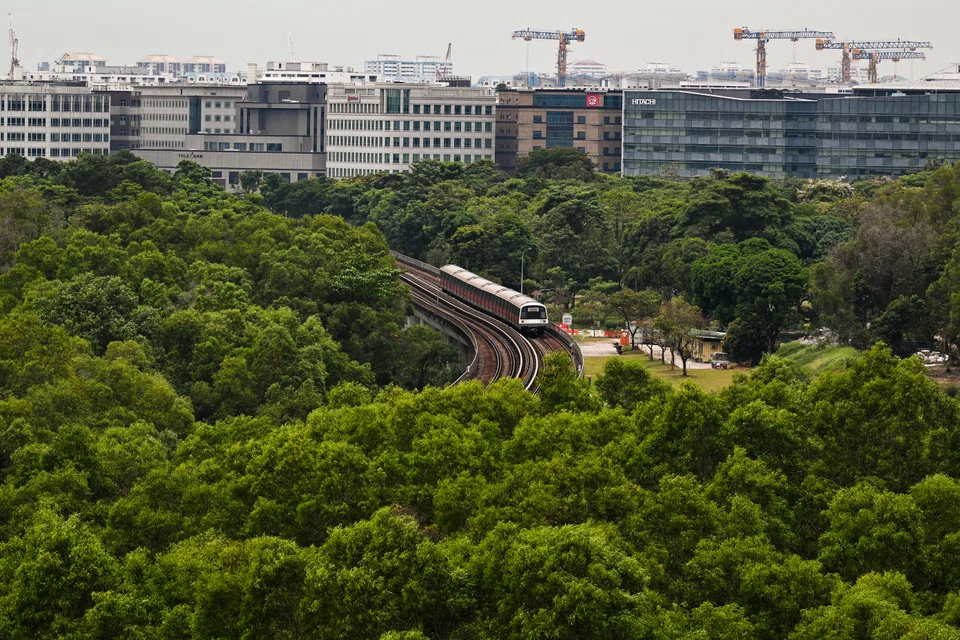
THE real estate market in Singapore has yet to yield conclusive data that green buildings are able to command higher rents or valuations, calling into question the substantial investments by landlords and developers into green features and certifications.
Valuation professionals have also not yet begun to incorporate penalties for so-called brown buildings when ascribing property values.
Valuers The Business Times spoke to said there is insufficient evidence supporting an explicit premium for green buildings.
Although there are studies to show the positive impact of green features on the values of buildings – such as higher rentals or occupancy, lower churn, and savings in operating and capital expenses – these have remained “largely anecdotal or theoretical”, according to Cynthia Ng, managing director for valuation and advisory at Savills Singapore.
“For valuers to place increasing weight on premium for green buildings, it would require evidence that could consistently validate the positive impacts on the property value ascribed by the sustainability features inherent to the green buildings,” she added.
The Singapore Green Building Council describes a green building as one that is “resource-efficient and environmentally responsible throughout its life-cycle: from planning to design, construction, operation, maintenance, renovation, and demolition”.
Buildings that are certified as green or energy efficient are endorsed by industry bodies. Certifications include Singapore’s Green Mark, Leed (Leadership in Energy and Environmental Design) and Breeam (the Building Research Establishment Environmental Assessment Method).
Desmond Sim, chief executive officer of Edmund Tie, noted that environmental, social and governance (ESG) tracking is still in its nascent stage, which means data remains limited.
Indeed, Savills’ Ng believes a green certification may turn into an important criterion for property valuation over time.
Some academics, however, contend that green features are already starting to translate into premiums in rent and capital values.
Sing Tien Foo, provost’s chair professor of real estate at the National University of Singapore (NUS) Business School, pointed to an NUS study showing that Green Mark-certified Housing and Development Board (HDB) buildings “command premiums of about 5 per cent to 6 per cent” in value from more efficient building design and newer features.
“For private housing, the premiums are slightly lower but average around 1.6 per cent. The premiums will be higher for those achieving gold plus and higher rating in the Green Mark certification,” he added.
“There is evidence of the significant price and rental premiums for green buildings, and these premiums have increased over time along with the trend of environmental sustainability and ESG-oriented corporate culture,” added Associate Professor Lee Kwan Ok, deputy head of NUS’ real estate department.
Prof Lee said overseas studies have shown that people are willing to pay three euros to 60 euros premium per square metre for a green roof or a green wall. Recreational green roofs can raise property prices by up to 20 per cent; productive rooftops by 7 per cent; and tree canopies by 3.5 per cent to 10 per cent, he added.
Still, Prof Lee and Prof Sing agreed that it is challenging to explicitly account for a building’s green credentials in valuation.
Property valuation is a systematic procedure to estimate a property’s market value by a licensed valuer. During the process, the valuer adopts various quantifiable metrics to derive the value or price.
Valuers said that in carrying out valuation, the property is assessed in “a holistic manner”.
Traditionally, green features have not been part of the consideration in the valuation process.
In practice, many valuers may lack the full understanding or ability to assign a premium for the Green Mark or other certifications on property values and rents. Clear guidelines on how to integrate these green aspects with property values are needed, said Prof Lee.
Prof Sing added that practising valuers may encounter difficulties in gathering “sound evidence” to support and justify the green premiums.
Even if valuers struggle to place a weight on green features, however, such features can improve a building’s appeal to users.
“Such buildings are often newer and involve higher construction costs, (so) they can command relatively higher rents. Therefore, the cost associated with green features is reflected in the form of higher rental income rather than being assigned a separate weightage in the valuation process,” added Tan Keng Chiam, executive director and head of valuation and advisory services at Colliers International.
The right green features on the right buildings should boost property value, although there is no “magic premium” or a percentage that is added on top, said Stephen Williams, head of value and risk advisory from JLL.
Williams sees clear preferences among tenants for buildings that are better aligned to their sustainability objectives, and are likely to be more modern, or have undergone recent, extensive asset enhancement. The green features would certainly have an aesthetic as well as functional appeal and be more attractive to potential occupiers, he said.
“This could translate into higher rental rates and shorter leasing-up periods (the time taken to let a space). Rather than being a direct adjustment to the total value, it would be reflected in the net income which then affects the final value of the asset,” added Williams.
With the Building and Construction Authority aiming to green at least 80 per cent of buildings by floor area in Singapore by 2030, green building adoption can only improve.
Expect more developers and landlords to change their energy consumption behaviour and green their buildings going forward.
TRENDING NOW

If Europe goes to war, the fallout will be felt in East Asia

Indonesia stocks suffer worst plunge in nearly 30 years as MSCI proposes standalone status

Vietnam’s race for growth tests pace of energy transition: experts

China’s market is tougher than ever. Where can Singapore firms still find room to grow?

