

Dubai property frenzy cools but sellers hold the line on prices
The Iran war has raised questions about how the city would be affected by a prolonged period of regional instability
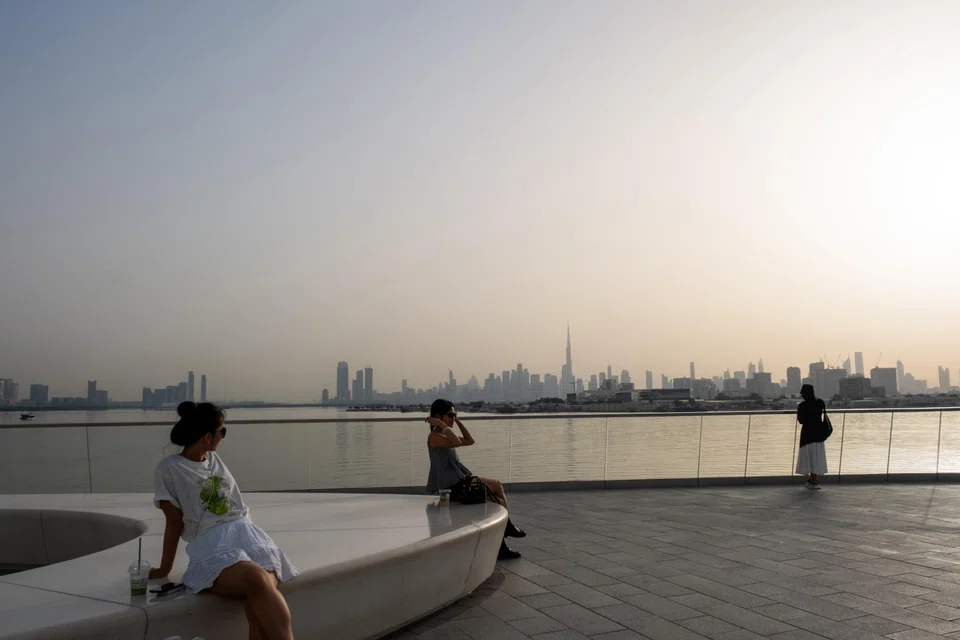
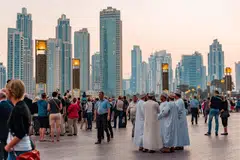
[DUBAI] Three months into a conflict that has roiled the Middle East, a nuanced picture is emerging on the state of Dubai’s housing market. The total value of transactions is down steeply, though prices have proved more resilient and buyers continue to seek out pockets of opportunity.
In the five years leading up to the war, Dubai had become one of the hottest real estate markets globally as buyers from India, the UK and Russia helped drive prices almost 70 per cent higher. Some of them have started to recalibrate in recent months, an adjustment that’s visible across transaction volumes rather than values.
Residential property worth 22.5 billion dirhams (S$8.3 billion) was sold in May, 42 per cent below April and roughly half the 46.6 billion dirhams recorded in February, before the conflict began, according to Reidin, a research firm that analyses data from the Dubai Land Department.
Prices for homes still under construction are down less than 9 per cent this year, while values for completed properties are unchanged.
The city’s real estate market “continues to demonstrate strong fundamentals, supported by a diversified investor base”, the Dubai Land Department said in a statement, adding that the government is confident in the outlook for the rest of the year.
In recent days, the US and Iran have reached an interim agreement to reopen the Strait of Hormuz and move further towards ending the war, but key sticking points remain for the next stage of talks.
Even with the latest drop in May, Reidin estimates that the value of total residential sales are comparable to levels seen just three years ago, in April 2023.
Activity slowed most sharply in projects that require commitments years ahead of completion, while demand for existing property held up better, suggesting buyers are becoming more selective without withdrawing entirely.
The off-plan segment, or homes still under construction, accounts for about three-quarters of overall transactions.
SEE ALSO



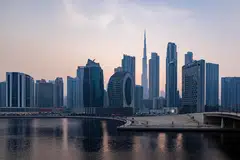
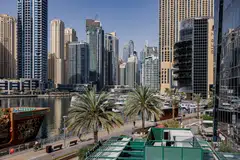
Such sales fell nearly 50 per cent to 15.8 billion dirhams in May from a month earlier, with part of the decline also reflecting a week-long Eid holiday. However, the less than 9 per cent drop in values points to a slowdown driven by fewer deals rather than broad price cuts.
For completed homes, transaction values fell less than 15 per cent from April and average prices of about 1,730 dirhams per square foot were little changed from levels seen at the end of last year, according to Reidin.
This slice, the secondary market, is showing early signs of stabilisation with demand recovering, but it still feels like a “Mexican standoff”, said Louis Harding, chief executive officer of Betterhomes.
“In the ready single-family home market, it’s mostly people who built up a lot of equity and don’t need to sell unless there is a reason like death, divorce or moving out of the country,” he added. “They don’t have the appetite to lower their prices and waiting for after the summer. Buyers on the other hand are expecting prices to drop and looking for a deal.”
At the same time, capital continued to flow selectively into prime assets in Dubai, which is part of the United Arab Emirates (UAE).
Sotheby’s International Realty said it sold a beach front plot for more than US$100 million in May and Brookfield Asset Management unveiled plans for a new development in the emirate the same month, a move seen as a bold bet on the property sector.
Still, the conflict has raised questions about how the city would be affected by a prolonged period of regional instability. At the peak of the Iran war, Dubai faced a barrage of missiles and drones, though most were intercepted and expatriates who temporarily left have largely returned.
But the ceasefire that’s been in place since early April was fragile. Sporadic attacks on UAE infrastructure and territorial waters last month underscored lingering risks, and the war has introduced a level of uncertainty that wasn’t previously factored in.
That’s already impacting the profile of buyers. While Indians and Britons accounted for a large share of transactions before the war began, brokers say demand from Middle Eastern countries like Lebanon and Egypt is increasingly becoming more visible.
Indians have shifted from “aggressive buying to more selective and cautious investing,” said Anuj Kejriwal, chief executive officer for Europe, Middle East and Africa at Anarock Group, which works with Indians buying property in Dubai. Many continue to view the market positively given tax efficiency and better rental yields, he added.
Taken together, the data point to a market adjusting rather than reversing.
The pockets of resilience are notable in a city that has repeatedly swung between rapid expansion and sharp reversals. In 2009, property prices fell more than 50 per cent after a debt-fuelled boom collapsed, leaving some developers heavily exposed and triggering a broad correction across the market.
In the years after that downturn, Dubai introduced a series of measures aimed at reducing speculative excess. Foreign buyers are now required to make upfront payments of at least 20 per cent, while limits on borrowing have reduced the ability to flip properties quickly.
Sales of completed homes have also been supported by Dubai’s shift from a transient business hub into a place where more expatriates settle long term. Long-term “golden visas” have encouraged residents to buy homes to live in rather than simply trade for profit, and many owners have been willing to hold on after sharp gains in recent years.
Against that backdrop, the market for homes still under construction remains a key indicator of sentiment. The recent slowdown marks a break from just a few months ago, when investors competed for multimillion-US dollar apartments.
Some developers have responded by slowing the pace of new launches.
“Last year around this time, we were pushing with a lot of launches of new projects,” said Mohamed Alabbar, founder of Emaar Properties. “Now, we’re not starting new projects and we are simply selling from existing ones. We are also not reducing prices but demand will build up for reputable players.”
Even so, some smaller developers are cutting prices to spur sales and the city’s population would have to grow enough to help absorb around 400,000 housing units expected in the coming years, analysts at JPMorgan said in a note this month.
Low taxes and a stable regulatory environment continue to underpin demand for completed homes, particularly in segments where supply is limited. For instance, large waterfront plots remain scarce in more mature global cities, brokers say, supporting continued interest in deals such as the US$100 million Sotheby’s sale on Naia Island in Dubai.
Mahdi Amjad, founder of Dubai-based ultra-luxury apartment developer Omniyat, said his firm had not seen many delays in payments collection from customers. More than 85 per cent of buyers paid on time, though a few asked for short delays, and the level of resilience has been strong, he said.
That’s also helping keep financial stress contained.
The 2009 crash left developers and lenders exposed to significant bad loans after a rapid expansion cycle. This time, non-performing loan levels remain broadly stable and banks are not reporting a material rise in defaults, according to Abdul Aziz Al Ghurair, chairman of Mashreq Bank and head of the UAE Banks Federation.
“Banks have learnt to deal with real estate. Over time banks matured and the real estate industry matured,” he said. BLOOMBERG
Decoding Asia newsletter: your guide to navigating Asia in a new global order. Sign up here to get Decoding Asia newsletter. Delivered to your inbox. Free.
Share with us your feedback on BT's products and services
TRENDING NOW

Once staunchly pro-China, Malaysian Chinese businesses are now distancing themselves from Beijing

Looking beyond looming CEO succession, should UOB potentially pursue a transformative merger?

Could stablecoins be the future of money?

Grab CEO’s wife Chloe Tong on life with Anthony Tan and finding her purpose

