

Dubai puts its hotel success to the test
It is building hotels at the fastest pace of any city, putting pressure on occupancy and rates that are among the highest in the world
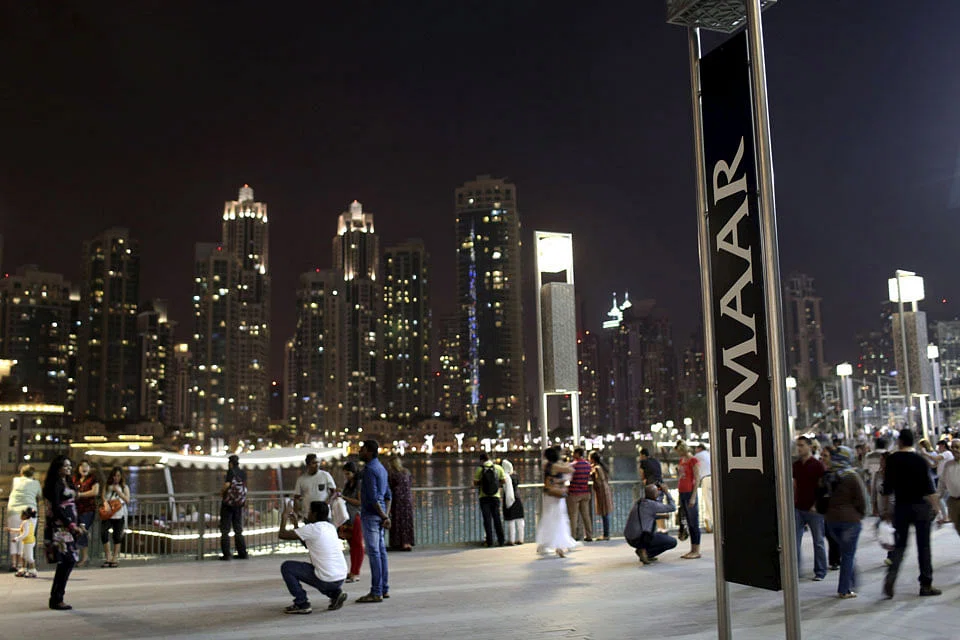
Dubai
THE Burj al Arab. The Jumeirah Beach Hotel. The palm island's Atlantis. All unmistakably Dubai, the Persian Gulf emirate that turned itself into a luxury tourist destination.
Now Dubai is doubling down by building hotels at the fastest pace of any city, putting pressure on occupancy and rates that are among the highest in the world. The 14,385 rooms under construction will increase supply by about a fifth, according to industry researcher STR Global, and thousands more are planned.
"There is concern around Dubai that we won't see the same high rates as before," Philip Wooller, Middle East and Africa director at STR Global, said in an interview. "But there is a bigger picture here and Dubai's room rates need to soften to keep people coming and to allow the market to evolve."
From the Roman columns of the soon-to-open Palazzo Versace to the Ottoman domes of Zabeel Saray, Dubai is adding to a collection of monuments that serve as tourist attractions in their own right. City authorities show no sign of impeding the rush towards growth, with plans to almost double rooms by 2020.
Profitability is flagging even before the new rooms hit the market. Revenue per available room, or revpar, declined 8.1 per cent in the first quarter from a year earlier. Occupancy dropped 2.2 percentage points to 85.7 per cent, while the average daily room rate fell 6.1 per cent, according to STR Global. Demand is growing year on year, however supply is currently increasing at a faster pace, Mr Wooller said.
For now, owners and managers might find it easy to shrug off a few points of declines. Revpar for the city stands at 839 dirhams (S$303), the highest in the world. Hong Kong and Paris, which have more rooms overall and more mid- and low-priced hotels, come in second and third at US$185 and US$165 respectively.
"Even if occupancy softens by five or six percentage points, that's a very strong market and any other city in the world would give its right arm for that," Alex Kyriakidis, president and managing director of Marriott International Inc for the Middle East and Africa. "Dubai is still a highly desirable market to be in."
The rooms being built are part of a total pipeline of 25,949 under contract, second to New York, according to STR Global data. About 75,000 are already available. JLL, the Chicago-based real estate adviser, says 28,000 rooms will be added by the end of 2018.
A drop in Russian tourists last year served as a warning that events outside Dubai could quickly hurt demand. The city is stepping up efforts to woo tourists with marketing initiatives, additional flights and easier visa policies after the rouble's decline caused Russian visits to drop by about a quarter, Helal Saeed Almarri, director-general of the Department of Tourism and Commerce Marketing, said at a conference in Dubai.
Hotels and restaurants contributed 5.5 per cent to Dubai's economy in the first half of 2014, Dubai Statistics Center says on its website. The Dubai Department for Economic Development expects tourism to grow 4.1 per cent this year.
Dubai authorities, which estimate that the city already has 93,000 rooms, would like to see supply grow by 8-12 per cent annually, Mr Almarri said.
That's realistic, said Chiheb Ben Mahmoud, head of hotel advisory for the Middle East and Africa at JLL. "Tourism isn't a matter of local demand, it's something you create. Who would have thought 15 years ago that Dubai would have more than 13 million visitors?"
Building more hotels is key to reducing rates and making the city accessible to a wider range of visitors, he said. "For a destination to grow, it has to be competitive. Large conventions still prefer Barcelona and Hong Kong to Dubai and that's because hotels there are less expensive."
Most of Dubai's main developers have hotel projects, from the publicly traded Emaar Properties PJSC to privately held Jumeirah Group and Al Habtoor Group LLC.
Owners of the 1,539-room Atlantis, The Palm, are building another 800-room property nearby to be completed by the end of 2017. The US$1.4 billion project will feature two buildings joined by a sky pool about 100 metres above the ground.
To fill beds, hotel operators must focus on strengthening relationships with businesses such as tour operators and credit card companies, said Serge Zaalof, president and managing director of the Atlantis. They also need to increase direct marketing in different places to avoid a collapse if one market suddenly slows. "As long as Dubai keeps providing value for money, it will keep growing."
Dubai is building attractions such as the world's tallest Ferris wheel and Hollywood-and-Bollywood-inspired theme parks and providing incentives for builders of cheaper hotels to boost the city's appeal to families. In January, Dubai's airport surpassed London's Heathrow as the world's top international air hub at a time local carrier Emirates is steaming ahead with its expansion of routes.
"Dubai is going to drive demand again through mid-range hotels," said David Clifton, regional development director at Faithful & Gould. "There is massive need for three- and four-star hotels that cater to business travellers and conferences, rooms that can be rented for US$75 to US$150." BLOOMBERG
TRENDING NOW
Despite the de-dollarisation debate, demand for dollar liquidity in Asia is growing
URA to review guidelines on floor space to give developers more design flexibility: Chee Hong Tat

He built the Vingroup empire. Now South-east Asia’s richest man is handing some key roles to his sons
Can a first-time homebuyer couple earning S$18,000 a month afford a new EC unit?

