

Easy to rent out, hard to sell: Are buyers losing interest in Singapore’s one-bedroom condos?
Lower entry prices and rental yields support demand, but exit prospects depend on location, layout and pricing

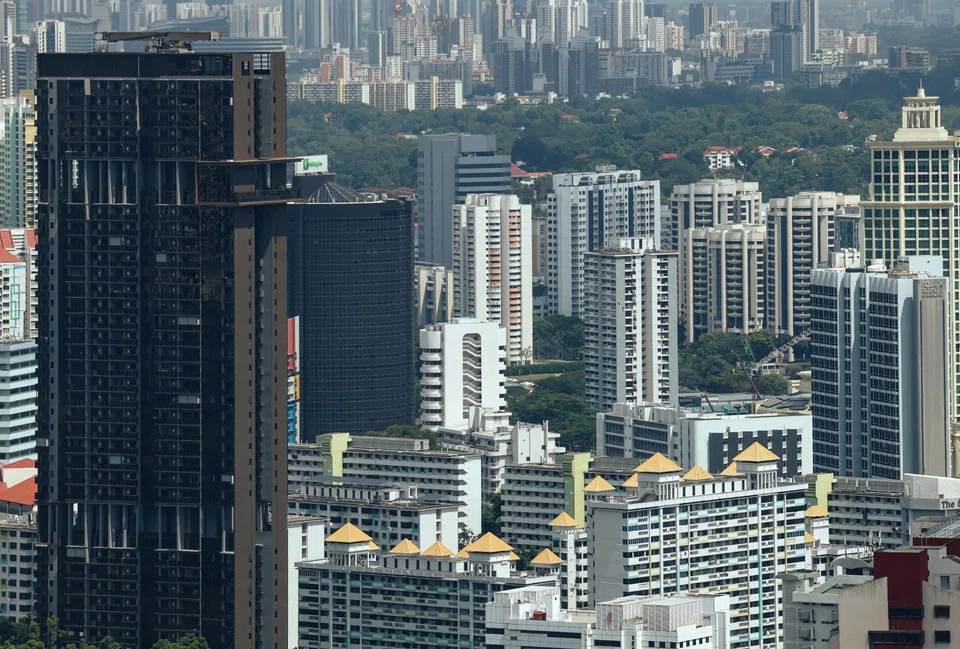
[SINGAPORE] One-bedroom condominium units, often viewed favourably as investment properties offering stable income, continue to attract tenants and buyers seeking an affordable entry into private housing. But owners looking to sell face the reality of a smaller buyer pool in the resale market, industry players say.
Perhaps cognisant of how buyer profiles are changing along with higher stamp duties designed to curb investment demand, developers are starting to build fewer one-bedders in new projects.
Notably, three new projects now on the market: Amberwood at Holland, The Serra Residences in Novena, and the mega 1,268-unit Thomson Reserve offer no one-bedroom formats at all.
According to PropNex data, annual new launch sales for one-bed units fell from an average of 1,808 a year between 2010 and 2015, to 1,157 in the 2016 to 2020 period, before diving to 521 units a year between 2021 and 2025. The resale market trended in the opposite direction. Annual resale transactions averaged just 108 units between 2010 and 2015, and jumped to 528 from 2016 to 2020, before hitting 1,023 between 2021 and 2025.
In a similar vein, the share of sub-500 square foot (sq ft) homes in resale transactions rose from 0.5 per cent in 2010 to 6.6 per cent in the year-to-date, while their share of new sales fell from 12.1 per cent to 2.5 per cent.
PropNex used private non-landed homes under 500 sq ft as a proxy, as caveat data from the Urban Redevelopment Authority’s (URA) Realis database does not specify the number of bedrooms.
“These trends suggest that while one-bedroom units have become less prominent in the new-launch market, resale activity has grown in both volume and relative share, as such units enter the resale market,” said PropNex CEO Kelvin Fong.
That interested buyers are looking in the resale market is a function of both price and yield.
The generally lower price for smaller resale properties makes them more accessible to buyers priced out of new projects or larger homes. PropNex data showed that for non-landed private homes below 500 sq ft, median price for resales was S$818,000 in 2026, compared with nearly S$1.37 million for new sales.
Interestingly, the data also shows HDB upgraders buying one-bedroom units in the resale market. From January 2025 to October 2026, buyers with an HDB address made up 43.7 per cent of one-bed resales, against 23.2 per cent for units of at least 1,000 sq ft.
As Savills’ executive director of research and consultancy Alan Cheong put it: “For investors, the attraction often lies in the numbers. Having compared acquisition costs against achievable rents, (buyers) may find that a resale unit delivers a higher rental yield than a new-launch unit, which typically carries a developer’s price premium.
“In addition, resale properties offer immediate income generation.”
For sellers, a key challenge is the smaller pool of potential buyers compared with larger homes, said Catherine He, Colliers’ head of research for Singapore. “One-bedders face a narrower buyer pool than family sized units, so exit depends on pricing.”
New guidelines
Since January 2019, URA guidelines have limited the number of small units in new non-landed residential developments outside the Central Area, using an average unit size of 85 square metres (sq m) to calculate the maximum number of homes, or 100 sq m in nine designated areas.
The rules extended to the Central Area in January 2023, requiring at least 20 per cent of units in new developments to have a minimum net internal area of 70 sq m.
In June that year, the government also harmonised floor-area definitions, bringing all strata areas into gross floor area calculations and excluding voids from strata area.
“The existing rules make very small units harder to design efficiently,” Colliers’ He said. At the same time, scarcity may help well-located existing one-bedders, but it is unlikely to lift all of them.
Older or poorly located units could face a tougher market. “Buyers now have more choices, with about 9,320 units on the 2026 GLS (government land sales) confirmed lists and a large completion pipeline,” she added.
Resale prospects also depend on a unit’s size and age, said Christine Sun, chief researcher and strategist at Realion Group.
Before 2012, one-bedroom units were getting smaller with “small-format” or “mickey-mouse” units being harder to lease, Sun noted. Owners of larger studios or one-bedroom units are likely to find it easier to sell than owners of units below 350 sq ft, she added.
Sing Tien Foo, provost’s chair professor of real estate at the National University of Singapore’s Business School, said that units with “inefficient layouts, high maintenance fees, short remaining lease tenures or weak transport access” could also struggle to find buyers. Developments with many identical units face additional competition among sellers, he added.
Recent launches illustrate how both developers and buyers view one-bedroom units across different locations.
At Narra Residences and Tengah Garden Residences, both suburban condos in the neighbouring planning areas of District 23 and 24, developers planned for just three and six one-bedders, respectively, in the projects. Both projects sold out their one-bed units, according to SRI data.
In the Central Business District, traditionally a strong rental market, Newport Residences sold 89 of its 108 one-bedroom units, which accounted for close to half of the project’s 246 units.
Meanwhile, Vela Bay in the popular Bayshore area in the east coast sold 21 of its 27 one-bed units.
Still, a PropNex analysis of seven major launches in 2026 pointed to less interest in one-bedroom units compared to larger ones. Marketing agents typically collect cheques as expressions of interest during the preview periods for new projects.
PropNex found that expressions of interest for one-bedroom units came in at 80 per cent of available supply, below 87 per cent for two-bedroom units and 112 per cent for three-bedroom units.
Rental demand remains strong
For owners holding out for a sale, rental demand continues to cushion holding costs.
SRI data showed that rental transactions for non-landed one-bedroom homes rose 27.9 per cent, from 8,007 in the first half of 2023 to an estimated 10,240 in the first half of 2026.
Gross rental yields for completed one-bedders can range from 3.5 to 4.25 per cent, according to Savills’ Cheong. So while property taxes and maintenance fees reduce net returns, yields remain “relatively attractive in a low-interest-rate environment”.
However, increasing competition from co-living operators could limit rent growth. Cheong estimated that city-fringe one-bedroom units typically rent for S$3,500 a month, compared with S$2,000 to S$2,500 for a co-living room.
Colliers’ He said co-living is “more likely to cap rent growth for one-bedders than to replace them”, as some tenants seek furnished accommodation and flexible terms.
Prof Sing observed that co-living “competes at the margin”, especially for younger tenants, but “a self-contained unit offers privacy and stability that shared accommodation cannot fully replicate”.
Longer term, demographic changes could support demand. Singstat data cited by PropNex showed that the number of one-person resident households in Singapore grew from 146,000 in 2015 to 247,900 in 2025.
Cheong said that an ageing population and a declining propensity to marry could further increase the number of single households, expanding the pool of owner-occupiers.
“Market dynamics could eventually become self-correcting. Should the absolute price of a one-bedroom private apartment fall to a meaningful discount relative to that of a larger HDB flat, a new pool of buyers may emerge,” added Cheong.
“Elderly households seeking to right-size, as well as singles who value private housing ownership, may increasingly view one-bedroom units as an attractive and affordable housing option.”
For owners preparing to sell, however, these demand drivers may not be enough to offset the shortcomings of an individual unit.
“One-bedders of a practical size, with distinct study or flex space, efficient storage and proximity to MRT stations, business parks, hospitals or universities should remain relatively liquid,” explained Prof Sing.
“The market is more likely to reward functionality and location,” the professor added. “Units designed primarily to offer a low entry price but facing quick functional obsolescence may face greater illiquidity and exit risks.”
TRENDING NOW

World’s largest offshore wind platform by Seatrium consortium on track to be completed by 2028

Is stamp collecting enjoying an analogue revival or are its best days over?

GovTech retrenches another 38 staff in second round of layoffs

MBS adjusted property Ebitda falls 20.6% in Q3 with fewer high-roller visits, weaker hold

