

Evergrande's condemned towers on China's Hawaii show new threat
Local governments race to reclaim land ahead of a looming restructuring of the embattled developer
 Add BT as a preferred source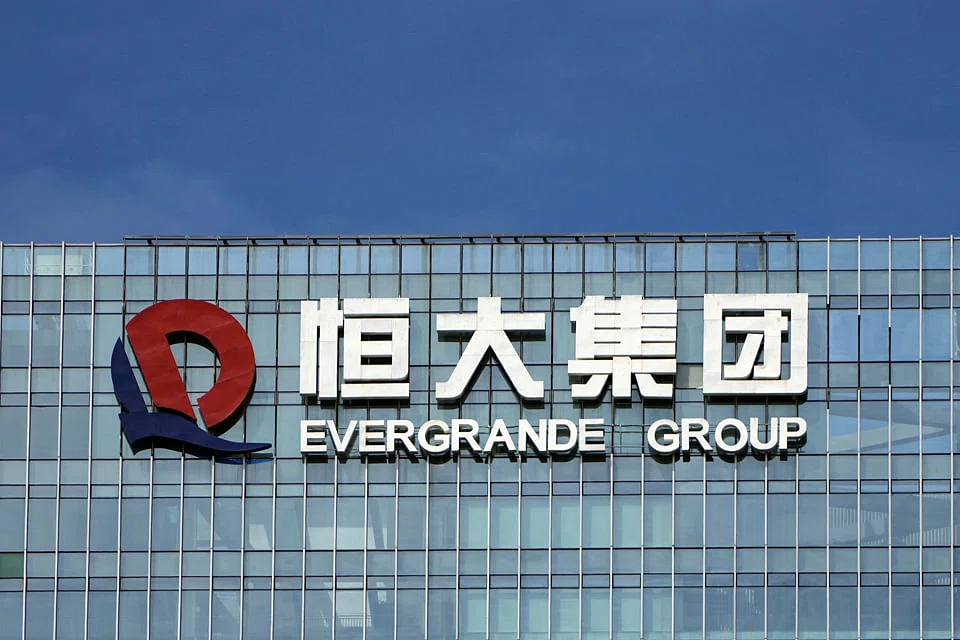
DeeperDive is a beta AI feature. Refer to full articles for the facts.
Shanghai
THE wrecking ball headed for 39 apartment blocks on a tropical island at the southern tip of China poses the latest threat for China Evergrande Group as local governments race to reclaim land ahead of a looming restructuring of the embattled developer.
The government of Danzhou, a city in the province of Hainan, has asked Evergrande to tear down what it says are illegal buildings within 10 days. The order was signed Dec 30, meaning the company could start demolition work on the near-complete condos by Jan 9.
The Hainan order is among the most extreme in a spate of government actions to seize Evergrande's property and land holdings, underscoring risks to its most-prized assets as the firm prepares for what could be the largest restructuring ever in China. In recent months, at least 11 land parcels have been targeted for confiscation by local authorities for reasons ranging from idle projects to missing fee payments.
As more officials across China rush to take control of Evergrande assets before a potential court-led restructuring that would constrain their power, it is making it more difficult for creditors to gauge the true state of the developer's financial health. Understanding the value of Evergrande's land and unfinished projects is key to determining whether Evergrande bonds are worth buying at prices of about 15 US cents on the dollar.
"Evergrande may have lost the last chance to sell its land bank for cash," said Bloomberg Intelligence analyst Patrick Wong. Evergrande did not immediately respond to a request for comment, and calls to Danzhou authorities went unanswered. The developer reiterated on Tuesday (Jan 4) that it will proactively handle the case in accordance with the demolition order. Real estate firms typically buy or lease land from local governments, making property a key source of revenue for China's biggest cities.
Navigate Asia in
a new global order
Get the insights delivered to your inbox.
In mid-December, local authorities in the western city of Chengdu said they planned to confiscate 2 land sites from Evergrande without compensation, saying the land had remained idle after being purchased in 2010 and 2011. The projects were meant to be residential complexes with a combined investment of at least 4.9 billion yuan (S$1 billion). The move follows a similar seizure of 8 land plots in southern Haikou city days earlier, 6 of which were part of a sprawling land portfolio Evergrande bought from New World Development in 2015. In September, Anqing city in central Anhui province took back parcels for a mixed-used Central Park project that Evergrande purchased for 877 million yuan but had failed to pay land fees.
In other regions, governments have taken charge of Evergrande's projects to reduce risk and guarantee delivery of homes to buyers, said people familiar with the matter. Officials are concerned that if a court-led restructuring of Evergrande is announced, it will become harder for them to reclaim the land, the sources said.
Evergrande is among the largest land holders in China with 778 projects across 233 cities. The assets cover 214 million square metres (sq m), with an original value of 456.8 billion yuan, said a company filing as of June.
The US$25 billion project in Hainan stands out for its sheer size and because the apartments are so close to completion, packed together on a dusty, treeless archipelago jutting into Danzhou Bay. The housing complex covers a floor area of 435,000 sq m - enough to almost fill the office space in New York's Empire State Building twice over. When it kicked off in 2010, the Danzhou government billed the project as a way to transform the small city into a global convention centre and tourism hotspot. They envisioned the artificial islands in the South China Sea, modelled after Dubai's Palm Islands, would generate more than 100,000 jobs and house 134,100 residents and visitors by 2030.
Hainan is known as China's "Hawaii" for its tropical climate and mountainous terrain, along with its array of golf courses and beaches. As the southern-most point in China, it is closer to the Vietnam coast than to Hong Kong or Evergrande's base in Shenzhen.
Evergrande says it began construction on the Ocean Flower Island project in 2015 and has invested 81 billion yuan so far, about half of the 160 billion yuan total budget. However, the project has faced several roadblocks in recent years. An inspection in 2017 found some land parcels tied to the reclaimed islands ran afoul of environmental rules. Danzhou's former mayor Zhang Qi backed the project, though he was eventually arrested and sentenced in 2020 to life in prison over bribery charges tied to development projects.
Construction has been stalled since October 2020, and now the city is claiming the project is illegal, given the environmental concerns over the impact on nearby coral reefs and pearl oyster beds. Evergrande said the tear-down order does not affect the remainder of the development, where 60,567 apartments have been delivered to buyers, with another 628 units on the way. A 2-bedroom condo in the complex was recently marketed at about US$160,000.
The Hainan demolition order may heighten investor concerns that policymakers are unlikely to ease their crackdown on indebted property firms like Evergrande even as they take steps to ensure stronger developers retain access to funding. The world's most indebted developer, saddled with US$300 billion in liabilities, was declared in default last month by ratings companies after failing to make coupon payments on its debt.
"Even though the Hainan project isn't a significant one in its country-wide strategy, it will have a big impact on confidence," said Kenny Ng, strategist at Everbright Sun Hung Kai Co.
Evergrande's property sales meanwhile continue to plunge. China's third-largest developer by sales recorded a 99 per cent decline year on year last month, the steepest among 31 listed developers tracked by Citigroup analysts. That is a 7 per cent drop versus November. BLOOMBERG
Decoding Asia newsletter: your guide to navigating Asia in a new global order. Sign up here to get Decoding Asia newsletter. Delivered to your inbox. Free.
Share with us your feedback on BT's products and services
TRENDING NOW
Singaporeans can now buy record amount of yen per Singdollar

Beijing’s calculated silence on the Iran war

China pips the US if Asean is forced to choose, but analysts warn against reading it like a sports result
StarHub hands Ensign InfoSecurity control back to Temasek in S$115 million deal, books S$200 million gain

