

Flood-soaked US homeowners face a costly choice: raise or raze
The cost of house lifting – using hydraulic lifts to push the house upwards – could exceed the home’s value
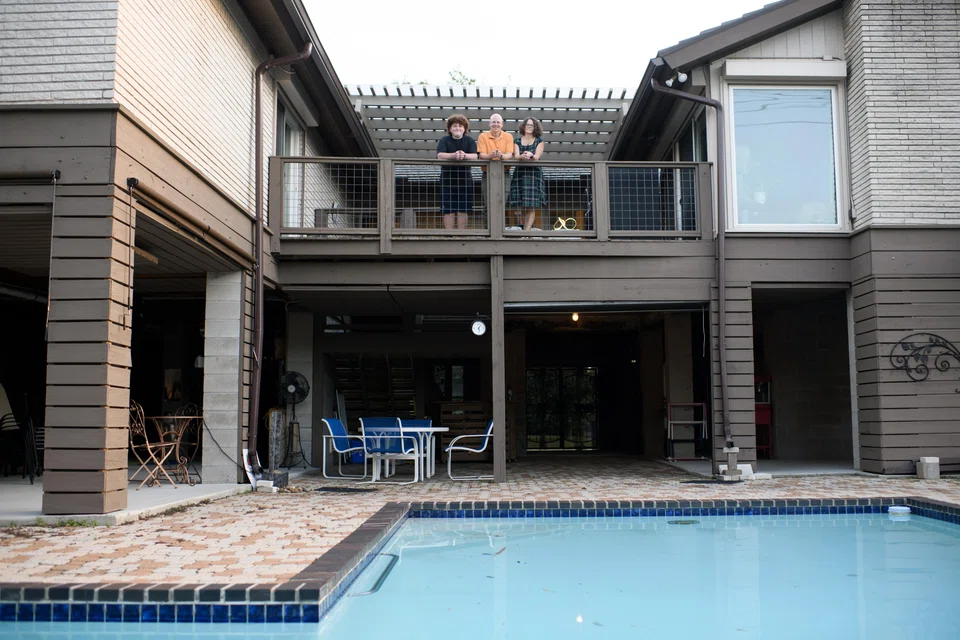
SHORTLY after moving into their home in St Petersburg, Florida, Meghan Martin and her husband noticed a drawback to their new neighbourhood. The quiet streets of Shore Acres, a leafy community bisected by canals, occasionally flooded. On some days it was easiest for Martin, a paediatric ER doctor, to reach the hospital by paddle board – a feat she once demonstrated in a widely viewed TikTok video.
The Martins settled into their one-storey “fixer-upper”, painting the exterior cornflower blue and revamping the 1950s kitchen with new appliances and a herringbone backsplash behind the countertop. But they stopped short of a more radical renovation: the house lift. A handful of water-wary neighbours had pushed their living quarters 8 to 10 feet (2.4-3m) in the air, adding space for a garage or storage underneath. The couple baulked when they learned the cost could exceed the value of their home, which they bought in 2016 for US$265,000. Besides, to their knowledge, the house had never severely flooded.
Two floods – and two rounds of ripping out drywall and throwing away sodden carpets and toys – later, the Martins reconsidered. This year, they put down a deposit on the cheapest option for raising their home – US$375,000.
Buildings have long been lifted out of nature’s path, especially in the historic quarters of flood-prone cities such as New Orleans or Charleston, South Carolina. A century goes by and a beach erodes or a river bend changes course; then the floodwaters arrive. But as climate change intensifies rainfall and strengthens tropical storms, a newer generation of homes is facing the threat of repeat flood disasters. Whether in Florida, New Jersey or Texas, homeowners are deciding whether to shell out hundreds of thousands of dollars to build up.
In St Petersburg, a city accustomed to narrow misses from major storms, house lifts were until recently an oddity. Comparisons to shoe boxes remain common, and the revised proportions would not probably fly in an architect’s atelier. But now they’re the norm.
House lifting may bring to mind the balloon-hoisted house of the movie Up, but the work starts underground. Hydraulic lifts, set in trenches dug under the foundation, push the house upwards, a process so smooth that lifters are known to leave a vase standing in a window for dramatic effect. A new foundation is installed, along with elongated staircases and reworked wires and plumbing.
On a recent weekend, Albert Jasuwan, owner of JAS Builders, one of a few house-raising specialists in the Tampa Bay area, had three houses “in the air” and 22 more awaiting permits. “Mother Nature is giving us more than the ground can take,” Jasuwan said. Prices can range from US$75 to US$200 per square foot, depending on the home’s design. A typical Florida home built on a concrete slab may cost US$400,000 to raise, though larger houses can exceed US$1 million.
Families like the Martins who have already experienced calamity are often eligible for federal assistance, including low-interest disaster loans. The Federal Emergency Management Agency (Fema) has also raised nearly 22,000 homes nationwide since 1999 through grant programmes that cover 75 per cent to 100 per cent of lifting costs. But funds are limited, and approval can take years.
Hannah Rebholz, a floodplain manager with the city of St Petersburg, said she was glad to see so much interest in lifting homes out of danger. “But I find it best to not give people false hope,” she added. “The process takes a mental toll.” She expects to help about 20 homeowners apply this year for federal assistance, a fraction of those paying their own way.
In time, Shore Acres in Florida may soon resemble places such as the bayou-hugging Meyerland community in Houston. Hundreds of the neighbourhood’s low-slung 1950s homes – many gems of the state’s mid-century modern style – were inundated by Hurricane Harvey in 2017, the third major flood in three years. The area is now an eclectic mix of quaint older homes thrust into the air and towering contemporary mansions, with staircases snaking 10 feet up to the front door. On some streets, the houses that remain on the ground are the oddities.
It was a storm in 2016 that made the choice clear for Drew and Pam Shefman. They loved their neighbourhood, and their house, which they had recently “made perfect”, using a flood insurance payout. But raising would be costly: US$420,000. “The hardest part to get into your head is that you’re going to lose money,” Drew Shefman said. “I had a lot of trouble accepting that.”
But Pam Shefman had started worrying about leaving her husband alone on rainy days in case he’d try lifting heavy furniture out of the way of rising water. “We weren’t comfortable waiting for Fema,” Drew Shefman said. “For my own sanity, this needed to happen quickly.” A crew arrived in the summer of 2017.
With Harvey in the forecast that August, the crew raced to lift the Shefmans’ home. It was nearly halfway to its 3m goal when the storm hit Houston, and perched about 7cm above the floodwaters. If any lower, the home would have floated away.
Today, the new space includes a three-car garage and a family area, designed by an architect who took care to keep the look consistent with the 1960s original. That meant extending the house’s columns an extra storey using off-white period bricks given to them by a neighbour who was tearing down and selling his flooded lot.
The Shefmans now mostly value peace of mind. “Our lives have been normal,” Drew Shefman said. “We were able to miss Harvey and keep some level of sanity.” Their annual flood insurance premium also fell to US$800 from more than US$5,000, and their hopes of recouping some of the cost has risen, with nearby homes now selling for more than US$1 million.
Many of Martin’s neighbours in St Petersburg are selling, unwilling or unable to raise or rebuild. The community is still desirable, close (if perhaps too close) to the water, with good schools, a local playground within easy walking distance and a cosy neighbourliness. She suspects wealthier newcomers will replace the older ruined homes with larger structures. “The vibe is going to change,” she said.
But Martin’s only regret is not acting sooner. “We don’t want to leave,” she said.
The only place they plan to go is up.
Decoding Asia newsletter: your guide to navigating Asia in a new global order. Sign up here to get Decoding Asia newsletter. Delivered to your inbox. Free.
Share with us your feedback on BT's products and services
TRENDING NOW

If Europe goes to war, the fallout will be felt in East Asia

Government to bring forward raising of retirement age, give employers more financial support to create flexi-load jobs

Indonesia stocks suffer worst plunge in nearly 30 years as MSCI proposes standalone status

Mapletree Industrial Trust posts 6.6% drop in Q2 DPU to S$0.0297

