Frasers Property turns focus to industrial and logistics sectors on limited supply, regional growth
The group’s assets for these segments have increased by over 80 per cent in the last five years to S$11.7 billion as at the end of March 2024

FRASERS Property has been beefing up its industrial and logistics portfolio as the property group looks to increase its exposure to high-performing asset classes.
The group’s assets on balance sheet for these sectors increased by over 80 per cent from S$6.4 billion as at end September 2018 to S$11.7 billion at the end of March 2024.
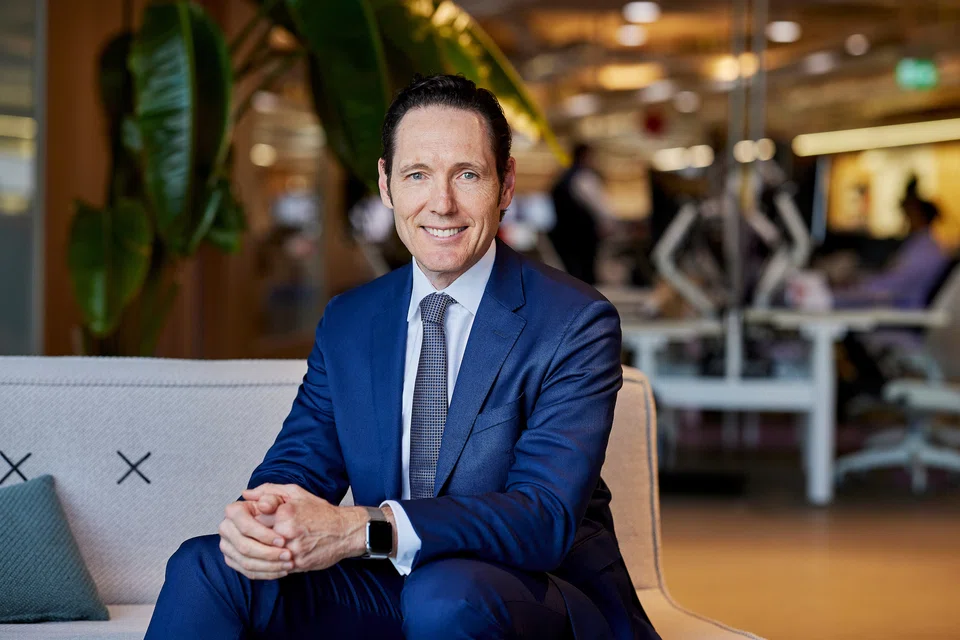
In an interview with The Business Times, Reini Otter, Frasers Property Industrial’s chief executive officer, said: “In the last five years between FY19 and FY23, Frasers Property has focused its investment on industrial and logistics, diversifying outside the residential and hospitality sectors.”
“The industrial sector is the backbone of any economy, providing a vital supply chain to nearly every sector, as well as products and services that people use every day, which means the demand for property assets in the space continues to grow.”
Expansion in Thailand and Vietnam
In addition to continuously growing its industrial and logistics investments in Europe, the group has been increasing its exposure to the sector in Thailand and Vietnam, Otter said.
He added: “We think we will start to generate a lot of business coming from Europe to Asia and we are already seeing it with the China + 1 effect, where we are seeing lots of investments coming into Vietnam and Thailand.”
As the electric vehicles and third-party logistics sectors take off in Vietnam, foreign direct investment has increased massively, Otter said.
Large high-tech players such as Samsung are building very large facilities in Ho Chi Minh City for manufacturing, significantly shifting business operations to Vietnam, he said.
Otter said: “So for us to be able to be present in North and South Vietnam and be able to identify those key emerging trends, especially the entry of those global manufacturing players, is a huge advantage.”
Such companies would be looking for a trusted partner in those markets who are able to deliver sustainable, quality buildings and who will be able to manage the construction and fit-out of projects, he added.
Otter said: “With the scale we can bring on in Vietnam which is close to a million square metres (sq m) of institutional grade facilities, I think it’s going to be quite a good story for us.”
In 2021, Frasers Property began developing Binh Duong Industrial Park (BDIP), which marked the group’s first foray into the industrial and logistics sectors in Vietnam.
The site is expected to span about 51.8 hectares when completed in FY2026, with more than 220,000 sq m of industrial facilities.
Occupiers are steadily coming onboard, with SPX, the in-house logistics arm of Shopee, set to occupy a 106,000 sq m automatic sorting centre in BDIP built by Frasers Property.
There are plans to expand the group’s presence in North Vietnam over the next three to five years and to build approximately 460,000 sq m of industrial facilities in the provinces of Bac Ninh, Hung Yen and Quang Ninh by 2027, Otter said.
In Thailand, the Eastern Economic Corridor programme, which seeks to drive investments in high-potential sectors such as smart electronics and the digital economy, will also provide opportunities which the group can tap as a market leader, he added.
Going green
Meanwhile, in Australia, Germany and the Netherlands, where Frasers Property has a 2.9 million sq m land bank it has yet to tap, industrial rents are still rising post Covid-19, albeit at a slower rate and vacancies are hovering near historic lows.
For instance, the vacancy rate for industrial properties in Sydney increased from 0.2 per cent in H1 2023 to 0.5 per cent in H2 2023,while vacancies in Melbourne increased from 1.2 per cent to 1.6 per cent in the same period.
Otter said: “You’ve got limited land, complex planning systems – whether it’s Europe or Australia, getting hold of (land) is not that easy and that creates high barriers to entry.”
“If you are an incumbent in those markets and have an ability to develop properties, you’ve got an advantage.”
In April, tool manufacturer Techtronic Industries opened a 74,056 sq m facility at The Yards, an industrial estate co-developed by Frasers Property Industrial in New South Wales, Australia.
The Yards was the first industrial estate in Australia to achieve the country’s 6 Star Green Star Communities rating, in recognition of its sustainability features, which include water efficient fittings and fixtures, electric vehicle charging points and cycling paths within the estate.
Otter said: “In the next 10 years, (we) will see a dramatic increase in the impact of climate change and how businesses respond to that will be very important.”
“We’ve taken a leading position in this because we think getting ahead of the curve is very important to future proof your assets.”
The Yards is also a premium estate, a concept which Frasers Property has rolled out since 2021, combining high-quality industrial and logistics facilities with wellness and sustainability features.
Green open spaces and cycling lanes have been built around the 77-hectare estate to boost the mental well-being and health of workers on-site.
Otter said: “Market reaction to our premium estates concept has been positive, although we will measure the real success of this approach over the long term through tenant retention over the next five to 10 years, as well as the health of employees.”