

Genting scion Lim Keong Wee takes principles from ‘university of life’ to build his wellness empire
Initial Sama serviced residence is part of strategy to grow its leasing and management portfolio

The strategies and stories that shape today’s leaders.
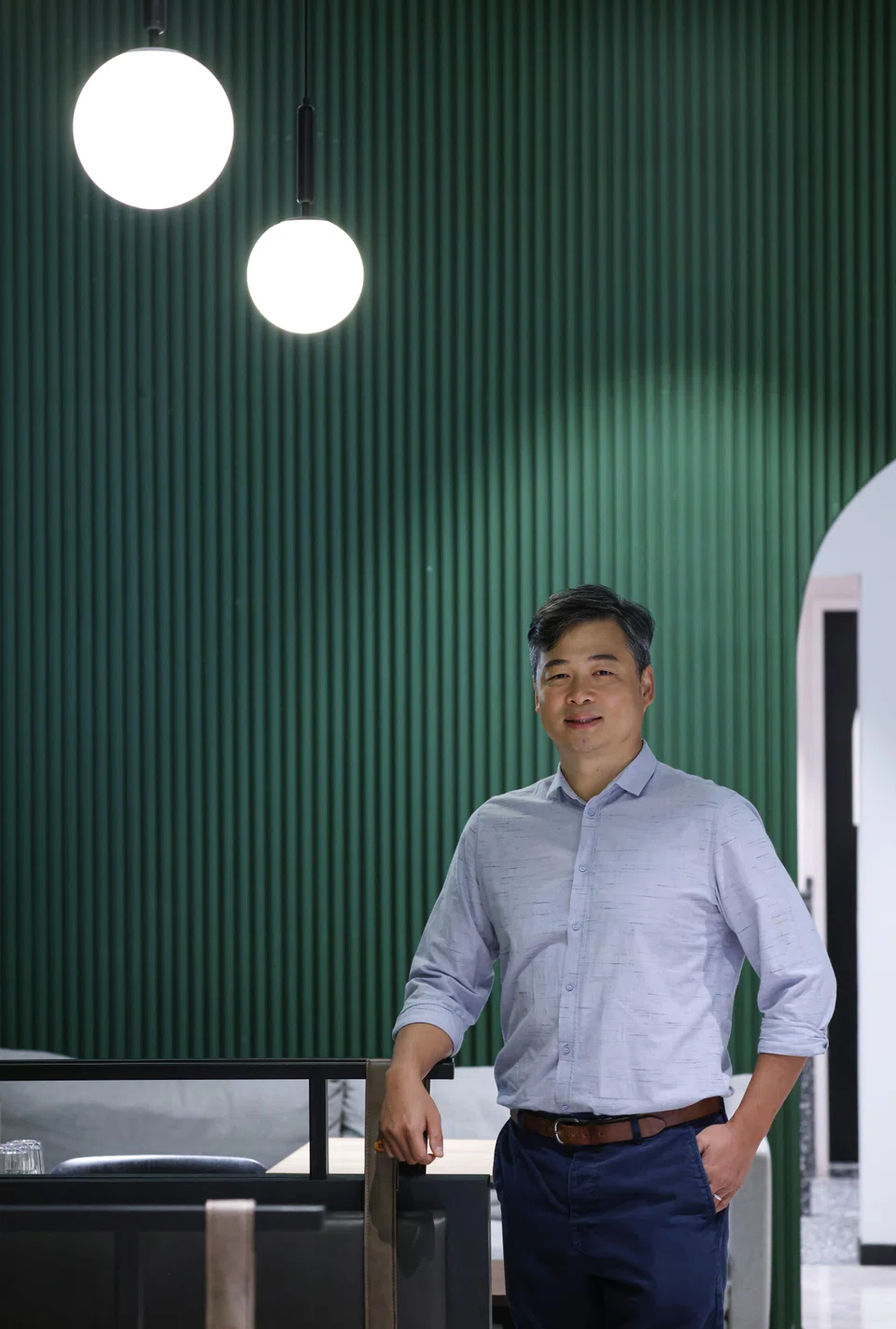
[SINGAPORE] As the grandson of the late Lim Goh Tong, founder of Malaysian conglomerate Genting Group, Lim Keong Wee had a blueprint for success already laid out for him. He has instead chosen to spend the past decade building Cover Projects, a turnkey solutions provider focused on creating and managing wellness-centric communities.
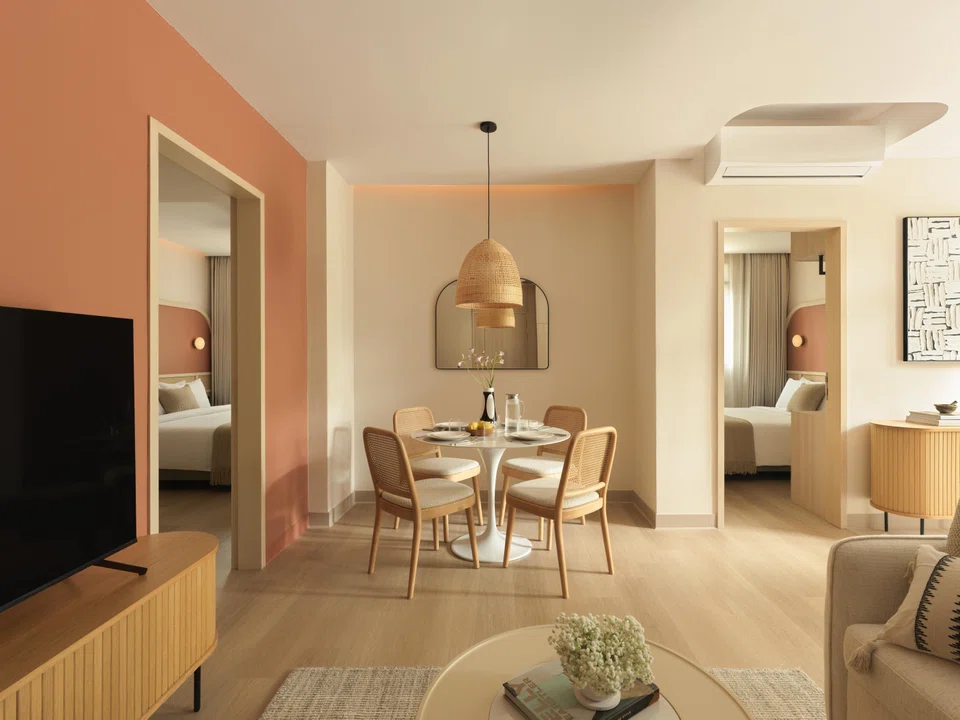
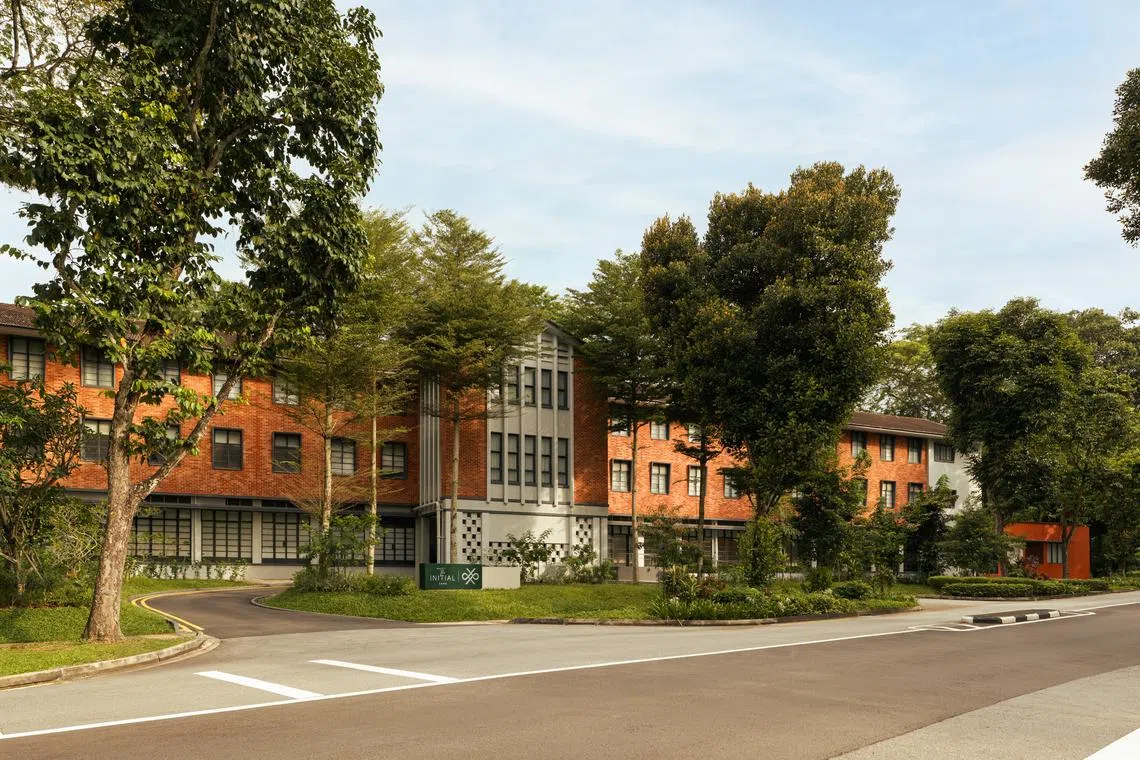
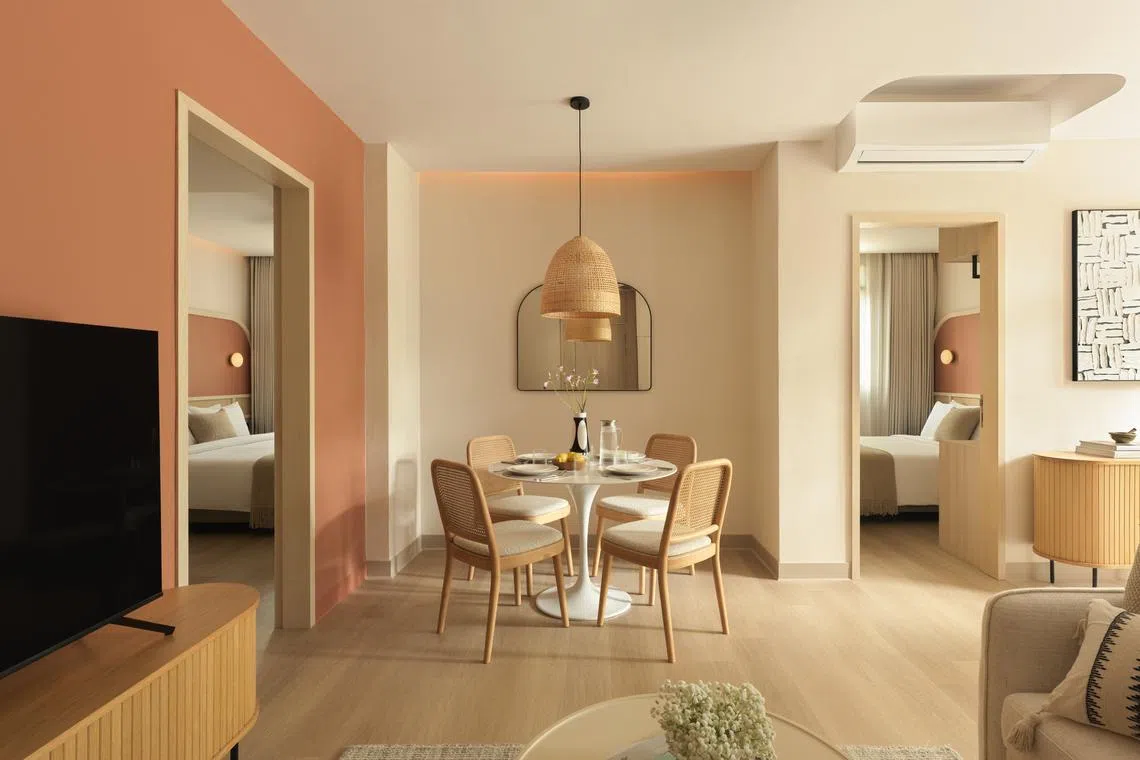
In July, the company opened The Initial Sama, a serviced residence at 26 Evans Road and its largest project to date. “Sama” is a Sanskrit word meaning balance and harmony, and the project aims to focus on contemporary well-being.
This was after Cover Projects beat 24 others to manage the state-owned property in January 2024, with the second-highest offer of S$265,000 a month. Bids for the price and quality tender, which closed in October 2023, ranged from S$63,000 to S$S319,000 a month.
Lim was particularly proud of how quickly the project came together. It took just one year to transform the iconic red brick property into a wellness hub which spans 153,821 square feet and consists of four apartment blocks with 92 units, ranging from studios to two-bedroom apartments. It includes a Hyrox-equipped gym, a spa, a dental clinic, bathhouses and a swimming pool.
The first guests were welcomed in early July and tenants such as specialist clinic Artisan Esthetic Dental and restaurant Yara have begun operations since.
A wellness programme is set to launch in December, offering services from preventative care to post-recovery and postpartum support. There are also plans to partner medical facilities in the area to offer pre and post-operation wellness and fitness programmes.
“We see ourselves as a partner to medical hospitals, as a way for their patients to recover while still being in a wellness-centric environment,” Lim said, adding that talks are already under way with Thomson Medical and Gleneagles Hospital, even as he noted that these discussions will take time due to technical audits and checks to meet healthcare standards.
These initiatives tap the strength of Singapore’s medical tourism sector and the fast-growing wellness tourism market, as the city-state positions itself as an urban wellness haven.
Rising demand for next-of-kin stays was evident at The Initial Residence, the company’s first serviced residence in Balestier.
“Because this property was so close to the medical hub (in Novena), we organically had about 8 to 10 per cent of bookings from the medical sector,” said Lim. “We saw caregivers or the family members who travel with the patient (book stays with us averaging) two to three weeks for consultations, surgery and recovery.”
At The Initial Sama, medical stays already account for 10 to 12 per cent of bookings. Overall occupancy at the property peaked at around 88 per cent in early October which coincided with the Singapore Grand Prix and cryptocurrency and Web3 conference Token2049.
While he declined to disclose revenue figures, Lim said the property’s internal rate of return is projected to be in the mid-teens once operations stabilise within two to three years.
The average daily rate at The Initial Sama is S$280, but Lim reckons that it could rise to around S$350 to S$380 following the launch of its wellness programmes. This translates to a monthly rate of less than S$12,000, a rate that is “a little bit conservative” especially compared with some postpartum or recovery care centres that charge between S$25,000 and S$30,000 a month, he said.
Expanding portfolio
Cover Projects is not Lim’s first foray into the business. He co-founded PAC with fellow architect Victoria Loh, who is also the co-founder of Cover Projects, in 2009.
PAC has a strong reputation in large-scale projects within the hospitality sector. One of its more notable projects is the Genting Secret Garden in Zhangjiakou, a ski resort which was the venue for the 2022 Beijing Winter Olympics. Genting Secret Gardens was co-founded by members of Genting Group.
Now, The Initial Sama is part of Cover Projects’ strategy to grow its leasing and management portfolio. The company is also exploring partnerships with developers and private owners of standalone buildings or integrated developments with serviced residence or co-living elements.
“We want to prove ourselves as a player that can deliver turnkey projects and manage the full life-cycle of a building, from design to management,” said Lim.
Singapore remains Cover Project’s core market, but the company is eyeing opportunities in markets such as Malaysia, Hong Kong and Japan.
“Our goal is to scale the company and expand the number of keys under management. We see opportunities across the living sector – from serviced residences to wellness and senior living – and we approach it as a single, integrated operating platform. Conservatively, we aim to reach at least 3,000 keys across our core markets (in Singapore, Malaysia and Hong Kong) in the next five to seven years,” he said.
In Malaysia, Lim noted that the co-living sector was more mature, offering growth potential. Currently, Cover Projects is working on the early stages of a management contract in Kuala Lumpur’s living sector.
Meanwhile in Hong Kong and Japan, Cover Projects sees opportunities, especially in the senior living and co-living sectors, given their dense urban populations, ageing demographics and “the gap between young professionals and the aged”.
“(In) Hong Kong, we know that there’s a huge market of aged folks who want to travel and age more actively,” said Lim. “Having hospitality properties across South-east Asia provides that network of travel and ageing for them, so that’s where we see potential.”
The purpose-built student accommodation (PBSA) sector in Hong Kong looks promising too.
“There’s very strong demand there, coupled with strong policy tailwinds, that makes it very ripe for student housing, especially in the budget hotel range where asset prices have come off quite significantly,” he said.
“(This) allows for capital investors to go in, and since PBSAs are a very specific niche that requires a turnkey operator like us to conceptualise the product, operationalise it and manage it.”
Back home, Lim said Cover Projects is considering the master leasing model for upcoming state tenders. “We’ve been in touch with some asset owners for master leases too, for a whole variety of assets.”
“What’s common to all the approaches is unlocking good value from the property and optimising returns in an integrated living facility,” he said. “We want to see how wellness can add value to the living sector, not only from a returns perspective but also how it’ll benefit the community and the residents.”
“With how broad the living sector is, spanning hotels, senior care and co-living, that can take you pretty much to the whole of Asia,” Lim added. “That’s something we are always on the lookout for, but I want to make sure that (our Singapore properties) are well-planted and mature before looking further afield.”
Lim said growing up in the Genting family definitely helped to shape his approach at Cover Projects.
“It gave me grounding in the realities of being an operator – functionality, operational flow and creating productive, commercially viable spaces while adding your own brand flair,” he said.
He added that his family was supportive of him forging his own path, providing mentorship without pressure to join the group.
When asked if Cover Projects could one day join the Genting ecosystem, Lim said the companies have kept discussions separate.
“Genting is a very diverse company with different segments… (Cover Projects) is a small SME (small or medium-sized enterprise) focused on accommodation. There isn’t an obvious convergence,” he said. “We’re focused on our own growth, our own space and our name in this segment.”
Three questions with Cover Projects co-founder Lim Keong Wee
Q: Was there a pivotal moment in your career or personal life that changed your approach to leadership?
Meeting other business owners, entrepreneurs and mentors have left an impact on me. But I keep coming back to the leadership qualities I’ve learnt from observing the family business, from the founder and second generation leaders. Those values remain true for me, both from a business and leadership standpoint.
The lessons I carry with me are about leading with integrity and by example. In this day and age, it’s also about leading on an equal basis – leading by example with a collaborative approach and naturally working to your team’s strengths.
Q: What is one piece of “unconventional wisdom” you swear by that most business schools would tell you is wrong?
I’ve never been to business school, so I’ve always relied on what I call the university of life.
It’s not so much about the skills you learn or have, but the attitude and mental approach you bring to business. One needs to be open to new ideas, explore the world, see different cultures and the diversity we have in the world, but stay clear-eyed about your end goal.
This open and collaborative attitude, and exposure to different industries and people, will help you collate a wealth of knowledge that no textbook can teach.
I started my career in architecture and design. But exposure to diverse hospitality projects – across scale, regions and markets – gave me a stepping stone into hospitality management. Travelling, participating in different projects, and learning from other leaders helped me identify trends and opportunities.
Once I saw a path forward, I asked myself: What gaps exist, and how do we bridge them? That’s something only experience can teach.
Q: When you feel burnout creeping in, what’s your non-business-related “panic button” activity or routine that reliably resets your focus?
Sports. Growing up, I played basketball competitively. While I don’t have time for competitive sports now, I still stay active with running.
I go for short or long runs, and it takes my mind off work. I also meditate every morning for about 10 to 15 minutes for a start. That usually sets me calm and collected to start my day.
TRENDING NOW

Britain’s mansion tax shows the difficulty of targeting wealth

Once staunchly pro-China, Malaysian Chinese businesses are now distancing themselves from Beijing
The only common thing in S-E Asia is that we all eat rice: Cisco’s Asean president
Singapore data centre operator DayOne opts for US IPO at likely US$20 billion valuation

