

Global investors bet on China's rental property
Beijing is wooing capital to help provide rental housing which is attracting plenty of institutional interest
 Add BT as a preferred source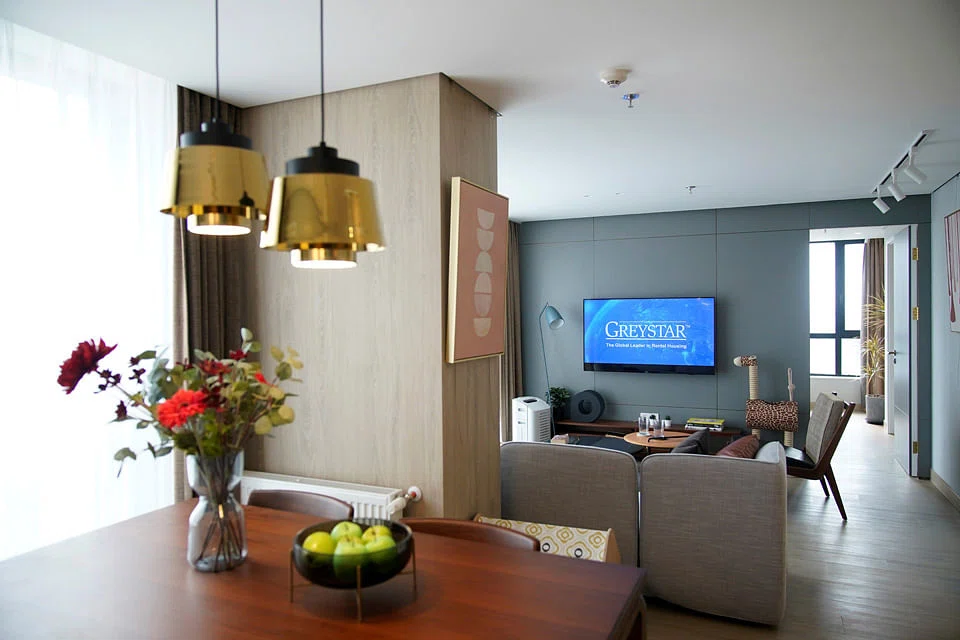
DeeperDive is a beta AI feature. Refer to full articles for the facts.
Shanghai
BEIJING'S regulatory firestorm is hitting large swathes of China's economy, but global investors including Blackstone and Warburg Pincus are ramping up bets on Chinese rental properties, judging that the political wind is blowing in their favour.
China has cracked down on private tutoring, brought monopolistic tech giants to their knees, and stepped up curbs on home buying. But Beijing is wooing capital to help provide rental housing, and that is attracting plenty of institutional interest.
In China, "people need to be housed, but houses have become too expensive to buy", said Graeme Torre, managing director of APG Asset Management, which has entered China's rental housing market in partnership with US property developer and operator Greystar.
"You need to have housing for rent. We like to invest with policy rather than trying to avoid it or invest against it. So I'd like to think it's politically correct," he added, estimating APG will commit around one billion euros (S$1.6 billion) into Chinese rental housing over the next three to five years.
Centralised long-term rental apartments - or multifamily as they are called in the United States - are the best solution to the housing affordability issue in China's cosmopolitan cities, said Qiqi Zhang, managing director of Warburg Pincus.
Navigate Asia in
a new global order
Get the insights delivered to your inbox.
"We think long-term rental housing is the next big opportunity in China, like logistics real estate a decade ago, or data centres five years ago." The US private equity giant has backed Chinese apartment rental brands including Mofang, Ziroom, TULU and Base.
There was little institutional interest in China's rental property market before 2017, when President Xi Jinping told the 19th Communist Party congress that China will encourage both housing purchase and renting. Beijing has stepped up calls this year to increase supply of rental housing. Among the measures that China has rolled out to revamp a market dominated by retail landlords, institutional investors hail two recent incentives - a big tax break effective this October, and the launch of a market for real estate investment trusts (Reits).
The tax break - expected to boost margins by 10 per cent for operators - and a potential exit channel through Reits are "the needle mover", said Eric Pang, China head of Capital Markets for property consultancy JLL.
Investors will also benefit from demographic tailwinds. Increasing population density and mobility in big cities such as Shanghai and Beijing, draconian curbs on home buying, as well as later marriages and childbearing will boost demand for multifamily housing, Mr Pang said. "This is a market with big potential," he added. "Global funds seeking returns will ramp up investment."
Foreign institutions already involved in China's rental housing market include Singaporean sovereign wealth fund GIC and the Canada Pension Plan Investment Board (CPPIB).
"Transaction volume in China won't climb to US$10 billion overnight, but there will be significant growth in the medium term," said Henry Chin, APAC head of research at CBRE, which recently helped Blackstone acquire a rental property in Shanghai.
Greystar, which launched a US$550 million China-focused fund in 2019 in partnership with Dutch pension investor APG and other global institutional investors, said it will now step up investing in China as government support becomes tangible. It already owns a 474-room rental apartment building in downtown Shanghai as well one under development.
"It's a bit like luxury cars. There's an added value to the product if there is a recognised and reputable brand attached," said Mr Torre of APG, which is backing Greystar's China expansion.
China's total renter population will exceed 240 million in 2022; and in Shanghai alone, the mid- and high-end multifamily market will generate at least 150 billion yuan (S$31.4 billion) in annual rental incomes, CBRE estimated.
Opportunistic capital is piling in. Private equity and venture capital investment in the sector has surged over the past few years, said CBRE.
Debt-fuelled expansion by some operators who adopt a light-asset model - renting flats from landlords on long-term leases and then subleting the properties to tenants - led to financial turmoil last year that crippled Danke Apartment, a major online apartment rental platform.
"It's not the problem with the market. It's the problem with some players' business models," said Charles Ma, Greater China managing director of Greystar, adding that more investors are adopting the strategy of buying and holding. "The industry shake-out is good for us. We have patience investing in this market." REUTERS
Decoding Asia newsletter: your guide to navigating Asia in a new global order. Sign up here to get Decoding Asia newsletter. Delivered to your inbox. Free.
Share with us your feedback on BT's products and services
TRENDING NOW
‘Boring’ is the new black: The stars are aligning for a Singapore stock market revival
Near sell-out launches in March boost developer sales to 1,300 units after four slow months

China pips the US if Asean is forced to choose, but analysts warn against reading it like a sports result

Genting Singapore’s Lim Kok Thay receives S$7.5 million pay package for FY2025

