

High interest rates sent home prices sliding in Sweden
 Add BT as a preferred source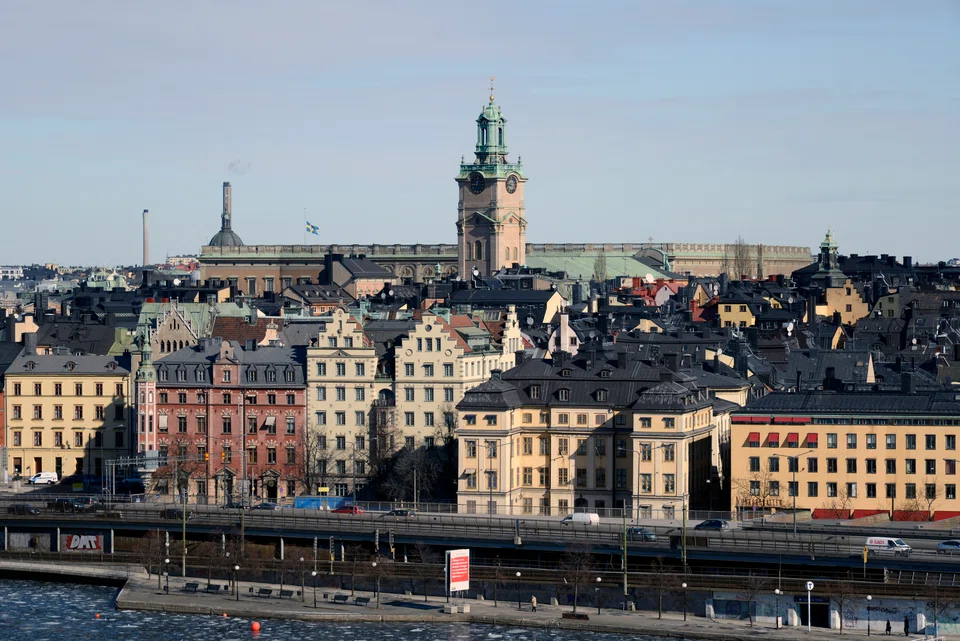
WHEN Madeleine Eiswohld decided to move in with her boyfriend last year, she never expected to find it so difficult to sell her apartment. It’s a cosy studio, with lots of natural light, in Huddinge, an increasingly desirable suburb of Stockholm.
But the timing was all wrong. She listed her place as Sweden’s housing market was tumbling through its most severe downturn in three decades. After only a few people viewed her apartment, Eiswohld lost hope that she would recover the money she had paid for it less than two years earlier.
“It’s been very scary,” Eiswohld, a 28-year-old visual merchandiser, said in her living area recently. In the end, the apartment sold last month for US$188,000, about 4 per cent less than what she had paid.
It could have been worse. From her kitchen table, she can see an identical apartment across a courtyard that recently sold for less.
House prices in Sweden plummeted about 15 per cent from their peak last March to the end of last year, and have mostly plateaued since then. The war in Ukraine, a European energy crisis and a global surge in inflation that has pushed up interest rates put an abrupt end to a run-up in Swedish house prices during the pandemic, when people outbid one another to move into larger homes.
Central banks around the world have spent most of the past year in a struggle against inflation. After sharply raising interest rates, major central banks, including the US Federal Reserve and the European Central Bank, are warning that inflation may persist longer than expected. Just as some banks have been caught off guard by quickly rising interest rates, economists are nervously eyeing global housing markets for signs of distress. Property prices have been heading south in Britain, Germany, the Netherlands, Canada, Australia and the United States.
But few places have been hit as hard as Sweden, which features an incendiary mix of high levels of household debt and the widespread use of variable or short-term fixed rates on home mortgages loans.
Three-quarters of new loans in Sweden have either a variable rate or a fixed rate for less than a year, according to the latest data from the European Mortgage Federation. In the eurozone, the average is about 25 per cent, and it’s a long way from a typical American mortgage, where loans are often fixed as long as 30 years.
So Swedish households quickly feel the impact of rising interest rates, pushing them to cut spending to pay higher mortgage costs. Since April, Sweden’s central bank, the Riksbank, has raised interest rates to 3 per cent from zero. And analysts expect the rate to keep rising amid signs that inflation, which rose at an annual rate of 12 per cent in February, is becoming embedded in the economy.
“This year is a lost year for Swedish households in many ways,” said Annika Winsth, an economist at Nordea, a bank that predicts that gross domestic product and private consumption will fall 1.8 per cent this year. The European Commission forecasts that Sweden’s economy will be the only one in the European Union to contract this year.
The severity of the housing market slump really depends on your vantage point. The recent decline has pushed the market back to about pre-pandemic levels, after a period when prices rose 20 per cent a year. From that perspective, “it’s not bad prices,” said Georgio Hadad, a broker in Huddinge for Fastighetsbyran, a real estate company. “But once you’ve tasted this 20 per cent increase, it’s bad.”
It has been a long time since Sweden experienced this kind of housing downturn – not since the 1990s, when a housing bubble burst and took down the banking system. Strict reforms later helped Sweden through the 2008 financial crisis.
Eiswohld, who sold her apartment as prices were sliding, had the misfortune of apartment shopping in the spring of 2021, when house prices were on an upswing.
“I scrolled and scrolled” through an online real estate site, she said, “but the prices were so high.” She finally found her place in Huddinge after spotting a listing, getting a private early viewing and putting in a bid instantly, offering more than the asking price.
In those days, when people were flocking to the suburbs, it wasn’t uncommon to have 40 to 50 people view one house, said Hadad, especially those seeking detached houses with gardens. Minutes after advertisements were posted, buyers would make large bids and ask for the listing to be taken down.
Now, it’s a struggle. “The buyer knows it’s their market,” Hadad said.
The past two months have offered some respite for Hadad. The new year brought some buyers back to the market. Across Sweden, apartment prices rose slightly in February and house prices plateaued, according to Svensk Maklarstatistik, which publishes housing statistics. (The Swedish rental market is heavily regulated, leaving a limited supply of rental apartments in the major cities.)
That doesn’t mean the downturn is over. “I have a hard time seeing that prices will turn and go up again,” Hadad said. “Not at the moment. There’s still too much uncertainty.”
Maria Wallin Fredholm, an economist at Swedbank, said the seasonal trend of people returning to the market after the holidays was probably masking the downward trend in house prices.
“For households, it’s just really uncertain about how much higher mortgage rates will go,” she said. “Until this uncertainty subsides, there’s going to continue to be fewer transactions being done with lower bidding activity.” NYTimes
Decoding Asia newsletter: your guide to navigating Asia in a new global order. Sign up here to get Decoding Asia newsletter. Delivered to your inbox. Free.
Share with us your feedback on BT's products and services
TRENDING NOW

Singapore Kitchen CEO, senior manager charged with alleged fraud, falsifying accounts; both to stay in jobs for now

Johor property old hand KSL readies family handover amid market boom

The tourism tug-of-war – concerts, cash and culture wars in Malaysia

Japanese mid-sized firms flocking to South-east Asia for growth

