

Hong Kong co-working providers thriving in virus crisis
Citizens are either escaping tiny apartments that are not conducive to work or are less concerned by the coronavirus
Singapore
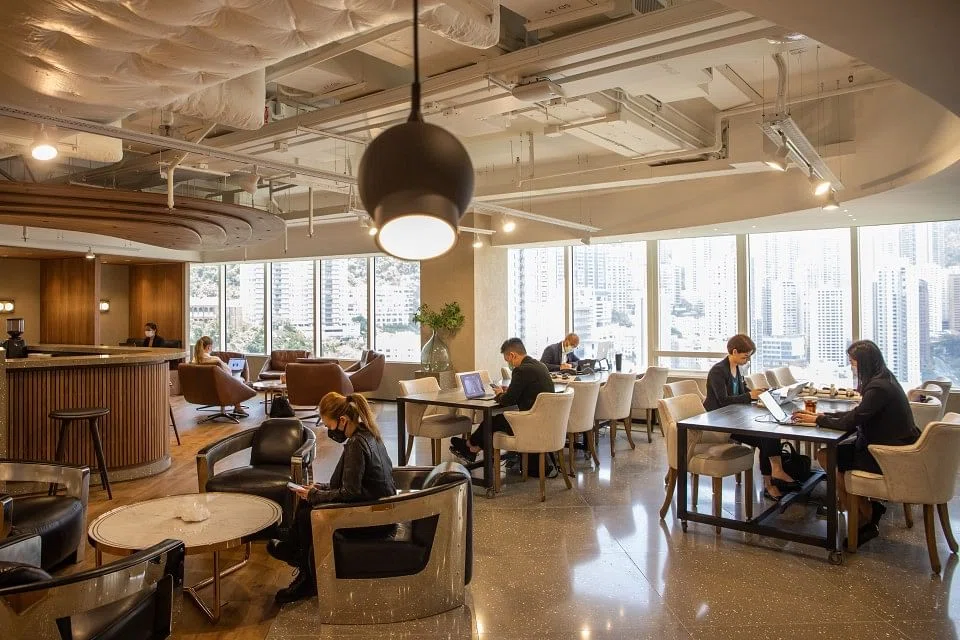
ON A recent Friday afternoon, dozens of people sat hunched over laptops at TheDesk's six-storey co-working space near Hong Kong's central business district, while others chatted over snacks at tables on the outdoor terrace - all of them ignoring government advice to work from home to stop the spread of the coronavirus.
Whether escaping tiny apartments that are not conducive to work, or less concerned by a virus that has infected around 1,000 residents compared to more than 110,000 New Yorkers, the surprise result is co-working providers are thriving in Hong Kong, even as much of the world remains in lockdown.
TheDesk signed up 25 per cent more new members in the first quarter than in the quarter prior, said its chief executive officer Thomas Hui.
"I think it is especially because the living environment in Hong Kong is very cramped, so there are a lot of disruptions to people working from home," he said.
The Executive Centre, a high-end serviced-office operator, leased 33 per cent more desk space in the first quarter in Hong Kong than a year earlier. Across its 135 mostly Asian centres, it grew about 9 per cent in the first three months of the year.
Companies are looking to conserve cash and retain flexibility rather than take the risk of committing to a long-term office lease, said CEO Paul Salnikow.
"The idea of signing a fixed lease with fixed rental commitment over a three-year period, which is the minimum term in Hong Kong, and then investing in the fit-out, buying the furniture, is an over-investment for most companies," he said.
It is a different story in Singapore, where a government-ordered shutdown of all but essential services means most workers have to stay home, with employers facing hefty fines or even jail if they do not enforce the measures.
In the early days of the outbreak, marketing manager Jivan Tulsani preferred to use a co-working office to working from home, free from the distractions of family members and Netflix.
Now he has no choice. The four-week circuit-breaker period, which lasts until May 4, has forced most co-working spaces to close, remaining accessible only to workers providing essential services such as banking, logistics and security.
Mr Tulsani's knowledge-sharing platform does not meet the criteria to continue operating.
Singapore's co-working spaces are popular with technology firms - from startups to multinational corporations - and the lockdown has hurt operators like JustCo. With all 17 of its centres closed to most workers, usage has declined, CEO Kong Wan Sing said, without providing figures.
Another problem JustCo faces - not receiving rent relief from its landlords despite the government providing a property tax rebate to ease the strain on commercial tenants.
To help its clients through the crisis, JustCo - which is backed by Singapore's sovereign wealth fund GIC - unveiled its own multi-million dollar relief package. It will benefit more than 3,000 companies across its centres in eight cities, including Singapore, Bangkok and Sydney.
WeWork, which made co-working hip before almost imploding last year, has closed its Indian offices indefinitely, but it remains open in Singapore, China and other Asia-Pacific nations.
In Australia, decals have been placed on floors and furniture to meet social-distancing guidelines. Pantries are operating with limited amenities, but the beer taps have been shut off.
In China, Hong Kong and Taiwan, all members must have their temperature checked and wear surgical masks, or risk being refused entry. Pets are no longer allowed.
With the world's biggest work-from-home experiment potentially reshaping the future role of the office, the test for the co-working industry will be to show it can provide a safe space for workers and companies seeking added flexibility.
"The challenge for a multinational is that if you put your staff in a co-working space, can you guarantee that you create a safe environment?" said Tim Armstrong, head of occupier services and commercial agency for the Asia-Pacific at Knight Frank.
"There will be pressure on co-working groups to show that they have gone above and beyond with their health and safety as well, if they want to entice multinationals in." BLOOMBERG
Decoding Asia newsletter: your guide to navigating Asia in a new global order. Sign up here to get Decoding Asia newsletter. Delivered to your inbox. Free.
Share with us your feedback on BT's products and services
TRENDING NOW

OCBC customers face difficulties accessing online, mobile banking services

SGX CEO Loh Boon Chye to step down; succession planning under way
Waymo founder predicts ‘landslide’ robotaxi adoption in Singapore, driven by high car costs

Vietnam’s northern provinces, not Hanoi or Ho Chi Minh City, are powering near 10% GDP growth

