



Hong Kong’s massive Northern Metropolis project to be ‘new economic engine’
Development being built on land near Shenzhen border will have office and commercial space, as well as homes for 2.5 million people
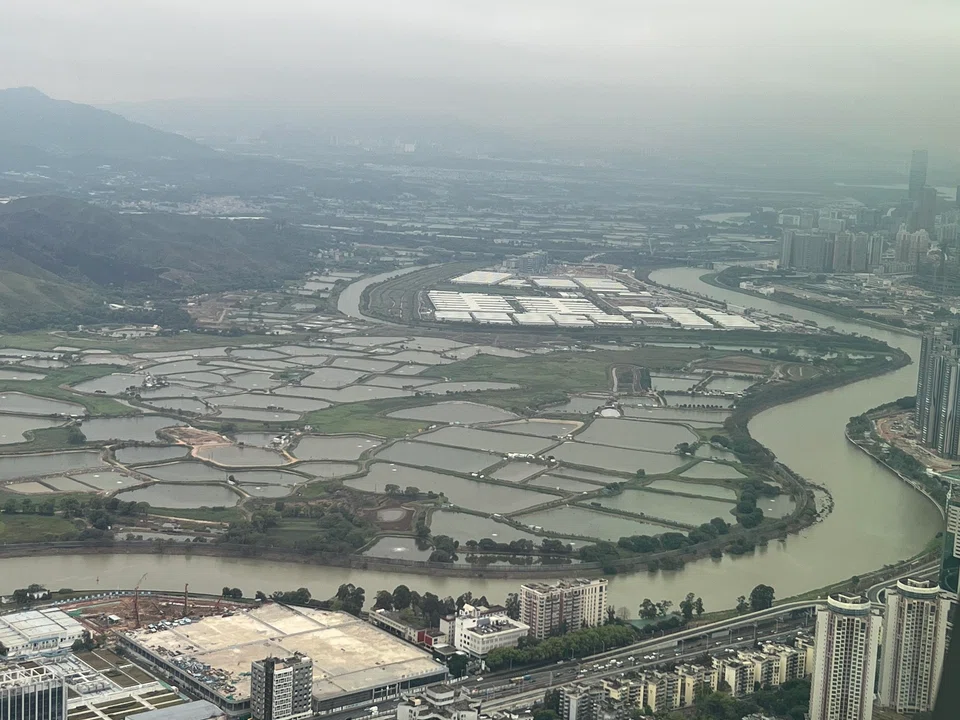
[HONG KONG] On a large plot of land near the border with Shenzhen, Hong Kong is busy building a new development called the Northern Metropolis.
Its designers envision the mega project – estimated to cost HK$224 billion (S$37 billion) but with the final bill likely to be higher – as a modern residential and commercial “super-city” with a focus on information and technology, supported by resources from neighbouring Shenzhen. The intent is to further integrate Hong Kong with China’s Greater Bay Area. The Northern Metropolis’ 30,000 hectares (ha) – about a third of Hong Kong’s land mass – include densely populated neighbourhoods as well as pristine virgin land on Hong Kong’s remote frontier, opposite the modernist skyline of Shenzhen’s commercial and political centre. In October 2025, Hong Kong Chief Executive John Lee created a steering committee, with himself as the chairman, to accelerate the project in alignment with China’s 14th Five-Year Plan, unveiled in 2020, which elevated Hong Kong to “an international AI (artificial intelligence) and tech centre.” “Strategically, it’s at the heart of tomorrow’s city,” said Barry Wilson, an adjunct professor at the University of Hong Kong and the immediate past president of the Hong Kong Institute of Urban Design.
“The land far from downtown Hong Kong is actually at the heart of the developing Hong Kong-Shenzhen twin cities. In my view, several decades from now, some of the most valuable real estate may well be the land closest to downtown Shenzhen,” he added.
Tech zones
Plans include tech zones equivalent in size to Hong Kong’s current business and financial districts – Sheung Wan, Central, Admiralty and Wan Chai – combined.
These zones will include 7 million square feet of office space – about 75 per cent of the city’s existing Grade-A office stock – to house a workforce of 120,000, roughly the same as Wan Chai and Admiralty combined, according to consultancy Colliers. The government’s Development Bureau, in a written reply to The Business Times, said it will create “a new economic engine of Hong Kong and a well-positioned platform for cooperation with the rest of the Greater Bay Area”.
The bureau said that new housing units have been completed since 2022, with four new towns under construction and four more lined up. In total, the metropolis will offer over 3,000 ha of new development land, capable of providing 500,000 new housing units and 500,000 new jobs. There are five-year and 10-year targets in place. In the first five-year phase to 2031, 30 per cent of the new development land – about 900 ha – will be “spade-ready”, the bureau said.
That means construction can begin immediately, with all necessary permits and approvals completed.
Some 70,000 housing units will be completed and ready for intake, and about 1 million sq m of economic floor space will be provided. In the second five-year phase to 2036, an additional 900 ha of land will be provided for some 170,000 housing units and about 10 million sq m of economic floor space. When fully completed, the new metropolis will accommodate 2.5 million residents and provide 650,000 jobs – up from the area’s current population of 980,000 and 134,000 jobs. A new HK$100 billion railway line will connect it to Shenzhen.
These big numbers inevitably raise some important questions, too. Where will these new residents come from, amid a declining population? Will public housing appeal to tech talent?
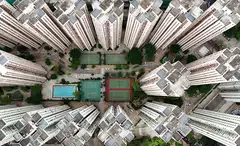

How will Hong Kong’s high housing costs compare to Shenzhen’s? And can the twin-city development proceed without destroying the natural environment and habitats that serve as a crucial green lung, akin to Central Park in New York City and Hyde Park in London? Hong Kong’s new metropolis area boasts one of the world’s most well-preserved ecological and cultural heritages, which Prof Wilson described as “a museum frozen in time” – protected from 1951 to 2012, before being gradually opened up. Next to an ever-shifting border with Shenzhen lie rolling green fields, agricultural fish ponds and wetlands dotted with low-rise village houses, as well as storage and logistics warehouses, container depots, truck parking lots, restaurants and even landfills. Some planning constraints are already evident. For instance, the main tech zone, San Tin Technopole, “takes bites out of what should probably be the most valuable green areas, and concerns remain about the poor connectivity and rural-urban integration”, said Prof Wilson. James Wang, research director of the Bay Area Hong Kong Centre, urged caution and suggested a step-by-step approach, focusing on the immediate five-year phase.
“Hong Kong excels in a bottom-up approach, which is the traditional way of Hong Kong thinking – very down-to-earth, very practical. With two-way commuting across the border by workers living on each side of the Shenzhen River, the process will be like an experiment to see when the demand and conditions are right.” he noted.
“The Hong Kong government’s main task has been to make land available for this new metropolis, as most of the land is privately owned and not under government control. Converting private land into the so-called ‘future build-up area’ is the first and most challenging hurdle,” said Wang. Observers said that the tech zones will take precedence. Colliers said the government is prioritising the development of the San Tin Technopole, which will cover over 300 ha and is planned as “the flagship innovation and technology project” in Hong Kong and the Greater Bay Area. Among local developers, 85 companies have already endorsed the government’s plan. However, they face high financing and construction costs, and declining property prices in a sluggish market.
They also must expand their traditional role to include site formation and infrastructure works, construction of roads and open spaces, and returning non-residential sites to the government – factors that consultancy JLL said “could limit profitability and dampen the private sector’s interest”. Alkan Au, JLL’s head of value and risk advisory, said: “Large-scale land disposal is a crucial step in accelerating development.”
He noted several potential concerns from investors, including the difficulty of obtaining large upfront payments, and a lack of both financing and expertise in developing public infrastructure, such as roads and drainage systems. Redundancy is another concern. Analysts at CBRE have recommended a review of the zoning for an additional 77-ha tech park whose “demand can be absorbed by commercial buildings within mixed-use and commercial zones”, given that San Tin Technopole has already reserved over 300 ha for the same purpose. The most promising opportunity may be university towns, which Wang of the Bay Area Hong Kong Centre said was attracting strong interest.
“The scale of university towns can quickly grow to something comparable to other existing new towns,” he said. Professor Tim Cheng of the Hong Kong University of Science and Technology compared the metropolis to “Hong Kong’s moonshot project”.
He called on the government to “prioritise livability, creating vibrant communities with quality housing, international schools and cultural amenities that make global talent want to put down roots, not just pass through”.
Decoding Asia newsletter: your guide to navigating Asia in a new global order. Sign up here to get Decoding Asia newsletter. Delivered to your inbox. Free.
Share with us your feedback on BT's products and services
TRENDING NOW

Why US$100 oil, 5% US yields affect Singdollar, ringgit differently vs other Asean currencies
Asia needs new energy security architecture

Despite the de-dollarisation debate, demand for dollar liquidity in Asia is growing

Anthropic to open Singapore office in October, sees it as a ‘standout market’ for Claude

