

Hotels not walking the talk on cleanliness, say guests
 Add BT as a preferred source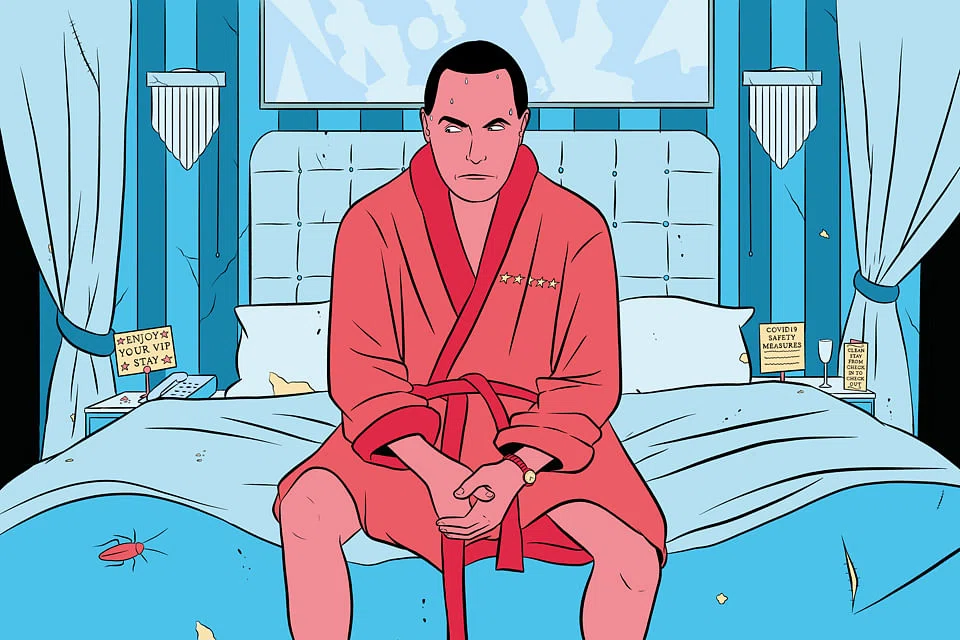
In June, Charles Kunz, a Titanium member of Marriott's Bonvoy loyalty programme, stayed at the Westin Atlanta Airport and found "the largest cockroach I've ever seen" on his bed the next morning.
In July, airline product development executive and Bonvoy Lifetime Platinum member Jeff Coons and his wife spent three nights at the Sheraton Panama City Beach Golf & Spa Resort in Florida, and found mask usage "seemingly optional" among hotel staff, and only one hand sanitiser dispenser could be found anywhere. The toilet seat assembly in his bathroom was broken, and there was an oversized Lego block beneath a guest room chair.
Major hotel companies have been promoting new cleaning initiatives since the spring as a way to regain the confidence of travellers in the wake of the coronavirus pandemic. But guests at hotels in the United States - including their most valuable customers, loyalty programme members - say they are not living up to their promises. Other travellers, after stays at both chain and independent hotels across the country, have reported dissatisfaction with enforcement of cleanliness and mask-wearing standards on TripAdvisor, Facebook and forums like FlyerTalk.
"I wouldn't be surprised if this becomes the centre of a coronavirus outbreak," wrote one commenter on TripAdvisor after listing concerns about the cleanliness of the common areas and hotel rooms at the Boar's Head Resort in Charlottesville, Virginia.
The issue of cleanliness aside, the pandemic has wreaked havoc with all sectors of the travel industry. According to a report issued last week by the US Travel Association, a trade group, the pandemic, since the beginning of March, has resulted in more than US$341 billion in cumulative losses for the travel industry in the US.
In a forecast released this month, STR, a lodging research company, and Tourism Economics, a forecasting and analysis firm, predicted "full recovery in US hotel demand and room revenue remains unlikely until 2023 and 2024, respectively".
But cleanliness, or the lack thereof, is the primary factor for would-be travellers, according to a study released last week by the American Hotel and Lodging Association (AHLA). Surveying around 700 travellers who spent five or more nights in a hotel in 2019, the study aimed to uncover frequent travellers' sentiments about enhanced cleaning standards.
When presented with eight factors that could determine their next hotel stay, the highest percentage of respondents - 34 per cent - reported that cleanliness was the number one factor when choosing a hotel, besides safety, price and location.
Henry Harteveldt, the founder of Atmosphere Research Group, a San Francisco-based travel market research firm, also conducted a survey of 2,500 business and leisure travellers in the US last month. Three-quarters of respondents said they were somewhat or very concerned about catching Covid-19. Of the approximately 1,060 respondents who had stayed at least once in a hotel in the previous year, over 80 per cent said it was important that hotels exceed guidelines for cleaning guest rooms issued by the World Health Organization (WHO) and Centers for Disease Control and Prevention (CDC), whose guidelines include, among other measures, the frequent use of Environmental Protection Agency-approved disinfectants on "surfaces and objects touched by multiple people," as well as practicing social distancing and wearing masks.
Not surprisingly, cleanliness issues also pose problems for some hotel housekeepers. Lydia Hernandez has worked as a housekeeper for 15 years at the Hilton Philadelphia at Penn's Landing, When the pandemic began, she only worked one day a week; more recently, she has been working five days a week, 8.5 hours each day. She said the hotel currently has between eight and 10 housekeepers working full time; before the pandemic, she said there were 35.
Before the pandemic, she cleaned all guest rooms every day, a process she said took half-an-hour per room. Now she only cleans a guest room when a guest checks out and must follow Hilton's new cleanliness standards. These include deep-cleaning 10 high-touch areas, de-cluttering paper amenities and placing a seal on the door of the guest room to indicate it has not been entered since it was cleaned.
Daily room cleaning was the norm before the pandemic; for sustainability and cost-cutting reasons, some brands permitted guests to opt out. The WHO currently recommends suspending these opt-out programmes, a step some hotel companies have taken in the wake of the pandemic.
The frequency of room cleaning is a topic of much debate in the industry: Last month, the city of San Francisco's board of supervisors passed a "healthy buildings" ordinance that requires daily hotel room cleaning. Local hotel groups and AHLA are suing, claiming the ordinance would "create hardship for an industry that is already suffering."
If hotel owners neglect new cleanliness standards, Mr Harteveldt warned this could come back to haunt them in the age of social media.
"People can and do share all aspects of travel. To post images of dirty or inadequately cleaned rooms that others may see, with the risk that the images go viral, will create a much bigger problem for the hotel owner and brand in the long run than the cost of properly cleaning the rooms," he said. NYTIMES
Decoding Asia newsletter: your guide to navigating Asia in a new global order. Sign up here to get Decoding Asia newsletter. Delivered to your inbox. Free.
Share with us your feedback on BT's products and services
TRENDING NOW

Dim sum chain Tim Ho Wan to close first Singapore outlet as part of Plaza Singapura’s redevelopment
What’s wrong with Orchard Road? Experts weigh in on the street’s cachet and its future
Sunway MCL, CSC make bold bet on River Valley site with S$1,730 psf ppr bid at S$750.6 million
DBS sees 46% upside for Jardine Matheson; analysts expect it to surpass ‘conservative’ targets

