In a Covid year, new condos' price-income ratio widens
Ratio captures rising prices against first decline in household income in over a decade; mortgage rates are inching up globally

Singapore
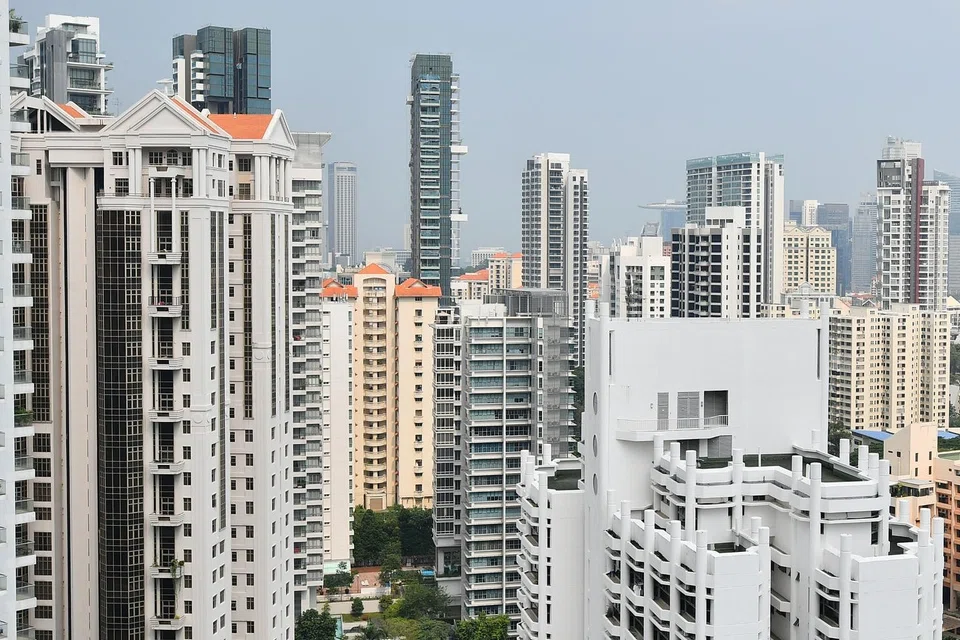
LIKE several countries across the world, Singapore has seen private housing prices move higher in spite of a global pandemic.
Given this, fresh data shows that the gap between incomes and prices of private non-landed homes continued to widen in 2020.
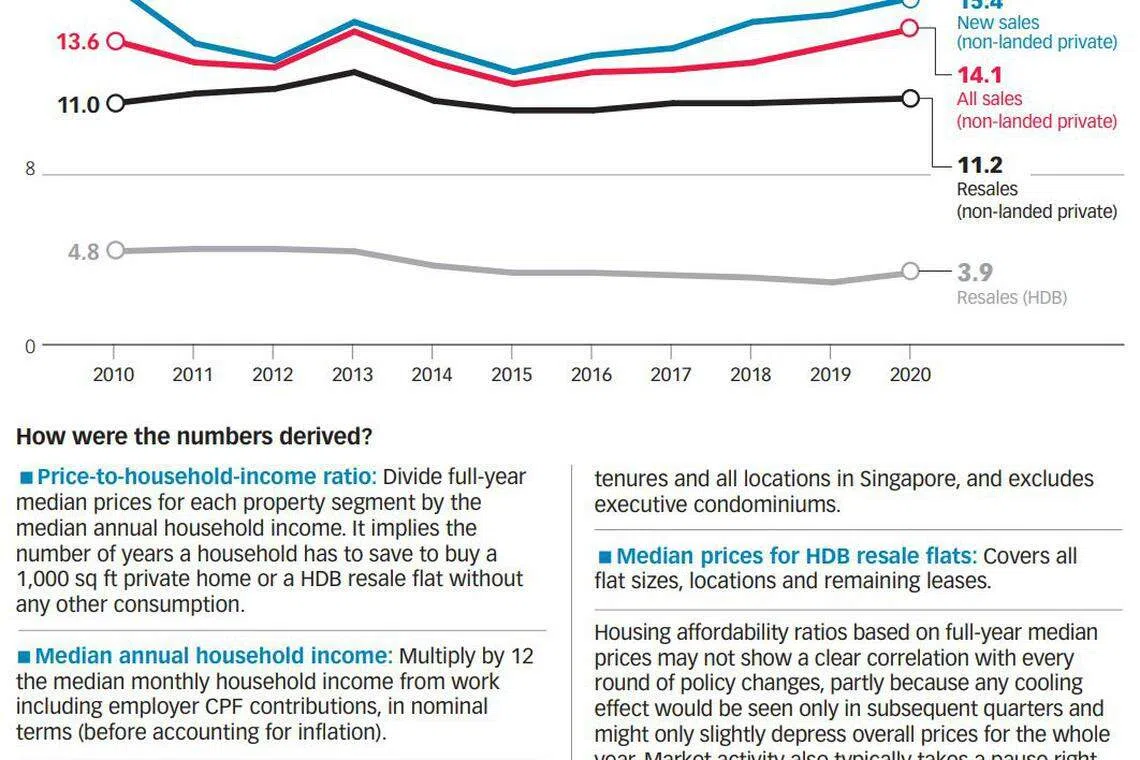
Specifically, the gap - known as an "affordability ratio" - between prices of new condominiums sold and household income continues to be at its widest in a decade, The Business Times' analysis of data from Knight Frank, Colliers International, OrangeTee & Tie, Urban Redevelopment Authority and Department of Statistics (DOS) showed.
The analysis uses median property prices covering all land tenures and locations in Singapore, excluding executive condominiums (ECs).To get these prices, the median per square foot (psf) price is multiplied by 1,000 sq ft, which is the methodology used by Knight Frank. Median annual household income is derived by multiplying by 12 the median monthly household income from work including employer CPF contributions.
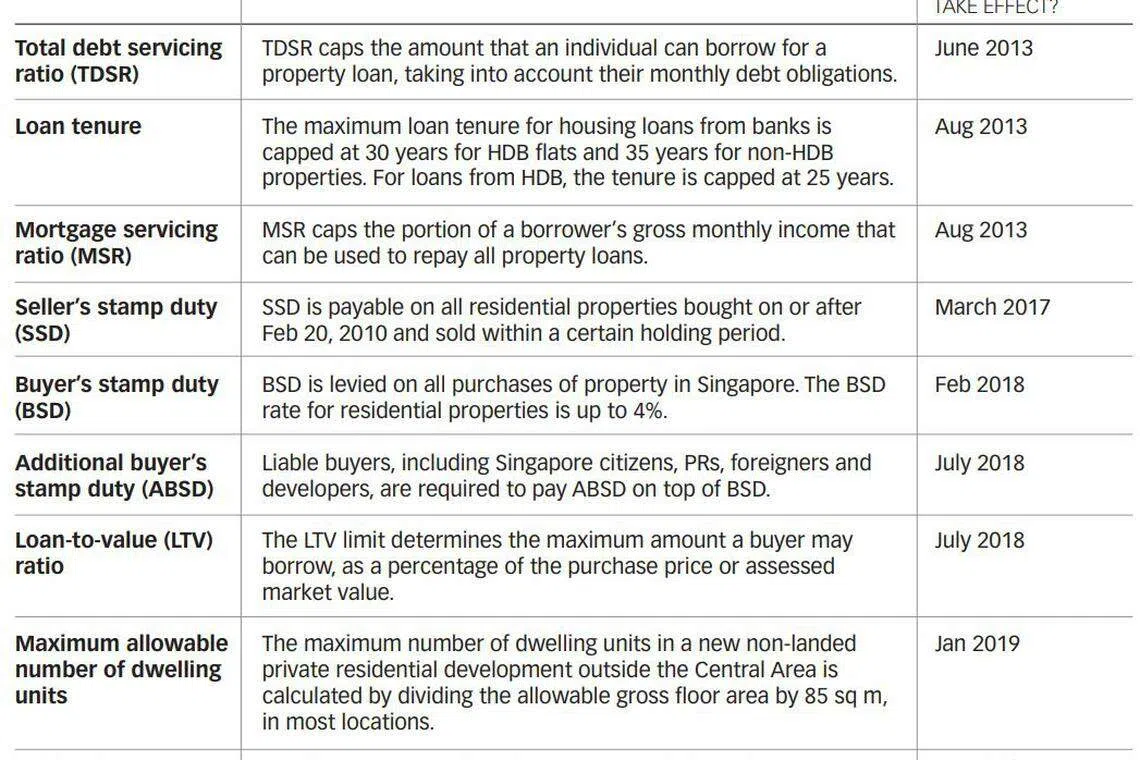
This price-to-income ratio is one affordability indicator brought to the fore amid market speculation of new cooling measures this year.
To be clear, the price-to-income ratio for new sales has been rising consecutively since 2016.
But in a year of Covid-19, the 2020 ratio stands out as it captures the first decline in household income in over a decade. DOS figures showed Singapore's 2020 median monthly household income from work falling 2.5 per cent year-on-year to S$9,189. Despite this, private non-landed home prices are now above their all-time peak in the third quarter of 2013, data from Colliers showed.
The availability of cheap debt, demand from HDB upgraders and Covid-19's uneven impact are some factors spurring on the private housing market. This is even as consumers are meeting existing regulations to deter over-leverage.
DBS Group Research analyst Derek Tan said the rising affordability ratio is "certainly something to look out for". A high ratio suggests households have to stretch their finances to buy a property. "This sparks the question of retirement adequacy, especially if one finances the majority of a property purchase with CPF savings."
The price-to-income ratio for new sales of non-landed private residential properties grew to 15.4 in 2020 from 14.7 in 2019, assuming a 1,000 sq ft unit. That means a household, without spending on anything else, has to save minimally for 15.4 years to buy a new condo unit. In 2010 - the last decade-high - the ratio was 15.9. (To be clear, in 2019, the 14.7 ratio already hit levels set at 2010.)
The same data shows the price-to-income ratio staying largely stable for resales, creeping up to 11.2, from 11.1 in 2019. It comes as median prices last year rose for new condos but fell for resale condos.
BT ran more checks by calculating prices based on absolute median quantums - rather than psf prices with an assumed 1,000 sq ft size - against median household incomes. This showed just two straight years of an increasing "affordability ratio" for new sales, though 2020's ratio of 12.1 grew more significantly over 2019 than the year prior. This ratio is now at its highest since 2010's 14.8.
Colliers research head Tricia Song noted that while median psf prices of all private home sales rose 50 per cent in 2010-2020, median absolute prices went up by just 24 per cent. Median incomes grew 45 per cent in this time. The slightly different scenes painted from the two data sets may reflect a skew from demand for smaller units, which fetch higher psf price but lower absolute quantums.
Private properties, excluding ECs, make up 25-26 per cent of all residential stock in Singapore. In general, private homes have been accessible mainly to the top 30 per cent of earners, analysts have said.
If calculated using the average top 30 per cent household incomes from work each year, the price-to-income ratio for new sales based on median psf prices has trended higher for the well-heeled since 2018. In 2020, the gap between new condo prices and the highest 30 per cent of household incomes was at its widest in over a decade, with a ratio of 6.3.
It has remained stable for resales. For the top 30 per cent of earners, resale condos' "affordability ratio" in 2020 has been flat at 4.6 since 2018.
This picture likewise indicates the widening price gap between new and resale condos, which "will probably balance itself in time to come", with either resale prices going up or new sales prices falling, Ms Song said.
The household income data used in BT's analysis captures only Singaporeans and permanent residents (PRs), while the property price data includes foreigners.
Sing Tien Foo, director at the Institute of Real Estate and Urban Studies at NUS, noted that foreign buyers may pay a slight premium relative to locals. Ong Choon Fah, Edmund Tie & Co's chief executive, observed too that new citizens and PRs, as well as high-net-worth individuals, are buying homes priced at the higher end of the market.
Knight Frank Singapore's research head Leonard Tay said the affordability trend, reflecting Covid-19's impact, might not be of concern if it is short-lived and confined to 2020 and the first half of this year.
To add, this affordability ratio is not the only indicator of the market's strength. For instance, income from work is not the only source of household capital, Mr Tay said. "At least two generations of Singaporeans have benefited from asset appreciation" thanks to Singapore's economic development in the last five decades. Savings amassed by baby boomers and Generation X can also fund their children's home aspirations."
Colliers' Ms Song highlighted that with the current ultra-low interest rates, other factors to look at include the household debt-servicing ratio, household debt as a percentage of assets, projected housing supply, and forecast income growth rate.
The market's level of subsales is another thing to consider - and this remains low for now, said DBS's Mr Tan.
Capital inflows from abroad and the pandemic's uneven impact on sectors also need to be taken into account. Investment demand from Singaporeans that were less affected economically by Covid-19 was likely a driver of home prices last year, Barclays economist Brian Tan said.
Christine Sun, OrangeTee & Tie senior vice-president of research and analytics, said a wait-and-see approach may be apt as the economy is still recovering and any cooling measures could affect other sectors such as construction and banking. If Singapore's gross domestic product picks up "substantially" in the first quarter of 2021, the property price growth may not be a major issue, Ms Sun noted.
OCBC chief economist Selena Ling said while policymakers would like to maintain a sustainable property market and avoid boom-and-bust cycles, the decision to intervene is not an easy one. Further measures will potentially interfere with consumer behaviour and affect developers' bottomline. "This is further complicated by the fact that the interest-rate environment is very low and the property demand driver is mostly local buyers and not arising from property speculation or foreign buying," she added.
Edmund Tie's Ms Ong similarly said that although mortgage rates are likely to stay low, they are inching up globally. "We are in a good space but must remain vigilant to ensure the market is fundamentally supported, given the wall of money looking for investment opportunities globally."