

India's forest-planting push leaves indigenous women out in the cold
Chennai
DURING the bone-chilling winters of Panna in central India's Madhya Pradesh state, Janaka Bai needs at least three bundles of firewood each week to keep her family warm and another to fuel her kitchen stove every day.
Living on the edge of India's diamond mining hub, Bai has been fighting to keep on collecting the firewood she needs nearby, as schemes to increase the country's shrinking forests have shut her and others out with fences and guards.
From snatched axes to risking arrest for trespass, indigenous women are finding themselves in conflict with new Indian laws that mandate large-scale tree-planting to compensate for declines in forest cover.
"They call us firewood thieves and sometimes take us to local police stations," said Bai, 45, by phone from her village. "Or they threaten us, snatch our tools and shoo us out of the forest. And yet we go back because there is no choice."
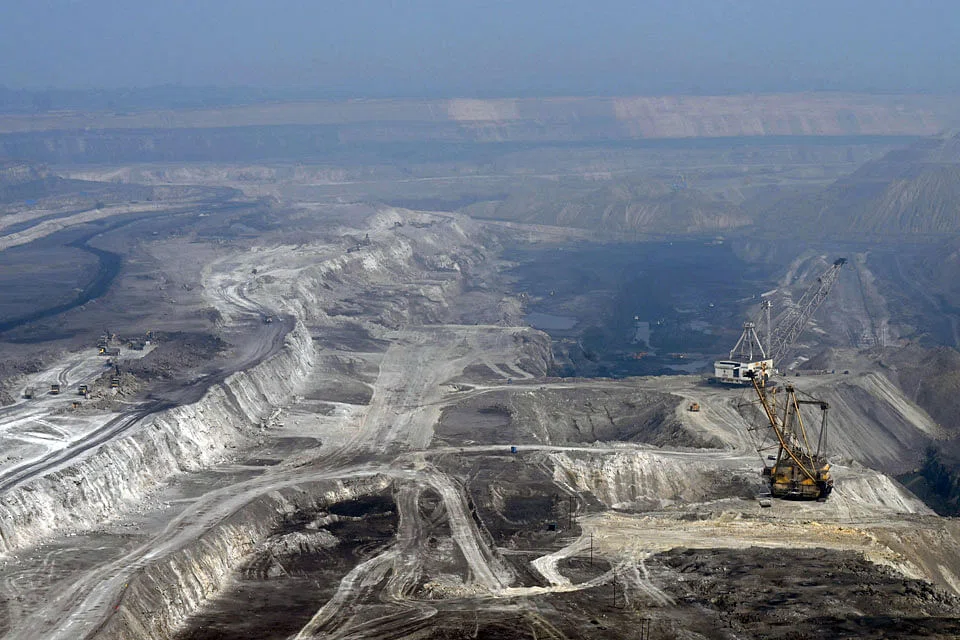
India's Compensatory Afforestation Fund Management and Planning Authority (CAMPA) was set up to promote forest restoration as a way of compensating for trees cleared for other uses such as mining and infrastructure projects.
But the new plantations - out of bounds to villagers - have led to the loss of both homes and livelihoods for thousands of indigenous people across India, forest rights campaigners say.
The latest government data states that 22 mining projects led to the diversion of 3,846 hectares of forest land in 2019.
India's Ministry of Environment, Forest and Climate Change had disbursed 474 billion rupees (S$8.5 billion) to 27 states under CAMPA programmes as of August 2019.
Officials say the afforestation is taking place on degraded or government land. But the programmes have become flashpoints, with campaigners arguing due process has not been followed and land rights claims ignored.
From bypassing village council approvals to not informing locals about plans, many say it is only when the fences are erected that they realise they can no longer access the land.
"Sometimes the boundary walls are being made around standing crops waiting to be harvested," said Sadhana Meena, a member of Adivasi Ekta Parishad, a non-governmental organisation working on tribal rights in the western state of Rajasthan. "People are simply told it is not their land and are literally left to fend for themselves."
Denying those allegations, CAMPA chief executive officer (CEO) Subhash Chandra said the bona fide claims and needs of local people are always considered before work starts on the plantations.
"Anyone whose rights are affected, including to fodder and firewood, has to be compensated," Chandra told Reuters.
But, he added, new tree plantations do not succeed where locals have unlimited access to the land, or if animals are allowed to graze there, which is why the areas are fenced off. "A forest takes more than 10 years to develop and everyone has to solve these challenges together," he said.
Bai is one of thousands of indigenous women who now sneak into their native forests to collect firewood and seasonal produce.
With forests harder to access and CAMPA plantations off limits, they go in the mornings, wary of being caught by guards.
Bai said local people are being driven away from the natural areas that were once their home - firstly when the forests are used for other purposes such as mining.
"The men migrate and the women manage till the CAMPA plantations displace them again," she said. "It means moving further away from the forests they grew up in and continue to be dependent on for food, livelihood (and) firewood."
India's tribes make up around 10 per cent of its 1.3 billion population, with the majority living in remote villages.
Many are in mineral-rich regions such as Odisha, Madhya Pradesh, Chhattisgarh and Jharkhand, where everyday lives are impacted by decades of mining.
Collecting and selling forest produce is the main economic activity for people living in and adjoining forests in about 173,000 villages, providing both subsistence and cash income to an estimated 100 million people, government data shows. Between 20 and 40 per cent of their annual earnings come from forest-derived products such as bamboo, brushwood, cane, cocoons, honey, wax, medicinal plants and herbs.
Indigenous rights activists say women especially depend on gathering and selling natural resources from the forest. "We were self-reliant, and the forest produce gave us enough income for a comfortable life," Bai said. "Now we are forced to take loans, sometimes from mine owners who then exploit us till we pay back. There is no other work, particularly for women."
In the last couple of years, at least 5 villages around diamond mines in the Chhatarpur region of Panna have lost nearly 200 ha of land to initiatives launched by the forest department, said a report by Dhaatri.
About 125 villages are affected by granite, limestone and zinc mining in the forests of Udaipur in Rajasthan, meanwhile, with nearly 80 per cent of villagers losing land to CAMPA plantations, Meena said.
Similar reports have also been compiled in other states.
In 2006, India passed the Forest Rights Act which recognises the right of tribes to inhabit land their forefathers settled on centuries ago. But researchers say implementation has been poor.
"There is a clear conflict between how communities have managed their resources for decades and new plans formulated by officials," said Satya Ranjan Mahakul, assistant professor at the National Institute of Rural Development and Panchayati Raj.
"The law gives communities the right to decide how their area should be developed but this right is rarely exercised. There are loopholes that get exploited routinely. Ownership of every resource is slowly being taken over by the state." According to a 2020 report by Land Conflict Watch, an India-based data research network, about half of mining-related conflicts violated the Forest Rights Act. REUTERS
Decoding Asia newsletter: your guide to navigating Asia in a new global order. Sign up here to get Decoding Asia newsletter. Delivered to your inbox. Free.
Share with us your feedback on BT's products and services
TRENDING NOW

Can a first-time homebuyer couple earning S$18,000 a month afford a new EC unit?

He built the Vingroup empire. Now South-east Asia’s richest man is handing some key roles to his sons

Asia needs new energy security architecture

Chagee, Mixue and Luckin won the market. Sustaining their edge is the harder part

