Indonesia’s JSI Group eyes growth after Jakarta opens door to foreign ownership of property
Samuel Oh
INDONESIA-LISTED property group Jakarta Setiabudi Internasional (JSI Group) has been actively looking for opportunities at home and abroad.
This comes after the Indonesian government announced the relaxation of rules on foreign ownership of property last September.
Before this move, which aims to boost foreign investment, foreigners could buy property in Indonesia only if they held a specific type of visa – the Limited Stay Permit Card or Permanent Stay Permit Card.
“With this relaxation, foreigners only need to pay the usual transaction fees such as stamp duties and legal fees now, similar to the locals when they buy a property,” said JSI Group director and board member Chandra Asali.
The decision to ease property ownership rules will have far-reaching effects on the real estate market and economy, and is one that industry players have been pushing for, for years, he said.
Asali told The Business Times this change provides foreign purchasers with a “clearer view on legality and tax implications during the purchase”.
With many markets in South-east Asia and the Asia-Pacific levying additional taxes and duties on property purchases, he said the Indonesian government’s approach has helped to spur demand.
JSI Group’s largest portfolio is in the hotel segment with 11 properties. In Bali, it owns three hotels, and is looking to launch a new resort-style condo development, Asali added.
“We will definitely tap on this foreign ownership rights because we have big exposure in Bali,” he said.
A foreign national can own only one plot of land of up to 2,000 sq m in size. Different tiers of pricing also apply when buying landed houses or apartments in different cities in Indonesia.
For example, in Jakarta, the minimum price to pay when buying a landed house is five billion rupiah (S$427,000), while for an apartment unit, foreigners can only buy those with a minimum price tag of three billion rupiah.
This differentiation in pricing ensures that housing remains affordable and locals are not priced out, said Asali.
With higher-for-longer interest rates affecting sentiment over the last few years, Asali said that the current mortgage rate of 5.5 to 7.5 per cent is “still pretty much affordable” for buyers in Indonesia.
He said the market should be able to “accept” such rates, as the country had previously experienced higher rates of 13 to 15 per cent.
Asali remains optimistic on the luxury residential segment in Indonesia. Besides the easing of requirements for foreign ownership, the country’s political situation in 2024 is expected to be conducive, he said.
The 7 to 9 per cent rise in the number of ultra-high-net-worth individuals in the country has also helped to support demand for luxury properties, he added.
JSI Group is currently developing a 667-hectare residential township in Medan. Asali said the company is also looking to venture into the logistics segment in the near term. “The demand for logistics in Indonesia is huge,” he said.
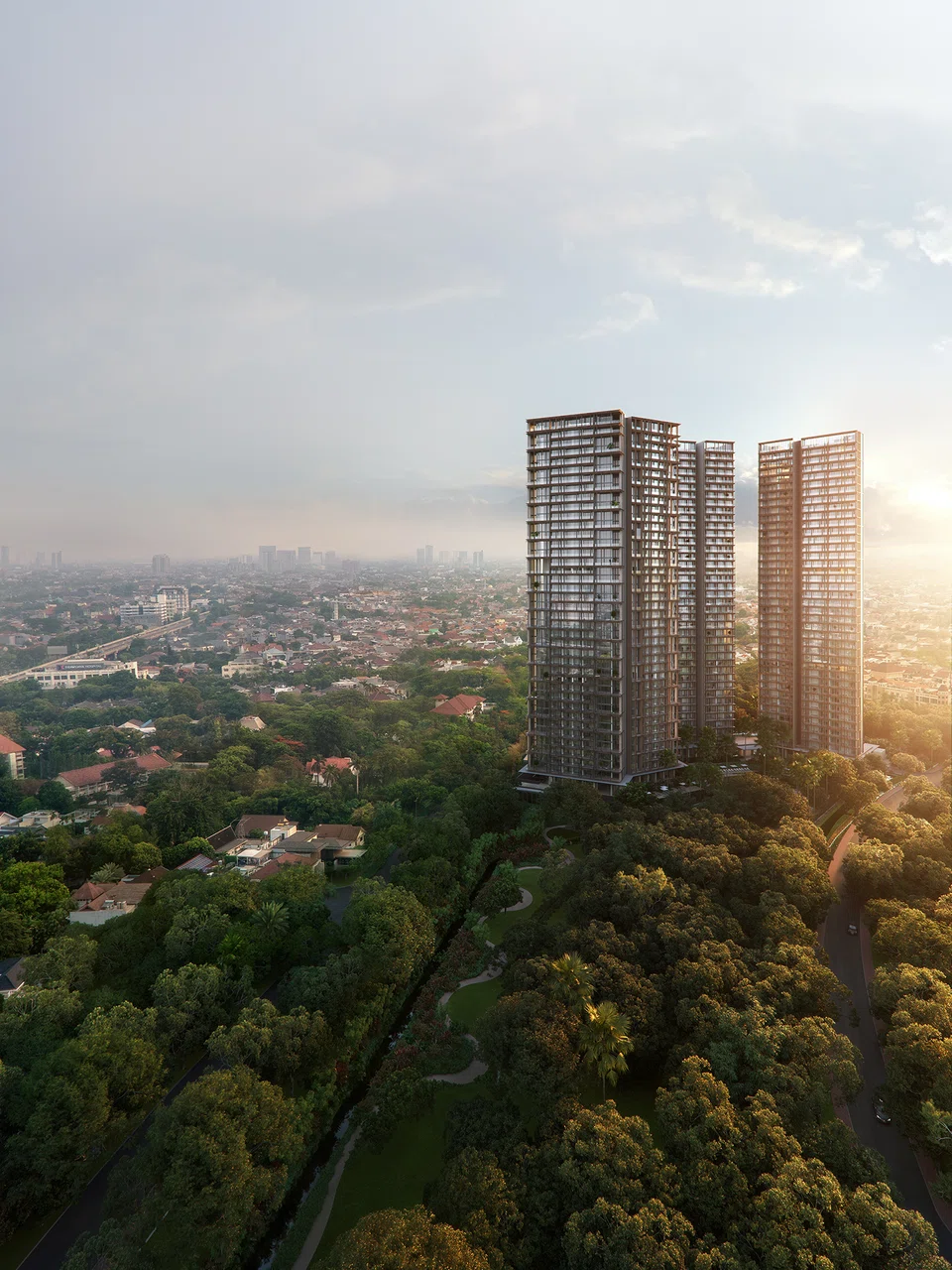
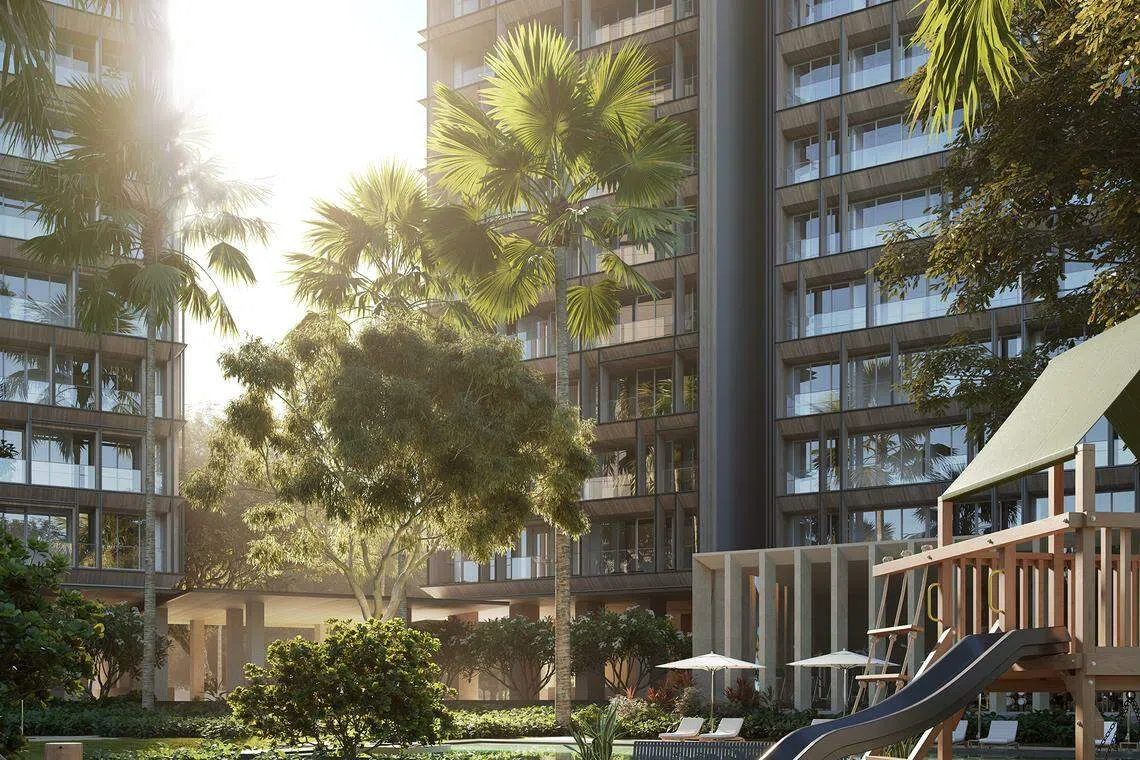
Asali was in Singapore to promote JSI Group’s latest project, Savyavasa, which means “living south” in Sanskrit. The 3-hectare development is located in the upscale neighbourhood of Dharmawangsa in South Jakarta.
The project is a collaboration between JSI Group and Swire Properties, under the joint-venture entity of Jantra Swarna Dipta. It has three blocks, with 402 units in total.
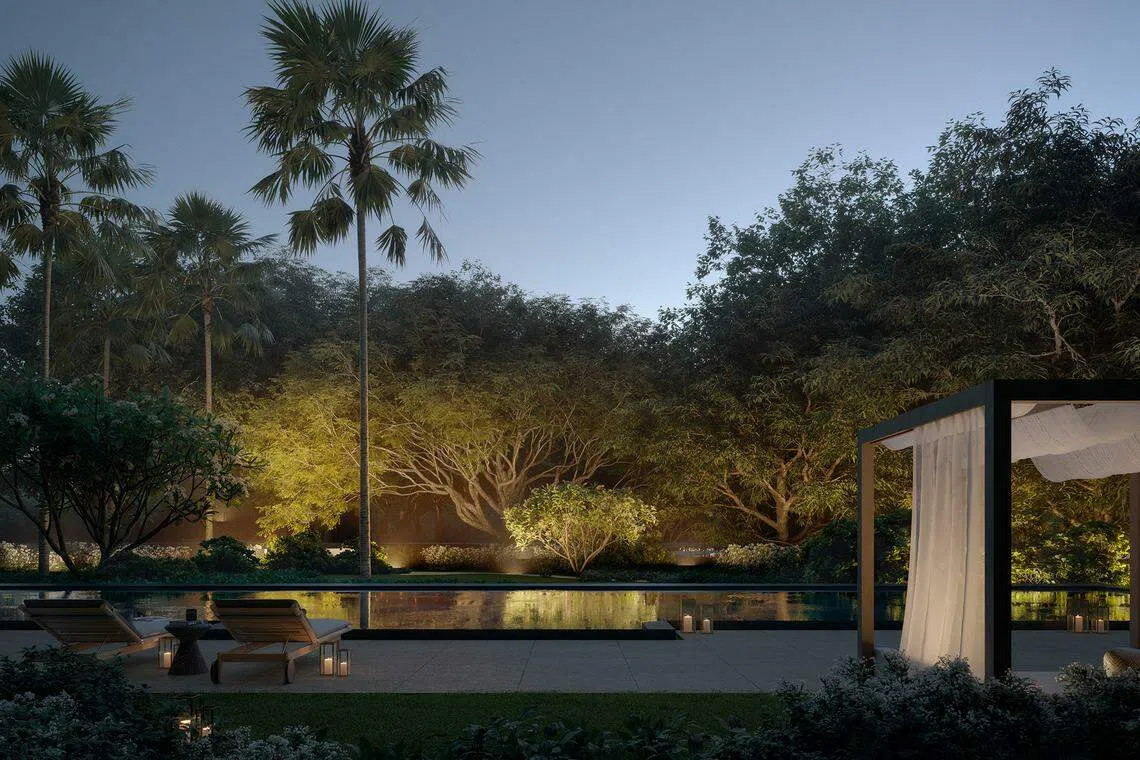
Apartments on offer range from two-bedders starting from 131 sq m; up to 336 sq m for a three-bedroom; and four-bedroom units with a maximum size of 496 sq m.
The price (before taxes and currency exchange conversion) for a two-bedroom unit starts from S$675,000, while a three-bedroom unit costs S$1.02 million. Four-bedders cost upwards of S$1.4 million.
As at the end of last year, about 41 per cent of the development had been completed, with the handover date around the second quarter of 2025.
Apartment ownership is held through strata title in Indonesia, and typically overlaid on a Hak Guna Bangunan (HGB) land title, creating a widely prevalent layered structure of property rights.
This system allows for individual ownership of apartment units within a building that is situated on land held under an HGB title. HGB is essentially a right to build and use buildings on land that is owned by someone else, usually the state.
JSI Group said the HGB’s right is granted for a certain period – usually 20 or 30 years – and can be extended for consecutive 20 or 30-year periods thereafter. Strata title holders can freely sell or transfer their apartment units, and can use their ownership title as mortgage collateral.
Besides Singapore, JSI Group is also looking to promote the project in Hong Kong and mainland China.
Swire Properties’ vice-president director for Indonesia, Sophie Watson-Swingewood, said Swire had set aside a sum of HK$100 billion (S$17 billion) in 2022 for investments in its core markets, including Hong Kong, mainland China and South-east Asia over the next decade.
She said 20 per cent of the fund is allocated for new residential trading opportunities in these markets, while 30 per cent will go towards expanding Swire’s office portfolio in Hong Kong, where it currently holds property in Pacific Place and Taikoo Place.
The remaining 50 per cent will be used for the China market, to grow its retail brands Taikoo Li and Taikoo Hui in existing and emerging Tier-1 cities. The plan is to double the gross floor area of Swire’s retail spaces in China by 2032.
Over 50 per cent of the fund has been committed so far.
Swire’s last project in Singapore was the luxury freehold residential development Eden at 2 Draycott Park. It sold all 20 units in the development in 2021 for S$293 million, or S$4,827 per square foot. The units were all four-bedders of over 3,000 sq ft, each occupying an entire floor.
“The company is still looking for a new project in Singapore,” Watson-Swingewood added.
Swire recently acquired a 40 per cent interest in a 136,000 sq ft freehold residential project in Bangkok, and a minor stake in two projects in Vietnam.
In South-east Asia, the company has always preferred to partner a local developer, to ride on each other’s strengths. “We think that is also our direction going forward as well,” said Watson-Swingewood.
While China’s property outlook has been grim over the past year, the Hong Kong-listed developer remains upbeat on the country’s prospects.
In 2023, Swire invested in two mixed-use projects – opposite Taikoo Li Qiantan, and on the waterfront along the Huangpu River in Shanghai’s Pudong New Bund Area.
“These will be our fourth and fifth developments in Shanghai, including our first foray into the residential market in mainland China,” it said.
The company plans to expand in other cities in China – in retail developments in Xi’an and Sanya, and two potential retail investment opportunities in Liwan district, Guangzhou and Futian district, Shenzhen.