

Industrial rents up 1.7% in Q4, prices climb 0.6%: JTC

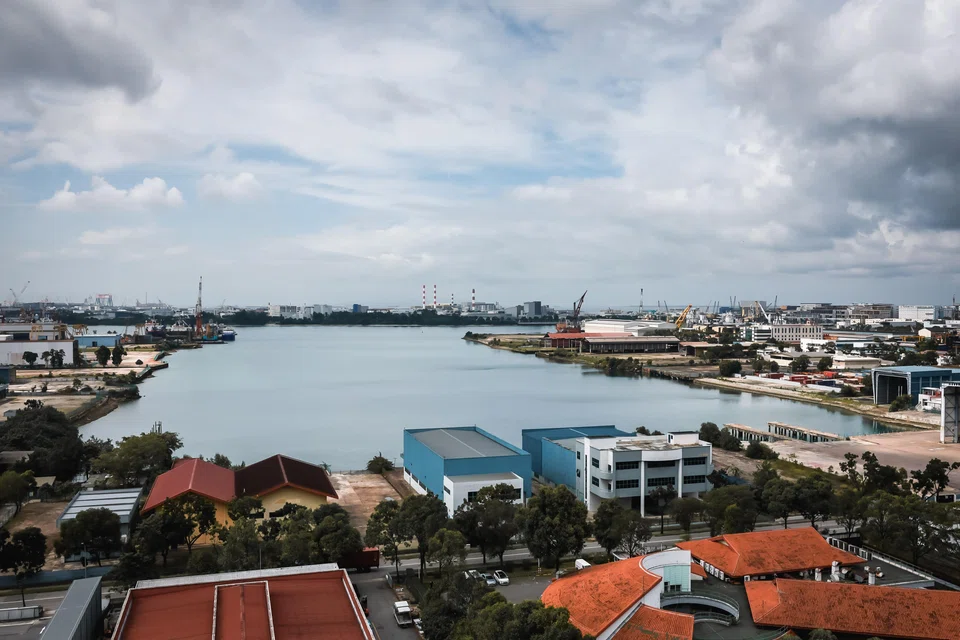
RENTS and prices of Singapore industrial space continued to rise for the 13th straight quarter in Q4 2023, but momentum is slowing, JTC data released on Thursday (Jan 25) showed.
Industrial rents rose 1.7 per cent quarter on quarter and 8.9 per cent year on year (yoy). The increase in rentals was led by the multiple-user factory segment, which rose 10.7 per cent yoy.
Tay Huey Ying, JLL’s head of research and consultancy, said: “The 1.7 per cent quarter-on-quarter rise in the all-industrial property rent index was the slowest in six quarters, while the 0.6 per cent quarter-on-quarter rise in the all-industrial property price index was the slowest in nine quarters.”
The deceleration across all industrial sectors, coming amid the turnaround in manufacturing activity, could be partly due to resistance to further rent and price hikes, said Tay.
“Driven by (the) supply crunch and investors’ reallocation of capital towards higher-yielding assets amid the elevated interest rate environment, Singapore’s industrial rent and prices have soared by a total of 18.9 per cent and 19.1 per cent (respectively) since their bottoms in Q3 of 2020,” she said.
Rents for warehouses climbed 8.5 per cent in 2023, while single-user factories were up 7 per cent and business parks rose 3.4 per cent.
Brenda Ong, executive director of logistics and industrial at Cushman & Wakefield, said growth in rents for multi-user factories was driven by new and better-located stock, while warehouse rents were supported by robust demand from third-party logistics players amid very tight supply.
The price index of all industrial spaces increased 0.6 per cent compared with Q3, and 5.1 per cent from the previous year.
Multiple-user and single-user factory prices climbed on a yearly basis, with multiple-user factory prices gaining 6.3 per cent and single-user factory prices increasing 3.8 per cent in 2023.
The overall occupancy rate stood at 89 per cent, a 0.1 percentage point increase from the previous quarter, and 0.4 percentage point lower than the previous year. The drop comes as new completions continued to be strong over the last few quarters, JTC said.
Leonard Tay, Knight Frank Singapore’s head of research, noted that the occupancy rate for business parks fell further to 78.4 per cent in Q4 2023, after five consecutive quarters of decline.
“Demand for business park spaces has weakened. Qualifying office occupiers choose to renew leases instead of incurring capital expenditure to relocate to decentralised business parks, notwithstanding the savings in occupational costs,” he said. “Existing business park tenants have also been cost consciously reducing their footprints, requiring less space with the adoption of hybrid work arrangements.”
Total available stock rose marginally to 52.9 million sq m, from 52.8 million sq m in the previous quarter. The increase in total available stock outpaced the 600,000 sq m increase in total occupied stock.
As at Q4, there were 144 units in uncompleted strata-titled developments which remained available for sale. These units totalled 24,465 sq m of space, and about 94 per cent of them were smaller than 200 sq m in size.
Transaction volume, according to estimates based on caveats data, fell 6 per cent from the previous year.
In the coming year, JTC expects 2 million sq m of industrial space to be completed.
Some 57 per cent of new supply will be from single-user factory spaces. Warehouse spaces will account for 19 per cent of the supply while business park space will make up 13 per cent. The remaining 11 per cent will come from multiple-user factories.
In 2025 and 2026, an additional 1.1 million sq m of industrial space is expected to be completed. This translates to an average annual supply of about 1.1 million sq m from now until end-2026.
In comparison, the average annual supply and demand for industrial space were about 1 million sq m and 700,000 sq m, respectively, over the past three years.
The manufacturing sector expanded by 3.2 per cent yoy in Q4, after contracting in the first three quarters of 2023, according to advance estimates from the Ministry of Trade and Industry.
Tricia Song, CBRE head of research for Singapore and South-east Asia, said: “With the anticipated recovery in global electronics demand for 2024, manufacturing is expected to rebound, which should continue to support demand for industrial space across both the high-tech and prime logistics segments.”
JLL expects demand for factories and warehouses to stay firm in 2024.
“The recovering manufacturing sector should underpin demand for factory space, while the persisting supply chain disruption on the back of ongoing geopolitical tensions should lend support to demand for warehouse space,” said JLL’s Tay.
She added that rent growth could be tempered by the higher supply pipeline, and occupier resistance towards further rent hikes could also intensify, given the high base.
Rents for well-located business park space could grow marginally in 2024, but rents for older business parks in non-central areas could flatten out, said Knight Frank’s Tay.






