

Investigations against CEO Ching related to Venetian corruption probe considered concluded: Oxley
He has never personally received any notification of any investigation for the allegations, and no charges have been brought against him, the company says

INVESTIGATIONS against Oxley Holdings’ chief executive officer Ching Chiat Kwong for his alleged involvement in a corruption investigation in Italy are considered concluded, and no decision has been made to prosecute him, the company said.
Ching’s name had been entered into an Italian register of criminal information in April 2022 as a result of allegations – brought against him by an Italian contractor – involving favours granted by the mayor of Venice to developers.
The contractor had been appointed to develop projects in Tuscany and Venice for Ching’s personal investments.
According to Italian law, the maximum length of investigations is two years from the time a person is entered into the register of criminal information, Oxley Holdings said in a statement to the Singapore Exchange last week.
Ching has never personally received any notification of any investigation for the allegations, and no charges have been brought against him, the company said.
Ching has since filed a report for slander and extortion against the person who made the allegations – Claudio Vanin – at the Italian Embassy in Singapore, Oxley Holdings told The Business Times. Vanin is also being investigated by the Venice public prosecutor’s office.
In July, Oxley Holdings responded to three news articles detailing Ching’s alleged involvement in a corruption probe involving Venice mayor Luigi Brugnaro, who was said to have granted favours to developers in exchange for kickbacks.
The Associated Press reported on Jul 17 that Brugnaro and two aides were being investigated for allegedly agreeing to ensure approvals for a 348,000 square metre residential and commercial project by Ching in exchange for 150 million euros (S$218.4 million).
Ching had considered the possibility of Oxley Holdings developing the project, known as Pili Land, into a waterfront township, and a feasibility study had been carried out, Oxley Holdings said.
However, it was determined that any development project would not be commercially viable as the costs would be too high. There were no discussions on the purchase price, and the project did not proceed.
Vanin was the de facto director of a general contractor appointed to develop projects in Tuscany and Venice for Ching’s personal investments.
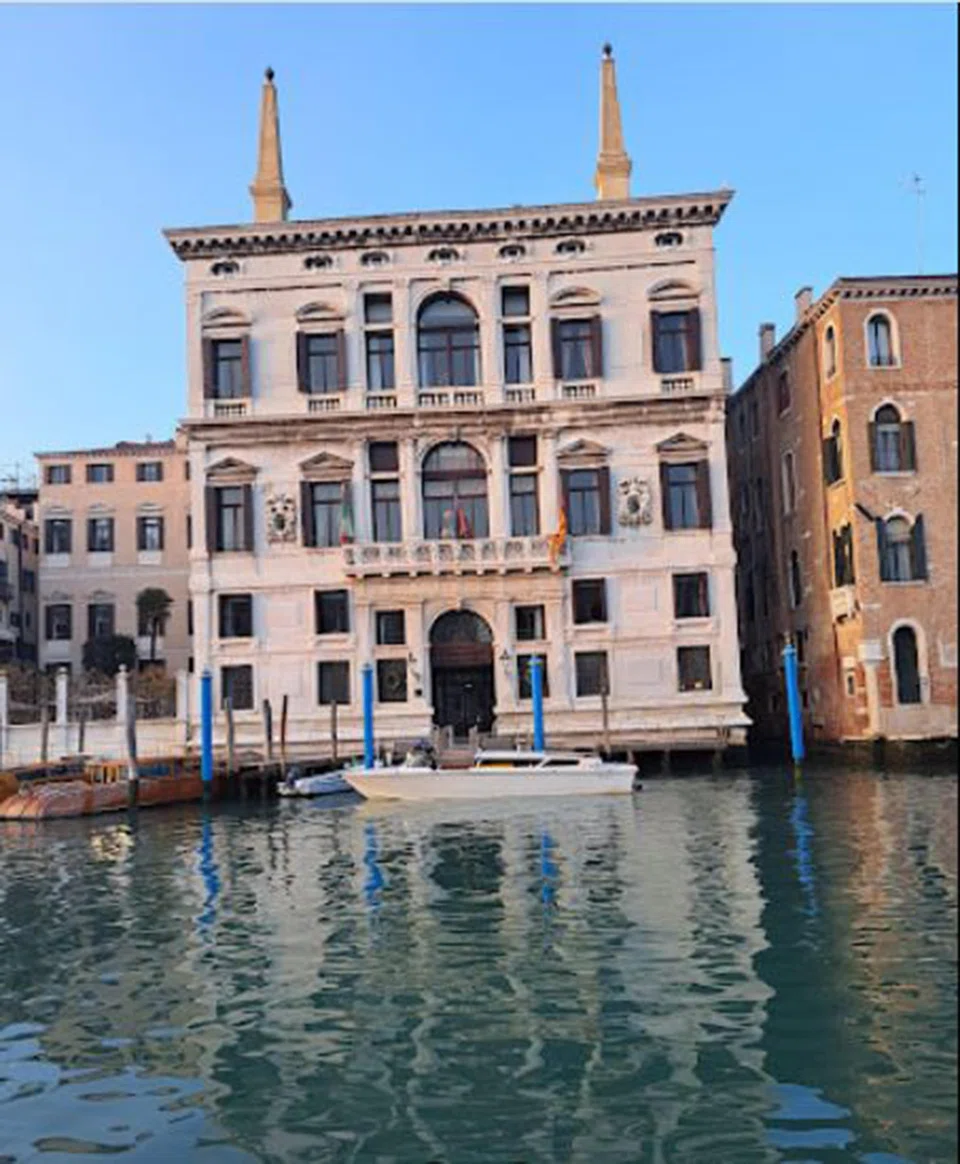
Oxley Holdings said Vanin had accused Ching of allegedly reaching an agreement with the Venice mayor to obtain a change in the building indexes and a favourable price for the purchase of two buildings owned by the municipality of Venice – Palazzo Dona and Palazzo Papadopoli. In exchange, the purchase price of Pili Land would be increased.
Palazzo Dona and Palazzo Papadopoli were investments carried out in Ching’s personal capacity.
A parallel investigation by the Court of Auditors in Italy is under way on the alleged price reduction in the sale of Palazzo Papadopoli. The Court of Auditors’ jurisdiction is limited to public officials, and Ching, being a private citizen, is not subject to its investigative processes, Oxley Holdings said.
According to Ching, Palazzo Papadopoli was put up for auction at 14 million euros. He placed a bid of 10.8 million euros for the property in 2017.
In response to queries from BT, Oxley Holdings said on Oct 30 that Ching’s purchase of Palazzo Papadopoli was conducted through public tenders and was entirely above board.
“Previous attempts by the Municipality of Venice to sell the property at a higher auction base price had failed, proving that the sale price set was excessive. When Ching submitted an offer at the public auction, no other investors made any offer despite the extensive publicity given to the auction by the Municipality of Venice and the Italian press,” Oxley Holdings said.
According to advice from Ching’s lawyers in Venice, the public prosecutor must make a decision to prosecute within three months of the expiry of the two-year investigation period, which in this case was Jul 4.
“Under the code, any investigations against Ching carried out after the expiry of the aforesaid time limit shall be inadmissible,” the group said.
TRENDING NOW

Singapore tech stocks plunge as Nasdaq bloodbath spills into region

S$3 billion money laundering case: Rare Pateks and Rolexes, diamond-covered Hermes and more head to auction
OCBC Q3 profit rises 3% to S$2.04 billion, slightly above expectations

From legacy to launch: Francis Yeoh and Yeoh Pei Xien on family unity and YTL’s next‑gen ventures

