

Investors bet on state-backed developers as Chinese property begins recovery
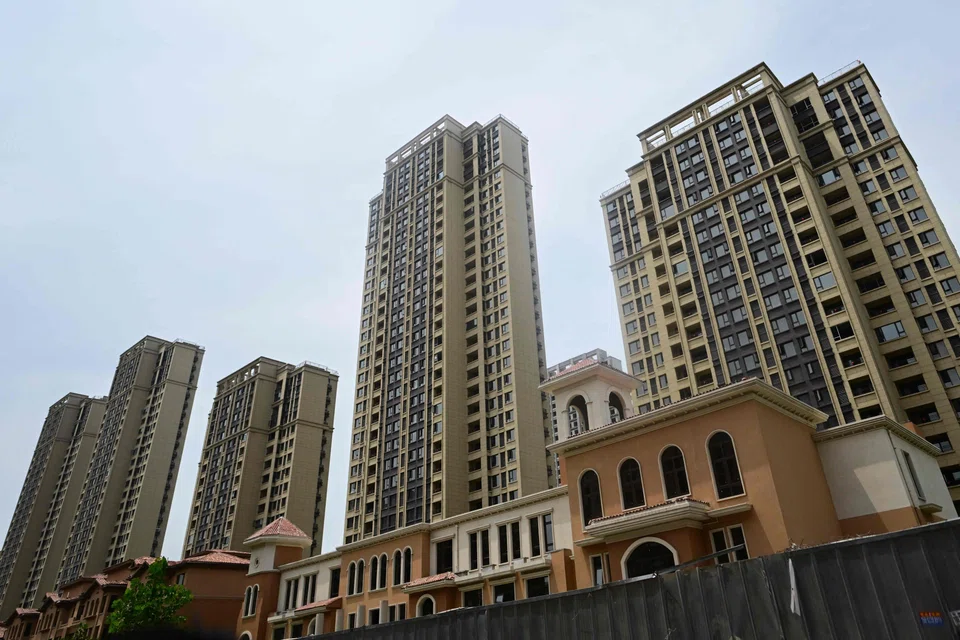
INVESTORS betting on recovery in China’s battered property sector are favouring the stocks and bonds of state-backed firms that are more likely to benefit from government support, market participants said.
The hugely leveraged sector has been gutted by three years of measures aimed at curbing speculative price rises and reducing developer debt, and has seen a string of major names defaulting on bonds or otherwise in dire financial straits.
Last month, however, the Politburo signalled change to real estate policy, and the People’s Bank of China pledged reasonable financing for developers and lower mortgage rates. Some cities, such as Zhengzhou, have started easing property market curbs.
For wary investors keen to return to a sector that accounts for a quarter of the economy, state-owned developers may offer government endorsement and better access to cheap funding.
Such sentiment is reflected in markets. Hong Kong’s price index of mainland developers – composed mainly of private firms – has fallen almost 30 per cent this year. China’s more mixed domestic real estate benchmark is down 13 per cent.
State-owned developers including Yuexiu Property and China Resources Land are trading at a price-to-earnings ratio of eight, whereas some private developers such as Country Garden Holdings are trading at less than two.
The bonds of some private developers such as Country Garden and CIFI Holdings are rated below investment grade.
“Developers that are either state-owned, or investment-grade rated, or those that are owned by or associated with local financial institutions will be the ones that are able to borrow long-term, cheap financing,” said Jenny Zeng, chief investment officer for Asia fixed income at Allianz Global Investors.
Meanwhile, investors have taken a dim view of the private sector. Short interest in Asian real estate – mostly private Chinese property firms – has been rising since April, with shares loaned as a proportion of market capitalisation hitting 0.75 per cent in July, showed data from S&P Global Market Intelligence.

Country Garden topped the list of most-heavily borrowed stock for short-selling, the data showed.
Leong Wai Mei, fixed income lead portfolio manager at Eastspring Investments, said that her fund only buys into very high-quality property firms which are either government-owned or have a government policy objective.
Lower debt and better financing have helped state-owned enterprises (SOEs) gain market share. They have historically generated around one-third of property sales but that share has risen in recent years to about 59 per cent, Capital Economics estimates.
The top five developers by sales in the first half year were state-backed, showed data from China Real Estate Information. Long-time leader Country Garden was sixth.
The share prices of state-backed firms such as Poly Developments have outperformed the CSI 300 real estate index. Country Garden stock has slumped more than 80 per cent since mid-2021.
Guangzhou local government-backed Yuexiu has seen its five-year bond due January 2026 bounce back to about 92 US cents on the dollar from a trough of 60 US cents in November. The offshore five-year bond of private firm CIFI, due October 2025, is around eight US cents.
“The latest property sales data for some of the performing non-SOE developers triggered fear that they would also need to default which sent shock waves through the market,” said Philip Meier, head of emerging market debt and multi-asset portfolio manager at Gramercy. REUTERS
Decoding Asia newsletter: your guide to navigating Asia in a new global order. Sign up here to get Decoding Asia newsletter. Delivered to your inbox. Free.
Share with us your feedback on BT's products and services
TRENDING NOW
Easy to rent out, hard to sell: Are buyers losing interest in Singapore’s one-bedroom condos?

GovTech retrenches another 38 staff in second round of layoffs

Stocks to watch: Seatrium, CapitaLand Investment, Keppel DC Reit, Suntec Reit, CLCT, TSH Resources
World’s largest offshore wind platform by Seatrium consortium on track to be completed by 2028

