

Investors home in on Singapore co-living, Hong Kong student housing in Apac’s US$13.8 billion living boom
Institutions are hunting in new markets beyond Japan and Australia where strong demand has driven up pricing, compressed yields

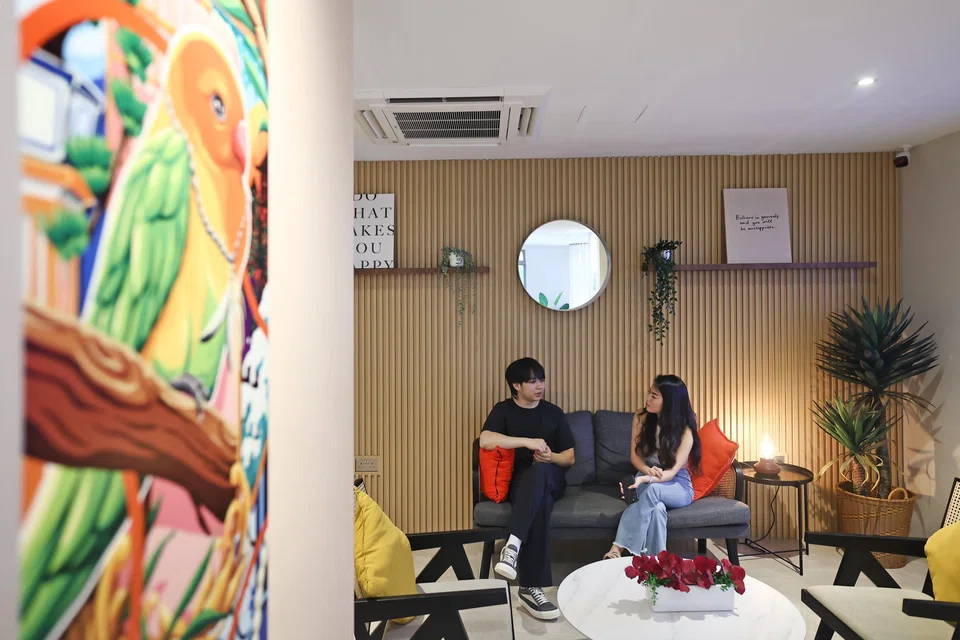
[SINGAPORE] Institutional interest is building in Singapore co-living and Hong Kong student housing, as a boom in Asia-Pacific’s (Apac) living sector extends beyond Japan and Australia, drawing capital from the likes of PGIM and BlackRock.
Investment in the sector, which covers rental housing categories, surged 38 per cent year on year to US$13.8 billion in 2025. It is the second-fastest among all real estate sectors after senior housing, a report by CapitaLand Investment (CLI) showed.
“Rental growth has also consistently outpaced both inflation and interest rates, preserving real income while maintaining a positive spread over financing costs,” the CLI report said.
BlackRock, the world’s largest asset manager, now ranks Japan and Singapore as Apac’s two most compelling living-sector markets, where it believes investors can generate attractive yields without significant planning or development risk.
“Japan offers established scale and defensive income, while Singapore offers a smaller but fast-institutionalising market with attractive value-add potential,” said Hamish Macdonald, head and chief investment officer of Asia-Pacific real estate at BlackRock.
Prudential’s asset management business PGIM, meanwhile, has deployed US$1.85 billion into Apac living-sector investments, with more than half invested in key markets including Australia, Japan and Singapore. The sector accounted for 60 per cent of its acquisitions and lending activity in 2025.
The living sector makes up about 23 per cent of PGIM’s global real estate portfolio, at more than US$50 billion.
Strong investor demand for established segments such as Japan multifamily and Australian student accommodation has driven pricing higher and compressed yields, said Suchad Chiaranussati, chairman and founder of real estate investment firm SC Capital Partners.
“For value-add and opportunistic capital, the focus is increasingly shifting towards identifying the next living subsectors within each market to institutionalise.”
For student accommodation and co-living, the most attractive markets typically combine housing affordability challenges with a stable or growing younger population, said David Fassbender, PGIM’s head of Asia-Pacific real estate. “Singapore and Hong Kong have many of these characteristics,” he added.
Living was the only real estate sector to see investment volume grow through both the Covid-19 pandemic and the global rate-hiking cycle from 2022 to 2024. It posted gains of 51 per cent and 18 per cent respectively as office and retail volumes tumbled during the period, indicated CLI’s research.
While Japan’s multifamily sector has long dominated Apac living investment, its share of investment volume has fallen from around 75 per cent in 2019 to about 50 per cent in 2025, as capital moved into Australia’s build-to-rent and purpose-built student accommodation (PBSA) markets and Singapore’s co-living segment. Hong Kong PBSA and South Korea’s living market are among the other emerging markets, the report said.
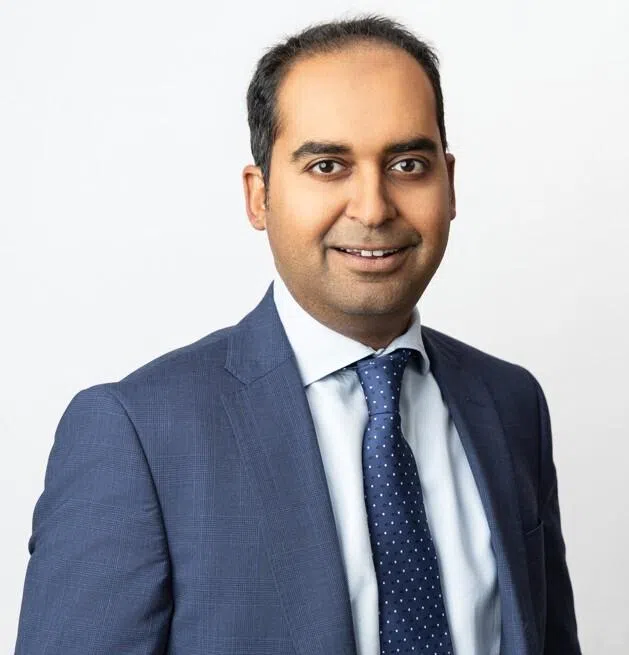
“A number of Asia-Pacific living segments now offer transparency, scalability and operating depth. This is creating a broader investable universe for global capital,” said Rahul Bharara, CLI’s global head of lodging and living for private funds, and chief investment officer of CLI Australia.
He noted that the rise of single-person households and shrinking household sizes, alongside cross-border mobility and sustained international student inflows, is driving regional demand and raising affordability pressures.
Singapore gains ground
In Singapore, market cooling measures, high homeownership, availability of public housing and transaction costs have kept conventional institutional rental housing limited. This has steered investment towards living and lodging formats such as serviced apartments and hotels, BlackRock’s Macdonald said.
BlackRock has made several acquisitions in the city-state’s living sector, drawn by a “compelling combination of resilience, limited supply and structural growth”, said Andrew Lee, head of Singapore, South-east Asia and South Korea for Apac real estate.
Most recently, BT reported in June that BlackRock is said to be in exclusive due diligence for a S$330 million acquisition of the 304-room Capri by Fraser China Square hotel in the South Bridge Road/Cross Street area.
The investment case for stabilised assets is “already compelling”, often generating meaningful income yield spreads over borrowing costs, Lee added. “The greater challenge for many investors is access to attractive opportunities.”
CLI’s report indicated that Singapore’s co-living room inventory grew 17 per cent between 2023 and 2025, mainly through adaptive reuse and conversion of existing assets.
The sector attracted S$1.4 billion in investment between January 2022 and August 2025, while accounting for just 6 per cent of Singapore’s total rental stock.
Co-living yields in Singapore are tight at around 4 per cent, the report noted, but Bharara did not see this as a deterrent. “Globally, living assets trade at the lowest yields across sectors due to the resilience of the cash flows,” he said.
Listings by home-grown operators Coliwoo and The Assembly Place could also widen exit options. The initial public offerings “signal greater acceptance of co-living as a scalable platform business rather than a fragmented lifestyle concept”, Bharara said. “This broadens potential pathways for capital recycling over time.”
Hong Kong’s student housing rush
In Hong Kong, student housing deals more than doubled to HK$3.3 billion (US$420.9 million) in 2025 from HK$1.3 billion in 2024. This came after the government launched its Hostel in the City Scheme in July last year to fast-track conversions of commercial buildings into PBSA.
The city faces a shortfall of 70,000 to 90,000 beds by the 2028/29 academic year, CLI estimated, and converted assets can yield 4.5 to 5 per cent, above office, serviced apartment and residential returns.
“Hong Kong PBSA is already a sector we find compelling, and have been evaluating for some time,” said Chiaranussati. SC Capital recently invested in a residential asset in Hong Kong’s Southside enclave, and sees an opportunity to reposition the property and target demand for high-quality accommodation.
Mapletree Investments, which counts student housing among its four core sectors, said Hong Kong has compelling fundamentals, including rising non-local student enrolments, highly ranked schools and a substantial undersupply of student housing. “This may create an investment opportunity in the future, and we will continue to evaluate the market,” a spokesperson said.
Beyond student housing, Mapletree also has exposure to the Apac living sector through serviced apartments, with assets in Ho Chi Minh City.
The private fund pathway
“The living sector remains relatively nascent across much of Asia-Pacific, with limited availability of core, stabilised products in many markets,” said Bridget Lee, Keppel’s chief investment officer for real estate. “Investors seeking exposure to the sector often do so via private funds, which have greater flexibility to pursue value-add and development opportunities.”
Keppel holds co-living and PBSA assets in its flagship private funds: the Sustainable Urban Renewal strategy and Keppel Education Asset Fund series.
In Australia and New Zealand, it adopted a portfolio aggregation strategy, converting a Sydney commercial property into a co-living asset and developing a PBSA asset in Auckland with the University of Auckland.
At CLI, private funds such as CapitaLand Ascott Residence Asia Fund II (Clara II) target value-add opportunities, while its listed hospitality trust, CapitaLand Ascott Trust, holds stable assets.
Last November, Clara II achieved final close with more than US$650 million in equity commitments and co-investments across the fund and associated vehicles. Clara II acquired an underperforming Tokyo hotel, repositioned it into co-living property lyf Shibuya Tokyo, and divested it within 18 months at more than double the fund’s target returns.
CLI’s lodging business unit, The Ascott, manages more than 8,100 operating and pipeline units under its co-living brand, lyf. The portfolio spans 29 cities in 16 countries across Asia-Pacific and Europe, with properties owned by CapitaLand Ascott Trust, CLI-managed private funds and third-party property owners.
In Singapore, Ascott operates five lyf properties with more than 1,200 units.
Still, living real estate has some way to go before becoming a core institutional asset class.
The gap with the West is stark. The living sector made up just 6 per cent of Apac commercial real estate investment volumes since 2019, versus 44 per cent in the US and 27 per cent in Europe, according to CBRE data cited by Bharara.
“The main constraint is not demand, but scalability,” said Fassbender. Many Asia-Pacific markets remain fragmented, with fewer large operating platforms than the US and Europe, he noted.
Decoding Asia newsletter: your guide to navigating Asia in a new global order. Sign up here to get Decoding Asia newsletter. Delivered to your inbox. Free.
Copyright SPH Media. All rights reserved.
TRENDING NOW

Singapore identifies 7 firms responsible for haze fires, notices issued urging action: Grace Fu

Philippine power giant First Gen rebuffs foreign offers, plans up to US$2.6 billion in expansion
DBS remains analysts’ pick ahead of Q3 earnings after Singapore banks’ share slump

Indonesia imposes US$116 million in fines over manipulation of Sinar Mas, Prajogo-linked stocks

